

George Osborne announced more than £500 million of contracts to overhaul the Royal Navy’s submarine base at Faslane, securing 6,700 jobs and set to create thousands more.
The Faslane Naval Base in Scotland is the home of Britain’s nuclear weapons – in the form of Vanguard-class nuclear-powered and nuclear-armed submarines.
The money will be spent on building sea walls, jetties and other projects. There are currently around 6,700 military and civilian staff and contractors at the base, but by 2022 that figure is expected to climb up to approximately 8,200.
Mr Osborne said: “I’m proud to say that this Government continues to recognise that our brave armed forces across Britain have always been resolute in defence of liberty and the promotion of stability around the world.
“That’s why I recently committed to meet the NATO pledge to spend 2% of our national income on defence every year of this decade. A strong and secure country is vital to both our prosperity and national security.
“There will be thousands more jobs right here in Faslane, as well as across the UK supply chain. Across Scotland, around 12,600 people work in defence and my defence spending commitments will secure these jobs and provide huge opportunities for defence, security and technology companies all over the UK.”
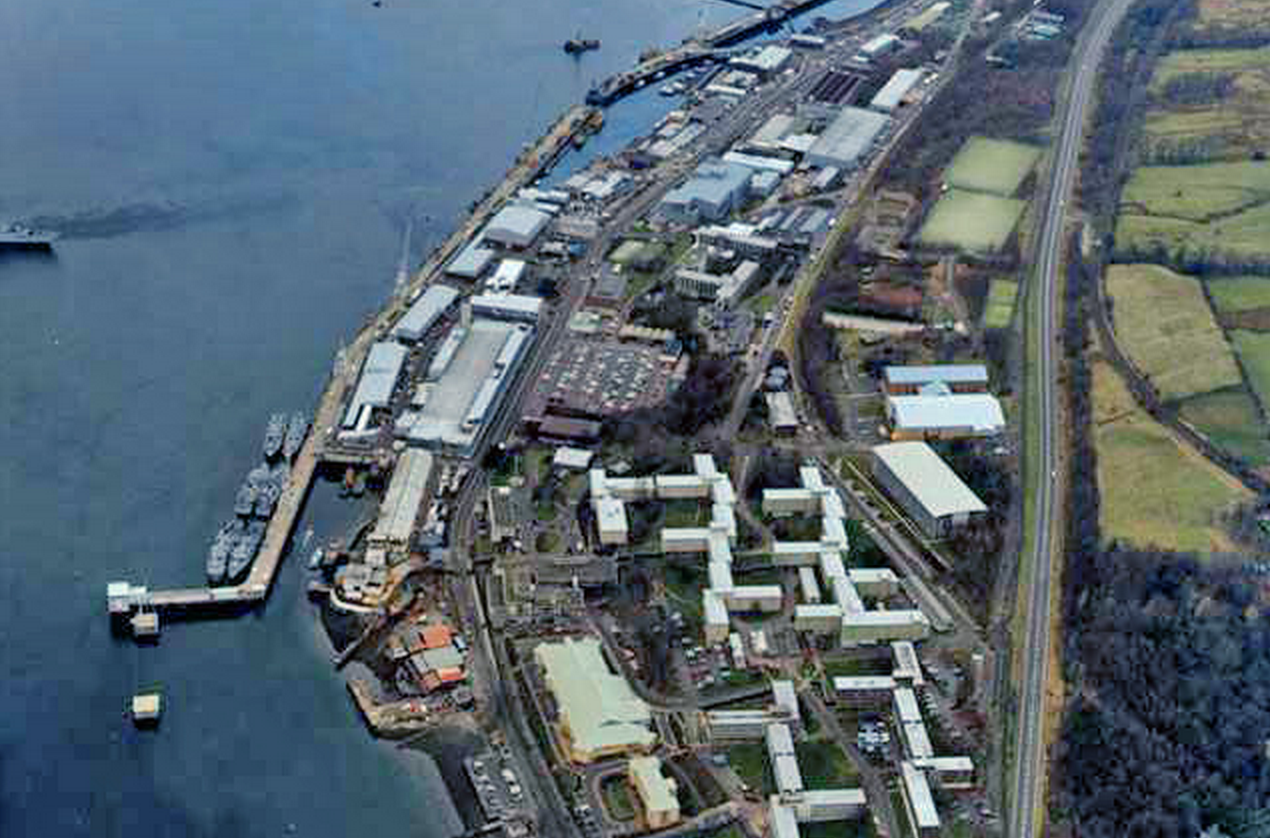
HM Naval Base Clyde Faslane base harbor
The SNP welcomed the investment in Faslane, however, the party said it must be as a conventional base “and not more money spent on weapons of mass destruction”.
The Trident nuclear system one of the main points of contention between the SNP and UK government. The SNP has made it clear that it wants the project to be scrapped if it involves spending on nuclear weapons.
SNP’s Westminster defence spokesman, Brendan O’Hara, said: “There is something fundamentally wrong with Westminster’s values and priorities if the Chancellor thinks wasting billions on nuclear weapons is something to boast about when people are dying within our benefits system.
“And in defence terms too, at a time when Scotland’s conventional defence footprint has never been smaller with major capability gaps, base closures and personnel numbers at an all-time low, it seems the Treasury apparently has a limitless pot to keep an unwanted and obscene arsenal of nuclear weapons afloat.
“Investment in Faslane is welcome – but it must be as a conventional base – and not more money spent on weapons of mass destruction.”
