
The world’s richest 10% – 700 million people – produce 50% of all carbon emissions, compared to the poorest 3.5 billion who produce just 10%, according to a new Oxfam report published this week. Unfortunately and ironically for those living in poverty, the 3.5 billion poorest will be the most badly affected by the consequences of climate change, which is caused by human activity.
The new report – ‘Extreme Carbon Inequality’ – released to coincide with the Paris Climate Talks, known officially as the ‘2015 United Nations Climate Change Conference’ or ‘COP 21’, which is currently underway in the French capital, provides estimates for carbon emissions according to individuals’ lifestyles in rich and poor nations across the world.
While the leaders and representatives of 180 nations try to negotiate a climate change agreement based on total emissions produced by each country, this report helps get rid of the myth that the bulk of the problem is being caused by the citizens of the emerging economies.
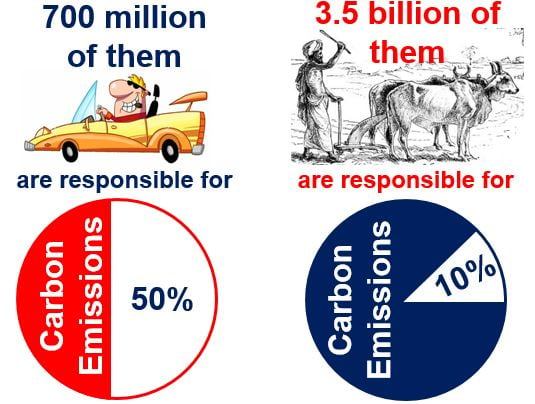 When you look at carbon emissions per person, the difference between rich and poor people is huge.
Emissions per capita in developing nations comparatively very low
It is true that greenhouse gas emissions are growing faster in developing nations. However, a large proportion of this growth comes from the production of goods which are sold to other countries.
When you look at emissions linked to the lifestyles of each person, greenhouse gas emissions per capita is considerably higher in the rich nations.
Tim Gore, Oxfam’s head of food and climate policy, who wrote the report, said:
“Climate change and economic inequality are inextricably linked and together pose one of the greatest challenges of the 21st century.”
“Paris must be the start of building a more human economy for all – not just for the ‘haves,’ the richest and highest emitters, but also the ‘have-nots,’ the poorest people who are the least responsible for and most vulnerable to climate change.”
Extent of inequality in emissions responsibility
According to Mr. Gore, the report provides compelling evidence of the extent of inequality in emissions responsibility – between nations and within them. For example:
– an individual in the richest 1% of the global population, uses on average 175 times more carbon compared to people from the bottom 10%.
– A person in India who is among the richest 10% of people in the country, uses on average just one quarter of the carbon that an individual belonging to the poorest half of the US population does.
– Carbon emissions per capita in the poorest half of the Indian population is one-twentieth of that used by each individual in the poorest half of the US population.
– Total carbon emissions among the 10% richest Americans – about 30 million people – are three times greater than all the emissions coming from the poorest half of China – about 600 million people.
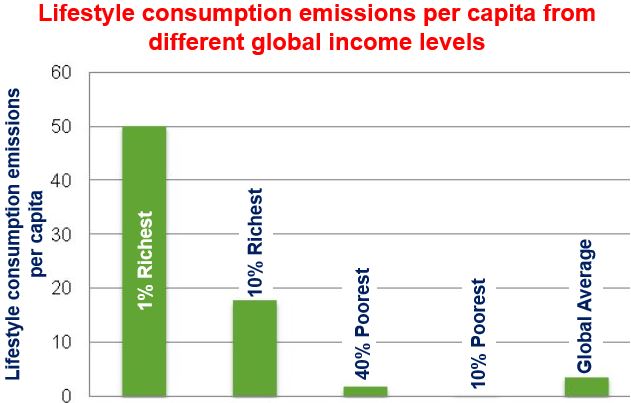 Look at the difference between the 1% richest and 10% poorest.
High carbon emitters should be made accountable
Mr. Gore stated:
“Rich, high emitters should be held accountable for their emissions, no matter where they live. But it’s easy to forget that rapidly developing economies are also home to the majority of the world’s very poorest people and while they have to do their fair share, it is rich countries that should still lead the way.”
If no effective agreement comes out of the current Paris Climate Talks, the only people who will benefit are members of a ‘select group of billionaires’, the report points out, whose massive fortunes in many cases were made in the fossil fuel business.
Examples of fossil fuels are natural gas, coal and petroleum. They contain high percentages of carbon. Fossil fuels are formed by natural processes, such as the decomposition of buried dead organisms over several hundred million years.
Addressing the economic inequality that these ‘carbon barons’ thrive on is vital to both combating climate change and eradicating extreme poverty, the author writes.
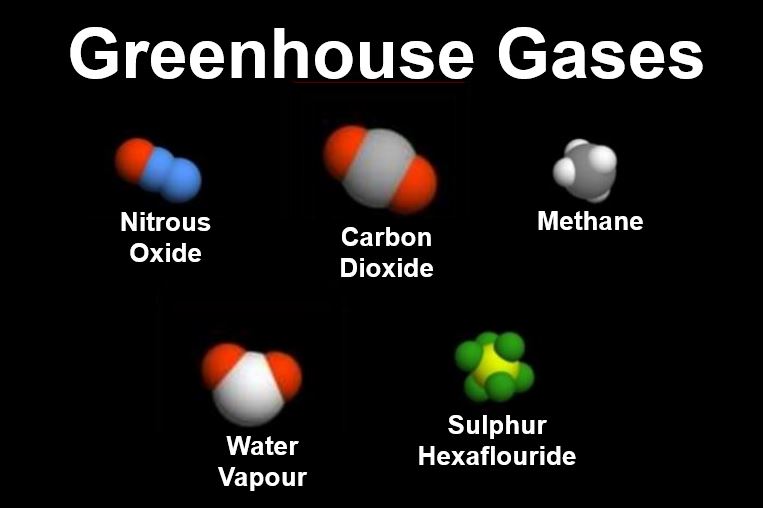 Human activity has increased the amount of greenhouse gases released into the atmosphere, which scientists say are causing global atmospheric temperatures to increase, sea ice to melt, sea levels to rise, and extreme weather events to occur more frequently and more severely.
Poorest people in the world are the most vulnerable
A World Bank Report published recently showed that the world’s poorest people are generally the most vulnerable and least prepared to withstand, cope with or overcome the effects of climate change, regardless of nationality.
Women, especially those in rural communities, face the greatest risks because they are so dependent on agriculture and have virtually no other way to earn a living.
Mr. Gore added:
“Extreme carbon inequality has to be capped. Any deal must keep alive the possibility of holding global warming at 1.5 degrees Celsius, and provide a major boost in funding to help the poorest and most vulnerable communities adapt to climate change.”
Those currently sitting at the negotiating table in Paris must agree on a deal that includes some way of helping those affected from the consequences of climate change when it is impossible to adapt. Oxfam is urging them to ensure that all climate actions and projects respect human rights and equality.
Video – What is your carbon footprint?
Your carbon footprint is a mark you leave upon the environment, the harmful gases such as Co2 that are pumped out by burning fossil fuels. The more you use the larger your footprint will be.
