
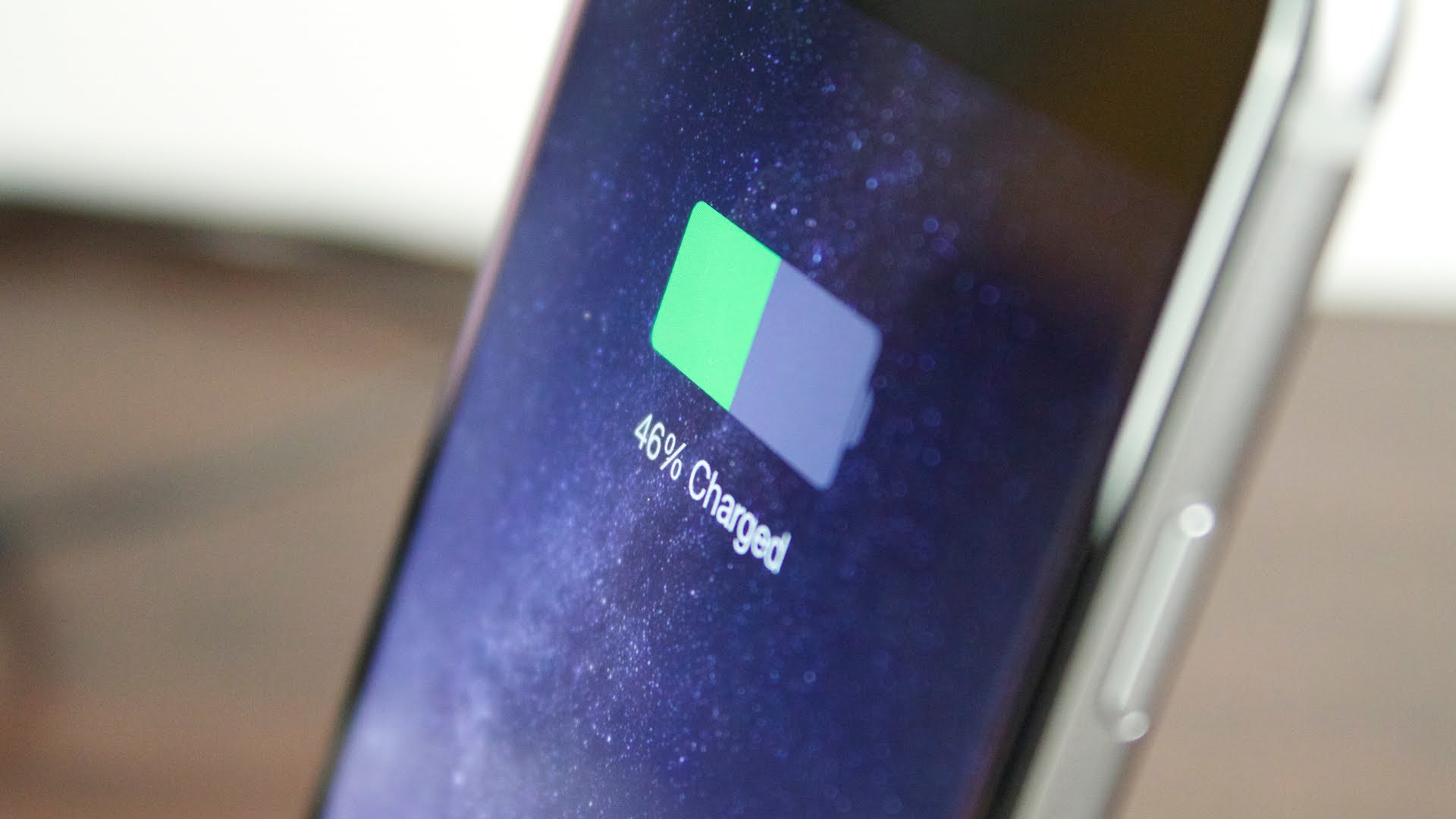
Battery icons shape the way people view time and space, according to new research from Cass Business School.
The abstract of the paper, scheduled for publication in the journal Marketing Theory, says:
“Charge levels on battery icons not only structure daily patterns of consumer life through planning efforts but become interpretively entangled in issues of duration, distance and sociality as energy demands in portable technology push consumers to avoid disruption.”
The study involved analyzing how London commuters viewed their daily trip in terms of the time and distance between charging points for mobile technology.
“People no longer think about their destination being 10 km away or 10 stops on the tube. They think about it being 50 per cent of their battery away,” said the study’s lead author, Dr Thomas Robinson.
“During interviews respondents discussed how a full battery gauge made them feel positive and as though they could go anywhere or do anything. Anything less than half full, however, induced feelings of profound anxiety and discomfort,” he said.
One of the respondents described how it feels to see the battery icon change throughout their day.
“Full would be ‘Yeah, ok great’, good to go for the day’; 50 per cent I’d be a bit ‘Oh God, I had better stop it from updating itself all the time in the background’ … then it would be at 30 per cent and I would be like: ‘Now I’m not having fun anymore’,” the respondent said.
Respondents that routinely check their battery gauges and take measures to ensure a high level of charge identify themselves as “control freaks”, “quite anal”, “planners” and “a bit OCD”. While those who let their phones run out of battery were identified as “frightfully frustrating”, “disorganised” and “inconsiderate”.
“We found that people who let their phones batteries run out are viewed by others as out of touch with the social norm of being connected and therefore unable to be competent members of society,” Dr Robinson said.
“Phones have become such a nexus for everything that we are that an inability to effectively manage battery life becomes symbolic of an inability to manage life.”
Journal Citation
“Portable technology and multi-domain energy practices”
Thomas Derek Robinson, Eric Arnould
Marketing Theory
Published August 20, 2019
https://doi.org/10.1177/1470593119870226
