

Boeing Co. and Toray Industries Inc. agreed on a $2.6 billion deal for additional supplies of lightweight, superstrong carbon fiber from the Japanese company for a new version of the 777X wings.
The Tokyo-based multinational corporation is one of Boeing’s biggest suppliers and the world’s largest maker of carbon fiber. The company already supplies the Chicago-based aerospace giant with building materials for its 787 aircraft, under a long-standing agreement through 2021 worth ¥700 billion ($6 billion).
This new deal raises the value to over ¥1 trillion for the next decade.
Carbon fiber is rapidly replacing metals in some parts of aircraft, because it is lighter and reduces weight, fuel consumption and ultimately operating costs.
The two companies have agreed to jointly work on increasing the possible applications of carbon fiber in the aerospace industry.
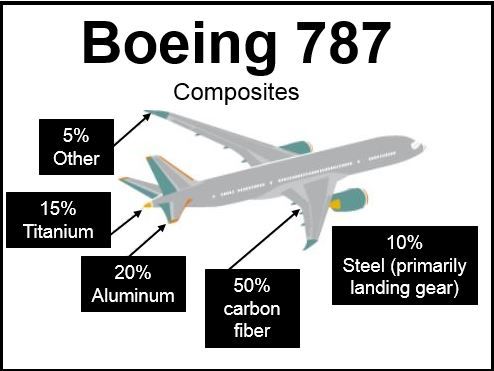
The primary structure of the Boeing 787, which is well known for its fuel efficiency, is about 50% made of carbon fiber. (Source: Boeing)
Japanese companies have become important suppliers of materials and industrial parts to major high tech and aerospace companies.
Boeing’s chief technology officer and senior vice president for Engineering, Operations & Technology, John Tracy, said regarding the partnership:
“This partnership is a great example of why Toray is the market leader in composite materials. Their understanding of the technology is outstanding, but they also know there is much more we can do with composites in aerospace if we work together to improve the performance, processing and economics. Toray is working with us on that and we are happy to expand their work statement to include the 777X.”
President of Toray Industries, Akihiro Nikkaku, said:
“We believe that this agreement signifies the solid mutual trust Toray has been building with Boeing through the stable supply of high quality carbon fiber materials since the 1970s. It also reflects Boeing’s recognition of our world-class technology and firm commitments to expanding composites application to aircraft. Going forward, Toray will continue to duly enhance its supply capacity in line with the production increases planned by Boeing.”
Boeing says it spent over $4 billion on goods and services from Japanese suppliers last year. Including this latest agreement, the company expects to buy an additional $36 billion of goods and services in Japan by the year 2020, “supporting tens of thousands of aerospace jobs.”
