
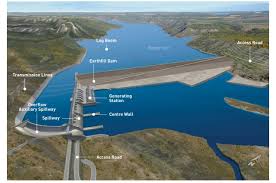
The $9 billion Site C dam has been approved by British Columbia. According to Premier Christy Clark, residents in the province will receive a reliable source of power for the next century – at a low cost.
“Affordable, reliable, clean electricity is the backbone of British Columbia’s economy,” said Clark. “Site C will support our quality of life for decades to come and will enable continued investment and a growing economy.”
BC Hydro predicts that Site C will generate 1,100 megawatts of capacity – enough to power around 450,000 homes annually.
Construction of the project is expected to begin in the summer of 2015.
British Columbia’s electricity rates are the third lowest in North America and the fourth lowest for commercial and industrial customers, according to Energy Minister Bill Bennett.
Mr. Bennett also said that the province’s population is estimated to rise by approximately one million over the next two decades and BC’s demand for electricity is expected to increase by 40 percent.
The Site C dam is a vital part of BC’s overall electricity plan and is expected to generate approximately 8 percent of the province’s total electricity needs, said Bennett.
He pointed out the advantages of how hydroelectric power is relatively clean compared to coal or natural, also adding that no one can predict the price of coal or natural gas over the next two decades.
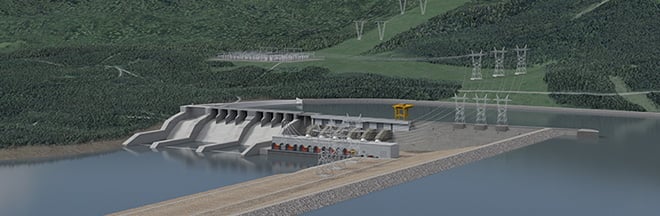
Photo Credit: BC Hydro
However, the decision to give the Site C dam project the green light to go ahead has been subject to scrutiny by First Nations and environmentalists.
In fact, The Union of B.C. Indian Chiefs is creating a message in the sand saying that Site C “will never see the light of day.”
Grand Chief Stewart Philip, said:
“We believe it to be an incredibly short-sighted and stupid decision. It’s not about the money. It’s about the environment, it’s about the land – about constitutional rights, treaty rights and so on and so forth. It’s about a way of life.”
Treaty 8 First Nations has also said that they fill fight construction of the project.
The Site C project would significantly affect a large area of northeastern BC, flooding over 5,500 hectares of land in a 83-kilometre stretch of valley.
The First Nations Summit issued a statement against the construction of Site C dam:
“This approach is unacceptable and an affront to the cultivation of constructive government-to-government relations between the provincial government and BC First Nations,”
West Moberly First Nation Chief, Roland Willson, said that he doesn’t want to see flooding happen in his land, which is the home of many sacred sites.
“We said no to the destruction of that valley … it’s the last chunk of valley that we have and it’s vitally important,” he said. “We have to make a decision here that will have implications for many, many decades.”
The Peace Valley Environment Association expressed extreme opposition to the project, saying that it BC’s biggest mistake in its history.
“At this time, it would make far more sense for BC to pause and develop an energy plan for the province. There is no rush to build Site C,” it said.
