
lithium-air--battery

Cambridge scientists make lithium-air battery breakthrough

Published: 00:13, November 1, 2015

Scientists at Cambridge University created a new design for lithium-air batteries which is reportedly 90 percent more efficient, has a higher energy density, and is capable of being recharged more than 2,000 times.

The battery has a spongy carbon electrode made from graphene and involves a chemical reaction to drive the cell, making it more stable and more efficient.

“What we’ve achieved is a significant advance for this technology and suggests whole new areas for research – we haven’t solved all the problems inherent to this chemistry, but our results do show routes forward towards a practical device”, said Professor Clare Grey of Cambridge’s Department of Chemistry, the paper’s senior author.

“We’re excited by the chemistry, but we’ve also got quite a lot of work to do in particular to understand the mechanisms of this chemistry and optimise it and to work on getting it closer to a higher rate system.”
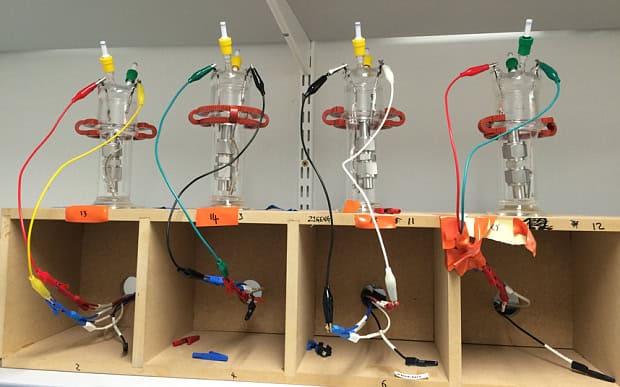
lithium-air--battery

The goal is for lithium-air batteries to eventually use regular-air to fuel the chemical reaction that releases electricity.

The technology is still in the lab phases and current test units have operated in pure oxygen – not regular air yet.

“What we really want is a [true] lithium-air battery – one that just takes in air, without having to remove CO2, nitrogen and water,” Prof Clare Grey told BBC News. “And now we have a system that at least tolerates a lot of water.”

The research is an important step towards taking lithium-air batteries out of the lab.

Veronica Salvador Avatar

Other News

AI system helps robots perform learned tasks up to 3.2 times faster

Aug 8, 2026

Meaningful work may come from accepting career uncertainty

Aug 8, 2026

Nvidia reportedly plans up to $3 billion investment in Lancium

Aug 8, 2026

Why businesses are being urged to prepare for tighter microplastics rules

Aug 7, 2026

Retiring a working gasoline car for an EV can cut lifetime emissions, study finds

Aug 7, 2026

U.S. businesses produced more per hour, but labor’s share of output hit a record low

Aug 6, 2026

Researchers test continuous method for making leather-like fabric from fungal mycelium

Aug 6, 2026

U.S. renters expect to move less as homeownership feels further out of reach

Aug 6, 2026

CEO confidence turns positive as pessimism recedes, but investment remains cautious

Aug 6, 2026

Digital tools could reshape women’s entrepreneurship, suggest researchers

Aug 5, 2026

Success can make people learn less from their own mistakes, study suggests

Aug 5, 2026

Shopify data suggests AI search is giving niche products a new route to customers

Aug 5, 2026

Customer data is moving deeper into pricing decisions

Aug 5, 2026

Texas pauses data-center grid connection approvals as power queue reaches 474 gigawatts

Aug 4, 2026

Japan tests whether carbon pulled from seawater can fuel planes

Aug 4, 2026

Expressive robots engage people more, but their mistakes carry a higher social cost

Aug 4, 2026

Employees reported a better work experience after hybrid work was introduced

Aug 4, 2026

Tomato gene helps plants recover after drought in controlled tests

Aug 4, 2026

New process could reduce the need to purify factory carbon dioxide before reuse

Aug 4, 2026

More novel drugs gained revenue faster in the U.S. after 2013

Aug 3, 2026