
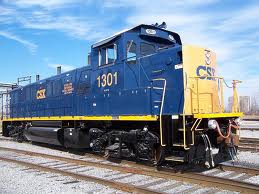
The potential merger between Canadian Pacific Railway Ltd. and CSX Corp., two of North America’s leading railroad companies, has almost no prospect of going through because of regulators getting in the way.
A deal would merge CSX’s network in the eastern U.S. with Canadian Pacific (CP)’s system spanning the width of its home country.
On Sunday it was reported that CSX rebuffed a proposal made by CP and it is still unclear whether CP will make another offer.
Both of the companies refused to make a comment on market rumors.
Even though CSX rejected CP’s initial offer it doesn’t mean that CP won’t make another offer.
However, if a deal is eventually agreed upon between the two Class 1 railways, it is not likely to be given the green light from the U.S. Surface Transportation Board (STB), in addition to other major regulatory bodies.
CSX and CP are two of seven Class-1 railways in North America – defined as generating over $250 million in annual revenue. The seven largest US and Canadian railroads make up for over 90 percent of all rail revenue in the region.
Credit Suisse analyst Allison Landry wrote in a note to clients:
“The STB rules concerning Class 1 mergers have an arguably impossible hurdle rate. Therefore, in our opinion, the deal is a non-starter.”
Back in 2000, after Canadian National Railway tried to merge with BNSF Railway, the STB imposed a 15-month moratorium on Class 1 mergers. Since then there have not been any Class 1 mergers between railroad companies.
One of CP’s directors, Linda Morgan, used to be chair of the STB, and has knowledge of the regulatory requirements for a potential deal, which is a huge asset at a time like this, but it might not be enough as shippers and regulators are disappointed with service and capacity issues in the railroad industry.
Cowen and Co. conducted a survey that found that 70% of shippers are against a Class 1 merger.
Earlier this month, at an investor conference, Mr. Harrison said that in the United States M&As make sense, noting that CP was having difficulty finding a potential partner.
On October 1 he said:
“You got to have somebody to dance with, and I don’t know anybody who wants to dance now. So I think it’s going to happen in two years, five years.”
Despite the regulatory hurdles that a merger between CP and CSX would face, it does make sense.
Morningstar analyst Keith Schoonmaker, in a note to his clients, said:
“For an extended period, we’ve insisted that the rational number of railroads in North America is two, and that interregional mergers would not reduce shippers’ competitive options.”
“A CP-CSX marriage would give CP options to divert traffic on a northerly route or take a greater role in managing two critical short lines.”
