

A Companies House typo, which entered 124 year-old military equipment supplier Taylor & Sons as Taylor & Son (missing the “s”), led to a sequence of events which destroyed the company, leaving the UK government with an ₤8.8 million legal bill.
Taylor and Son had gone into liquidation, not Taylor & Sons. As soon as credit agencies picked up the data, the Welsh engineering company lost credit facilities with its 3,000 suppliers and started seeing contracts disappear as well as possible future business.
A High Court Judge ruled this week that Companies House was responsible for the collapse of Taylor & Sons Ltd after it informed credit agencies that the company had gone into liquidation.
Companies House claims it was the only typo it has ever made.
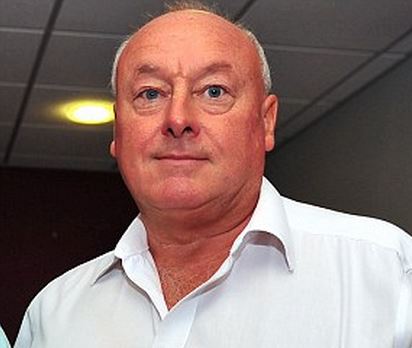
Former co-owner of Taylor & Sons was on holiday in the Maldives when he started getting angry phone calls from suppliers.
On February 20th, 2009, Companies House recorded the incorrect data on the companies register. It realized it had made a serious mistake three days later – but the fatal damage had already been done.
Within two months the company, which had existed since the late 1800s, had gone into administration and 250 workers lost their jobs.
Former co-owner and managing director of the unfortunate firm, Philip Davison-Sebry, said:
“Companies House had already sold the false information to the credit reference agencies. We lost all our credibility as all our suppliers thought we were in liquidation. It was like a snowball effect.”
When Mr. Davison-Sebry received a message to urgently contact one of his major clients, Corus, he was on holiday in the Maldives celebration his wife’s 50th birthday. The client scolded him for living it up out in the tropical sunshine while his company was folding. Mr. Davison-Sebry was confused at the comment, given that at the time he knew nothing of the typo and the subsequent disastrous domino-effect.
Mr. Davison-Sebry continued “They said we were in liquidation and that the credit agencies had told them. I rang the office to find out what was going on – it was like Armageddon. We will never forget it.”
Taylor & Sons soon lost £400,000 per month in business from its largest client, Tata Steel. At the time it had been in talks about a £3 million contract to build three Royal National Lifeboat Institution stations – the talks were cancelled.
Companies House said it was not guilty of any wrongdoing. However, the High Court judge disagreed, saying it is legally liable for the collapse of the business.
Mr Justice Edis ruled that had it not been for Companies House error, Taylor & Sons would still be in business.
The judge said: “Balancing the harm actually done to the company in this case against the potential adverse impact upon Companies House, it is clear that the balance favours the loss falling on Companies House rather than the company.”
Mr Justice Edis added that the company was not consulted so that it could challenge the mistake. “My finding on the causation issue shows that in this case that harm amounted to the destruction of a company which had traded for over 100 years and which owned a valuable business,” he said.
Mr. Davison-Sebry’s legal representatives are suing for £8.8 million. This is only a preliminary judgement. The issue of damages has not yet been resolved.
A Companies House spokesman said:
“Companies House has recently received the judgement in this case and is currently considering the implications at this time. Until these considerations are complete we remain unable to comment further.”
