
Lord Mandelson has warned Ed Miliband that if he cuts tuition fees from £9,000 to £6,000 for British students, Universities will favour foreign students, who pay more, to the detriment of British youth. In other words, Universities would increase their ratio of foreign students to plug the funding gap.
Mr. Miliband was also warned that he is creating a gaping “credibility gap” over his spending plans, as it emerged the Labour party still has not managed to agree on how the university fee cuts would be financed.
Lord Mandelson, who was Business Secretary when Gordon Brown was Prime Minister, admitted that Labour needs to say where it will find the money to pay for the tuition fee cuts.
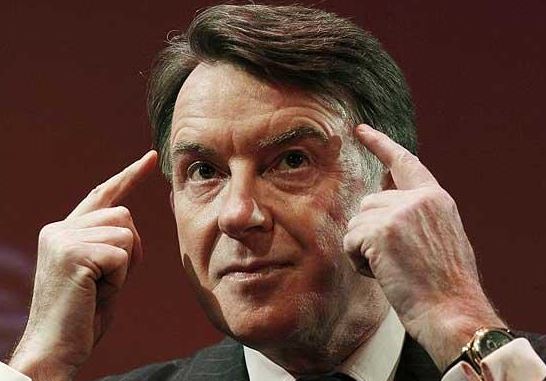
Mr. Miliband’s tuition-fee cut proposal is creating a credibility gap, says Lord Mandelson.
When Lord Mandelson was in the Cabinet, funding for universities was part of his remit. He said it was “inconceivable” that Labour could cut funding to the higher-education sector.
In a speech to a private meeting of university vice-chancellors, Lord Mandelson said:
“If any reduction in fees is announced, and I’m not assuming that it will be, it’s absolutely vital that replacement funding from taxation is identified and announced at the same time.”
“Not in a generalised way, but in a specific way. Because that will ensure that no credibility gap is opened up either around university funding or the Labour Party’s commitment to reducing the fiscal deficit.”
Higher fees did not hurt application numbers
Lord Mandelson acknowledged that the current governments’ claims that increasing fees to £9,000 would not result in a fall in university applications turned out to be true. Even students from low socioeconomic households were today more likely to apply.
When Mr. Miliband was campaigning for the leadership of the Labour Party, he had proposed that a graduate tax should replace tuition fees. Despite years to prepare for this, his party has not yet agreed on its position ahead of May’s general election.

Vince Cable believes Ed Miliband’s tuition fees proposal is a cheap populist stunt.
Vince Cable, who has been Secretary of State for Business, Innovation and Skills since 2010, believes reducing fees to £6,000 is a “foolish” idea. It would cost about £10 billion over a five-year period.
In a letter to Mr. Miliband, Mr. Cable wrote “(It) would be a populist gesture which would achieve nothing and do a lot of damage.”
Several UK media sources say there are wrangles at the top of the Labour party on whether to impose a £6,000 cap.
Letter from Universities UK
Earlier this month, in an open letter to The Times, Universities UK said reducing tuition fees would damage student education, access to higher education, and also the British economy.
Professor Sir Christopher Snowden, President of Universities UK, wrote:
“Were this to happen, at least £10bn of additional public funding would need to be found and ring-fenced over the course of the next parliament to close the gap.”
“Given the many pressures on public finances, and with all political parties committed to further public spending cuts, it is implausible that any incoming government would be able to do this.”
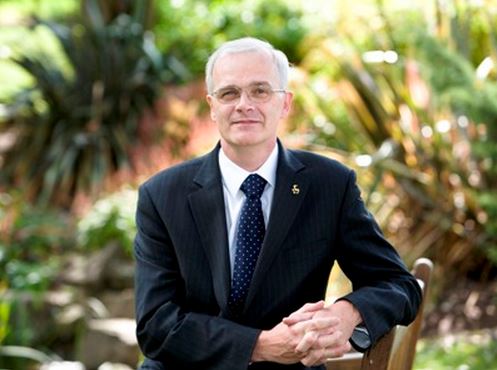
Mr. Miliband’s fee-cut proposal is “implausible”, said Sir Christopher. (Image: University of Surrey)
The letter, which was signed by 19 university leaders across the UK, pointed out that any measures to limit university student numbers as a way of cutting costs would undermine young adults’ educational opportunities, as well as for those seeking to return to education. It would also undermine economic growth, they added.
Sir Christopher pointed out that both total university applications and the proportion of applicants from the poorest households have increased.
Sir Christopher and colleagues wrote:
“Universities UK has consistently argued that our student funding system must be sustainable and support affordable, high-quality higher education.”
“Any evolution of the current system in England should ensure value for money for students, prevent students from poorer backgrounds from being deterred from study, and be financially sustainable for both universities and government. Cutting the fee cap does not help poorer students and risks the quality of education for all.”
