
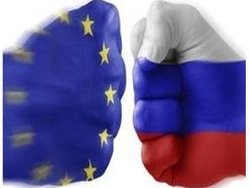
As the EU adopts new Russian sanctions, European businesses become more nervous after the German economy shrank in the second quarter and Eurozone GDP flatlined.
The increased sanctions are likely to include several Russian state owned businesses, including oil companies, by restricting their ability to raise finance on European financial markets.
Investors had expected the new measures would come into effect today, but the EU Council, in what appears to be an eleventh-hour olive branch, said this will occur in the next few days.
Several EU member states, led by Finland, want to put the new sanctions on hold and give the ceasefire and current talks a chance. Finnish Prime Minister Alexander Stubb said to reporters “Finland in general isn’t of the opinion that the right time [to implement new sanctions] is right now.”
The new economic sanctions have been agreed because Russia is accused by the EU of sending soldiers to help pro-Russian separatists in Ukraine, who are fighting against the government. Russia denies any involvement. At the end of August, the EU gave Russia an ultimatum – one week to reverse its course.
President of the European Council, Herman Van Rompuy, announced today that the Council has adopted more measures against Russia, further deepening the targeted measures imposed on July 31, 2014.
Russia must change its course
Mr. Van Rompuy says they are aimed at encouraging Russia, which is destabilizing eastern Ukraine through its actions, to change its course.
“(The new measures) come in the wake of the European Council of 30 August, which condemned the increasing inflows of fighters and weapons from the territory of the Russian Federation into Eastern Ukraine and the aggression by Russian armed forces on Ukrainian soil.”
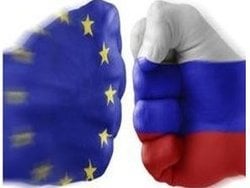
The date of the new sanctions will be published in the Official Journal, Mr. Van Rompuy added, which will “take place in the next few days.” The EU will assess how effective the ceasefire agreement has been.
Depending on the situation on the ground, the European Union will consider reviewing the agreed measures either entirely or in part, he added.
Ceasefire holding … so far
So far, both sides appear to be respecting the ceasefire. However, the head of OSCE (Organization for Security and Cooperation in Europe), which set up the deal, said Monday was a “shaky” day.
Before the ceasefire was set up, pro-Russian rebels had gained considerable ground in eastern Ukraine and captured territory near the strategic port city of Mariupol.
Sergei Lavrov, Russia’s Foreign Minister, urged the Ukrainian government to open talks with the separatists on the status of the two regions of the country. He added that so far the ceasefire seems to be holding.
Since the truce came into effect on Friday, five Ukrainian soldiers have died and 33 injured, according to Ukrainian officials. Both sides have accused each other of violating the agreement.
Russia may close air space
In what it described as an “asymmetrical” response to new EU sanctions, Russia insinuated that it may close its airspace to Western airlines.
Prime Minister Dmitry Medvedev is blaming the US, EU and other allies for damaging the Russian economy. He said Russia needs to reduce its reliance on imports.
Mr. Medvedev says Russia has been far too patient with the West in its worst confrontation since the Cold War. The country should have responded more strongly after the EU and US tried to punish it, he added.
In an interview with Russian newspaper Vedomosti, Mr. Medvedev said:
“If there are sanctions related to the energy sector, or further restrictions on Russia’s financial sector, we will have to respond asymmetrically. This is not the way to go. We just hope our partners realise this at some point.”
Mr. Medvedev pointed out that trade between China and Russia currently stands at $100 billion annually, compared to $450 billion with the EU. Nearly half of Russia’s trade is with the EU. He says it is vital to increase trade with the Asia-Pacific nations.
Mr. Medvedev said:
“We should trade, solicit investments and work with China, India, Vietnam and other big and not so big regional actors. The turn toward Asia is overdue. We are not doing it because of the sanctions or the deteriorating political situation, but because we owe it to ourselves to diversify our trade.”
“It will help us develop Siberia and the Russian Far East. So, I don’t see any particular problems, provided we take reasonable decisions. China is the largest trading partner of the United States. This fact also causes debate there, but no one questions the independence of the United States.”
