
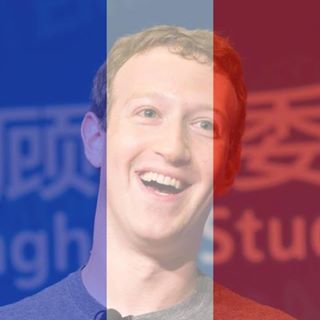
mark_zuckberburg

Facebook responds to criticism, will broaden Safety Check

Written by Joseph Nordqvist

Published: 04:21, November 16, 2015

Thousands of people in the Paris area used Facebook on Friday to let friends and family know they were safe after a wave of terrorist attacks struck the French capital killing 132 people. 

Facebook’s “Safety Check” feature allowed users in the city to alert people in their network that they were safe with the simple click of a button.

There is no question that “Safety Check” is a welcome feature as it quickly allows a person to let others know they are okay after a disaster strikes.

But why wasn’t the feature available during other terrorist attacks?

Many people flocked to social media asking why Safety Check wasn’t activated during other devastating events, such as the twin suicide bombings that struck Beirut on Thursday – killing over 43 people – and the attack at Garissa University College in Kenya that left 147 dead.

The answer is that Facebook changed its policy the day of the attacks in France. It said it will now activate the feature during human disasters – not just natural disasters.

The social media giant began Safety Check in response to the 2011 tsunami in Japan and it was only ever activated during natural disasters – up until the terrorist attacks in Paris that is.

Facebook CEO Mark Zuckerburg was quick to respond to the complaints. In a Facebook post he said:

“Many people have rightfully asked why we turned on Safety Check for Paris but not for bombings in Beirut and other places.

“Until yesterday, our policy was only to activate Safety Check for natural disasters. We just changed this and now plan to activate Safety Check for more human disasters going forward as well.”

He added:

“Thank you to everyone who has reached out with questions and concerns about this. You are right that there are many other important conflicts in the world.

“We care about all people equally, and we will work hard to help people suffering in as many of these situations as we can.”

Joseph Nordqvist Avatar

Other News

COBOL still runs critical business systems because replacing the system is harder than replacing the language

Sep 20, 2026

Heat stress adds $41 per ton to the estimated cost of carbon, study finds

Sep 20, 2026

UN lifts global growth forecast, but warns energy shock has revived inflation pressure

Sep 20, 2026

HPE lifts outlook after AI servers and networking drive record quarterly revenue

Sep 20, 2026

A missed opportunity can make managers keep weak projects alive

Sep 19, 2026

Surgical robots are gaining autonomy, but surgeons still run the operating room

Sep 18, 2026

Catalonia’s Plan B asks how an economy can meet needs without relying on growth

Sep 18, 2026

Bank of Japan raises policy rates to 1.25%. What higher borrowing costs mean

Sep 18, 2026

UK retail sales rise 0.5% in August as online stores recover

Sep 18, 2026

Mistras agrees $866 million sale to H.I.G. Capital

Sep 18, 2026

US industrial output stalls in August as manufacturing slips

Sep 18, 2026

Japan’s household financial assets hit a record ¥2,519 trillion. What that measures

Sep 17, 2026

Canada welcomes EU associate-member proposal, but terms are undefined

Sep 17, 2026

Softcat agrees $1.05B GDT acquisition to expand US data-centre services

Sep 17, 2026

Bank Rate held at 3.75% in the UK as energy prices sharpen inflation risk

Sep 17, 2026

East African Community trade reaches $52.3bn as exports drive surplus

Sep 16, 2026

Canada says its investment summit mobilised nearly C$500bn. What does that actually mean?

Sep 16, 2026

May Mobility agrees $1.4B SPAC deal, bets on asset-light robotaxi model

Sep 16, 2026

Fed raises rates to 3.75% to 4.00% as inflation remains elevated

Sep 16, 2026

IBM-backed Anderon finalizes up to $1B US quantum foundry award

Sep 16, 2026