
A growing equity mortgage, or GEM, is a fixed-rate mortgage with scheduled increases in payments. The initial payment already covers interest and repays some principal. Later increases accelerate repayment of the principal balance.
The name describes a method of repaying debt. It does not promise that a property will rise in value or that future payments will become easier to afford.
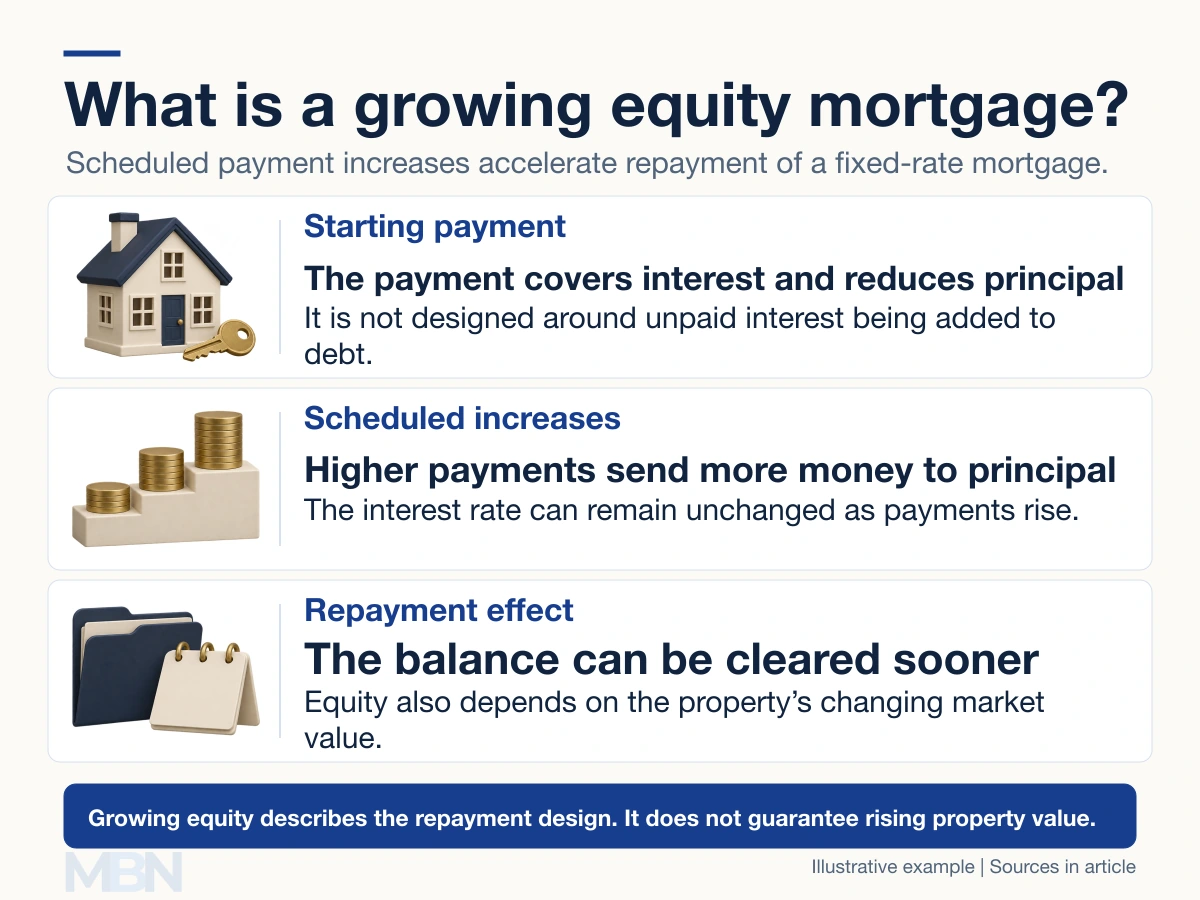
How the repayment structure works
Principal is the amount of debt outstanding. Each payment covers the interest charged for the period and reduces principal. A scheduled increase directs more money toward reducing that balance, while the contractual interest rate remains fixed.
HUD’s mortgage program guidance describes GEM payment increases as reducing principal and shortening repayment. That differs from an arrangement in which the low starting payment leaves some interest unpaid.
A simple payment example
Consider a fictional payment date with a $100,000 loan balance. At a nominal annual rate of 6%, calculated monthly, the interest is $500. A $600 payment covers that interest and reduces principal by $100.
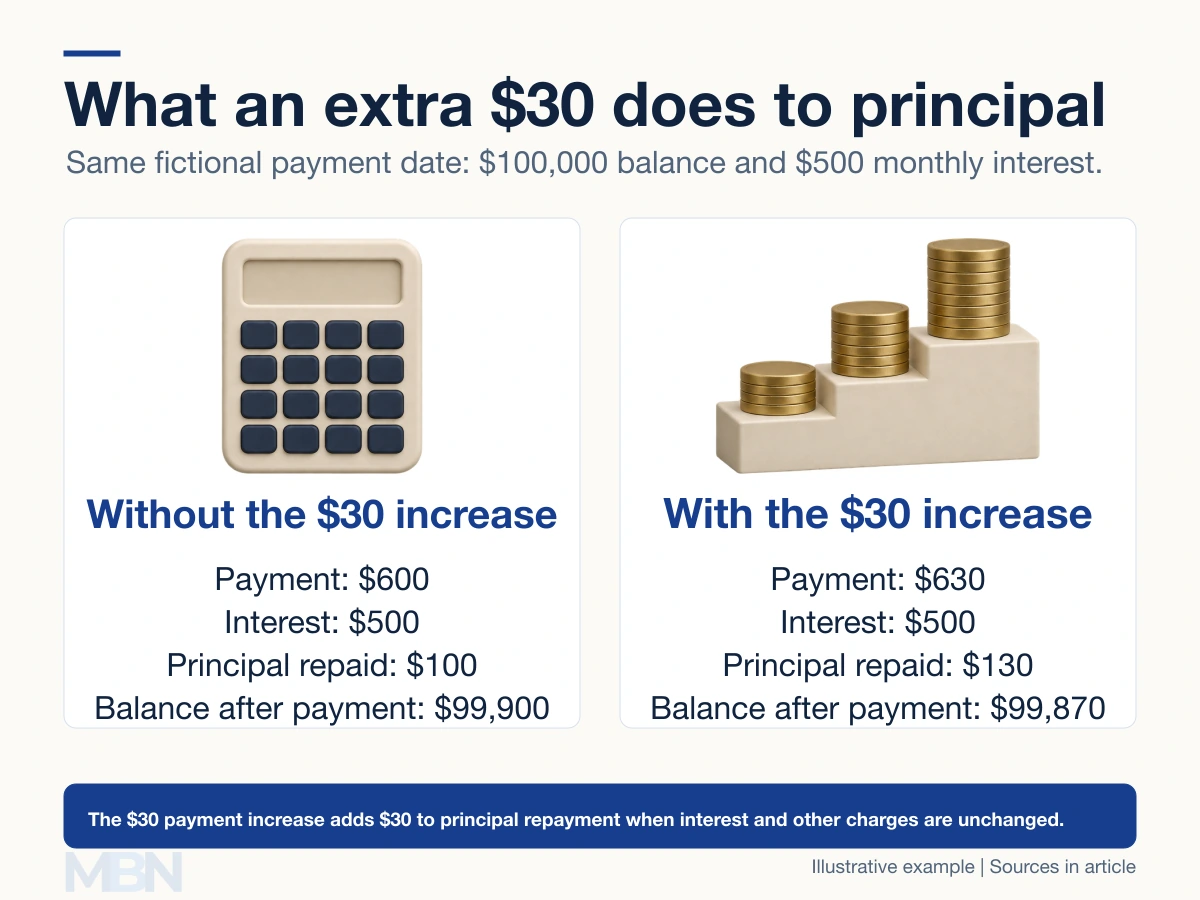
If the scheduled payment at that same date were $630, with all other assumptions unchanged, principal would fall by $130. The extra $30 goes to principal. This comparison illustrates one payment, not an entire GEM amortization schedule.
Repeated principal reductions leave a smaller balance on which future interest is calculated. Compared with keeping the lower payment on an otherwise identical loan, that can reduce total interest and bring the payoff date forward.
How a GEM differs from a GPM
A graduated payment mortgage, or GPM, also has rising payments, but traditional designs can begin with payments below the interest due. Unpaid interest added to principal is negative amortization. A GEM is structured to avoid that process.
HUD’s FHA Connection documentation distinguishes GEM and GPM plan codes. Its listed GEM codes have annual payment increases of 1% to 5%. The documentation was last revised in 2010 and should not be read as a current offer from a lender or a promise of product availability.
Does equity always increase?
The CFPB defines equity as the property’s current value minus mortgage amounts owed. With no other secured debt, a $180,000 home and $100,000 mortgage imply $80,000 equity.
If the loan later falls to $99,000 but the home’s value falls to $170,000, equity becomes $71,000. Repaying principal helps build equity relative to an unchanged property value, but cannot prevent a market-price decline.
What the label does not establish
A GEM does not establish eligibility, total housing costs or future income. The full payment schedule, loan term, fees, taxes and insurance determine the actual commitment. Expected salary growth remains uncertain even when the mortgage’s payment increases are fixed in advance.
Last checked and updated on November 4, 2026 by the MBN editorial team.