
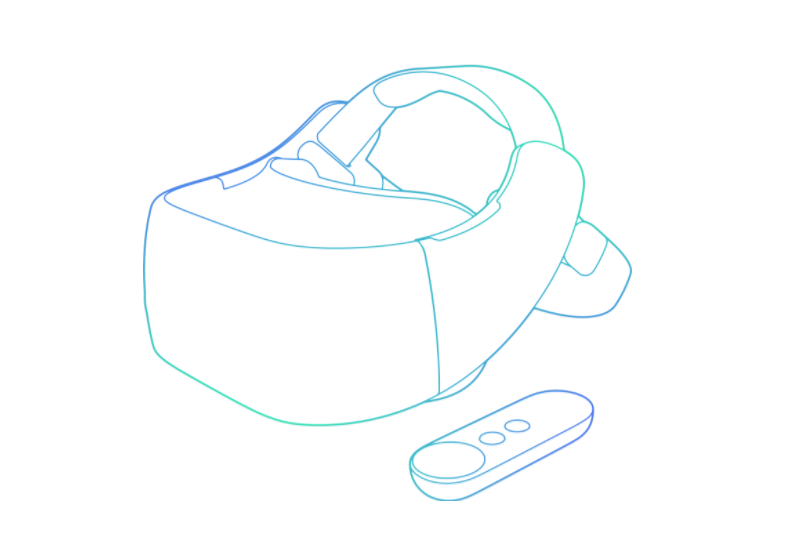
Google_VR_Standalone_Headset

Google announces standalone Daydream VR headsets

Written by Joseph Nordqvist

Published: 23:47, May 17, 2017

Google announced that it is working with HTC and Lenovo to launch standalone Daydream virtual reality (VR) headsets later this year.

Daydream is Google’s VR platform for smartphones and standalone headsets.

The standalone VR headsets will be based on Qualcomm’s 835 VR platform and use WorldSense, a new technology that understands movement in space without the need to set up any external sensors.

Google_DayDream_VR

“The whole device is designed just for VR,” Clay Bavor, Google’s head of VR, was quoted by the FT as saying.

“Getting into VR is as easy as picking the thing up,” he said. “By building every part of the device specifically for VR, we’ve been able to optimise everything . . . to give a stronger sense of being transported.”


“We are thrilled to once again work with Google and offer a powerful premium Snapdragon experience for devices on the Daydream platform,” said Keith Kressin, senior vice president, product management, Qualcomm Technologies, Inc.

“Our companies share the same vision: to make it possible for everyone to enjoy rich and immersive VR experiences on a smartphone device or a dedicated VR head-mounted display while being fully mobile, rather than being restricted by cables or limited to predefined rooms setup for outside-in tracking.”

Google’s Clay Bavor said:

“The Daydream standalone headset reference design created in close partnership with Qualcomm will enable manufacturers to build a whole new category of VR devices.

“These headsets have everything needed for VR, built right into the headset itself and are as easy to use as picking them up. They’ll feature WorldSense for positional tracking right out of the box without any external equipment. We’re thrilled that headsets will begin to hit shelves later this year.”

Joseph Nordqvist Avatar

Other News

What makes a product vintage, and why the distinction matters to retailers

Nov 15, 2026

EU business social media use rises, but a gap remains by company size

Nov 15, 2026

Why startups may benefit from testing locally before expanding abroad

Nov 14, 2026

Novel product ideas can be harder to try but more rewarding afterward

Nov 14, 2026

What is in an online cart can influence whether shoppers check out

Nov 14, 2026

Subscription plans can miss customers who would save money, Lyft research finds

Nov 14, 2026

Workers with worse shifts than their colleagues were more likely to leave, restaurant study finds

Nov 14, 2026

More product options do not always reach more customers, cosmetics study finds

Nov 14, 2026

EU household spending grew in 2025 as communication purchases led gains

Nov 13, 2026

Ad experiments can help predict which campaigns drive additional sales

Nov 13, 2026

Browser choice screens lifted Firefox usage in Europe, researchers find

Nov 13, 2026

Online product rankings can cut shipping costs without reducing sales, experiment finds

Nov 13, 2026

Large companies lead EU service exports, but smaller firms dominate in some markets

Nov 13, 2026

Cart reminder timing is linked to different shopper responses

Nov 12, 2026

AI labels changed how consumers judged food images in three experiments

Nov 12, 2026

Shared AI tools were linked to higher sales for small online sellers

Nov 12, 2026

An image ad people like may not be the one they remember

Nov 12, 2026

Upfront rental prices changed competition as nightly rates rose in a study

Nov 12, 2026

Showing payment options earlier can influence online purchase decisions

Nov 11, 2026

Cash-back offers for positive reviews brought more responses but fewer repeat purchases

Nov 11, 2026