
Instagram_Feed

Instagram adopting ‘interest’ based feed, ditching reverse chronological order

Written by Joseph Nordqvist

Published: 02:07, March 17, 2016

Instagram said that it will be reorganising users’ feeds by prioritising posts it thinks users will find the most interesting (based on their interests).

The move means that Instagram will no longer display content in reverse chronological order.

Instagram said that it believes the new Facebook-style feed is the best option for its users:

“You may be surprised to learn that people miss on average 70 percent of their feeds. As Instagram has grown, it’s become harder to keep up with all the photos and videos people share. This means you often don’t see the posts you might care about the most.

“To improve your experience, your feed will soon be ordered to show the moments we believe you will care about the most.”
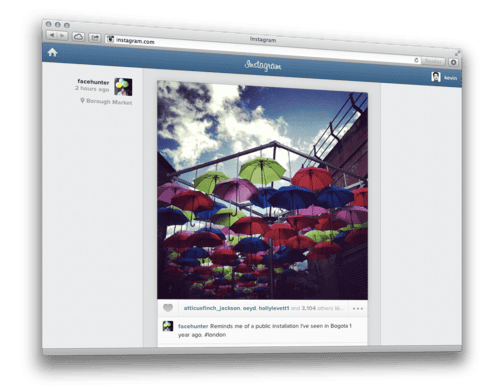
Instagram_Feed

According to Instagram, the order of photos and videos in a feed will be “based on the likelihood” that the user will be interested in the content, their relationship with the person posting and the timeliness of the post – similar to how Facebook displays its users’ timelines.

“As we begin, we’re focusing on optimising the order — all the posts will still be there, just in a different order,” the company said.

Adding:

“If your favorite musician shares a video from last night’s concert, it will be waiting for you when you wake up, no matter how many accounts you follow or what time zone you live in. And when your best friend posts a photo of her new puppy, you won’t miss it.

“We’re going to take time to get this right and listen to your feedback along the way. You’ll see this new experience in the coming months.”

Instagram says that the change will not have a significant impact on advertisers.

A spokesperson was quoted by The Drum as saying that “changes to the feed will not impact ad delivery — frequency and order will stay the same.”

Joseph Nordqvist Avatar

Other News

Boehringer Ingelheim’s Mexico City expansion targets 5 billion tablets a year

Aug 2, 2026

Why more accurate AI forecasts don’t always make better investment decisions

Aug 1, 2026

The AI boom is inheriting the geography of America’s old energy economy

Jul 31, 2026

Brands scale AI investment as consumers place greater value on reliability, survey finds

Jul 30, 2026

Customers may praise products they helped create even when they fail

Jul 30, 2026

Study links Uber and Lyft to higher local GDP, but overall job effects remain unclear

Jul 30, 2026

Why some industrial parks create thousands of jobs while others create almost none

Jul 29, 2026

Solar farms meet farming as AI robots work beneath the panels

Jul 28, 2026

Simple chemical treatment could make recycled car plastic almost as strong as new

Jul 28, 2026

Leaf spray could give farmers another tool against salty soil

Jul 28, 2026

Product recalls were linked to lower reported tax rates near year-end

Jul 27, 2026

Land degradation is linked to billions in lost farm output

Jul 26, 2026

Chile’s mining disruption exposes a hidden risk in the AI supply chain

Jul 26, 2026

Bad customer matching can make a profitable ad campaign look like a failure

Jul 26, 2026

1% of resumes contain hidden prompts to trick AI hiring tools

Jul 25, 2026

One fund transaction may have sent the wrong signal about bond investors

Jul 25, 2026

How Kuwait is raising $7.85 billion without selling its pipelines

Jul 25, 2026

Why Gruyère makers would rather make less cheese than cut prices

Jul 25, 2026

Consumer distrust grows twice as fast as trust, study finds

Jul 25, 2026

Autonomous vehicles may become mainstream in mines before they do on public roads

Jul 25, 2026