
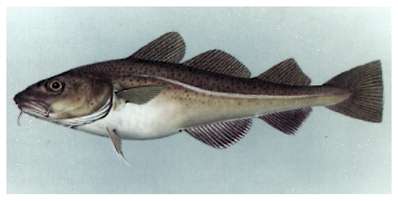
 The UK Marine Conservation Society’s (MCS) has removed North Sea cod off its list of fish to avoid eating.
Strict catch controls were introduced in 2006 after overfishing pushed the cod population down to an alarmingly low level, but after years of hard work its population has climbed back up to a more sustainable level.
“It’s fantastic to see this fishery finally off the red list. Years of sacrifice and a lot of hard work have led to population increases above dangerously low levels. Whilst this certainly is a milestone for North Sea cod, the job is not done yet. Efforts of recent years need to continue in order for the fishery to head towards the green end of the spectrum,” says MCS Fisheries Officer, Samuel Stone.
“It is encouraging to see this change in scoring from the MCS,” the council’s North Atlantic director, Toby Middleton, said. “The signs of improvement are there.”
According to Oceana, the population may not ever recover from its peak level of the 1970s and early 1980s though.
Fishermen from Denmark, Norway and the UK are to blame for overfishing in the region.
Nine other cod stocks still at risk
Despite this improving news for North Sea cod, there are still nine other cod stocks in the north east Atlantic that are red rated by MCS: Celtic Sea, Faroes Plateau, Faroes Bank, Irish Sea, Kattegat, Norwegian Coast, Rockall, West of Scotland, and West Baltic.
“These nine cod stocks now need some of the attention that North Sea cod has had over the last decade in order to turn things around,” says Samuel Stone. “Whilst these stocks are far smaller than the North Sea stock, they still play a very important role in the local marine ecosystem and greater efforts are needed to recover these stocks.”
Rukayah Sarumi, Oceans campaigner at Greenpeace UK, said: “The government needs to start rewarding those who fish in a sustainable way by putting them at the front of the queue for fishing quota, instead of continuing to let the industry’s biggest players plunder our seas.”
“Cod lives close to the ocean floor and so it was particularly affected by bottom trawling, which is the most destructive type of fishing,” said Lasse Gustavsson, Oceana’s executive director. “When you drag a huge net along the sea floor, you plough it up and catch everything there. Selective fishing is not an option in those circumstances.”
Cod is the most imported species into the UK representing 18.7% of fish imports.
