
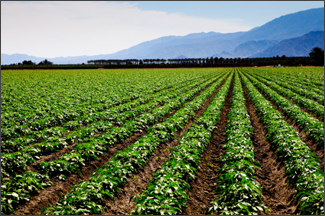
Crops_325

Northern Ireland bans GM crops

Written by Joseph Nordqvist

Published: 02:12, September 22, 2015

Crops_325

Northern Ireland has just banned the growing of genetically modified (GM) crops.

Mark H Durkan, Stormont’s environment minister, said that he was “unconvinced of the advantages” of GM crops, adding that his decision would be in effect for the “foreseeable future”.

Earlier this year the European Union said that its member states could make their own decisions on the issue. Each regional assembly within the UK is making their own.

Scotland already banned GM crops in August and Wales says that it is maintaining “a restrictive and precautionary approach to GM crop cultivation”.

GM crops are not grown commercially across Britain. However, there are imported GM commodities used for animal feed and in food products.

According to Durkan, the small size of farms in Northern Ireland could result in “potential difficulties if we were to seek to keep GM and non-GM crops separate”.

The costs associated with dividing GM from non-GM would be impractical and expensive.

He said: “Further, we are rightly proud of our natural environment and rich biodiversity,”

“We are perceived internationally to have a clean and green image. I am concerned that the growing of GM crops, which I acknowledge is controversial, could potentially damage that image.”

England said it will allow GM crops to be planted and marketed if a “robust risk assessment indicates that it is safe for people and the environment”.

The world’s main producers of GM crops are the USA, Argentina, and Brazil. The most common GM crops are maize and soya. There are currently eighteen million farmers across 28 nations growing GM crops on 181 million hectares.


Joseph Nordqvist Avatar

Other News

Safety reminders reduce unsafe choices in a clinical AI study

Oct 10, 2026

VEIR raises $110 million for superconducting data-center power systems

Oct 10, 2026

EU prepares €52.5 million in calls to help research reach the market

Oct 10, 2026

France secures EU approval for €40.5 million in fuel-cost loan schemes

Oct 10, 2026

EU selects 46 new projects for critical mineral supplies

Oct 10, 2026

Why a port disruption can reach factories far inland

Oct 10, 2026

Sorghum could diversify Europe’s feed crops as the climate warms

Oct 10, 2026

X-ray snapshots reveal how an enzyme builds penicillin’s rings

Oct 9, 2026

Thyssenkrupp opens Pune engineering center focused on vehicle software

Oct 9, 2026

Malaysia plans RM2,000 minimum wage with relief for smaller firms

Oct 9, 2026

Airtel Money’s London flotation puts its payments business in focus

Oct 9, 2026

More US families face heavy debt payments despite rising wealth

Oct 9, 2026

Can bikes and scooters make everyday city travel cheaper?

Oct 8, 2026

Workplace wearables: the safety promise and the privacy risk

Oct 8, 2026

International experience can help business leaders, but the fit matters

Oct 8, 2026

Housing costs and family plans: owners and renters face different pressures

Oct 8, 2026

Women in male-dominated finance workplaces report less comfort admitting mistakes

Oct 8, 2026

Second Nature Brands brings Voortman onto shared SAP platform

Oct 8, 2026

Why cloud bills can grow faster than companies expect

Oct 7, 2026

Why empty offices affect more than landlords

Oct 6, 2026