
Last month, electricity produced by mainland Portugal’s renewables exceeded demand, according to figures released by the country’s transmission system operator, Redes Energéticas Nacionais (REN).
The figures for mainland Portugal show that in March 2018, electricity from renewable sources amounted to 4,812 GWh, accounting for 103.6 percent of consumption, which totalled 4,647 GWh.
These amounts exclude electricity production and consumption for the islands of the Azores and Madeira.
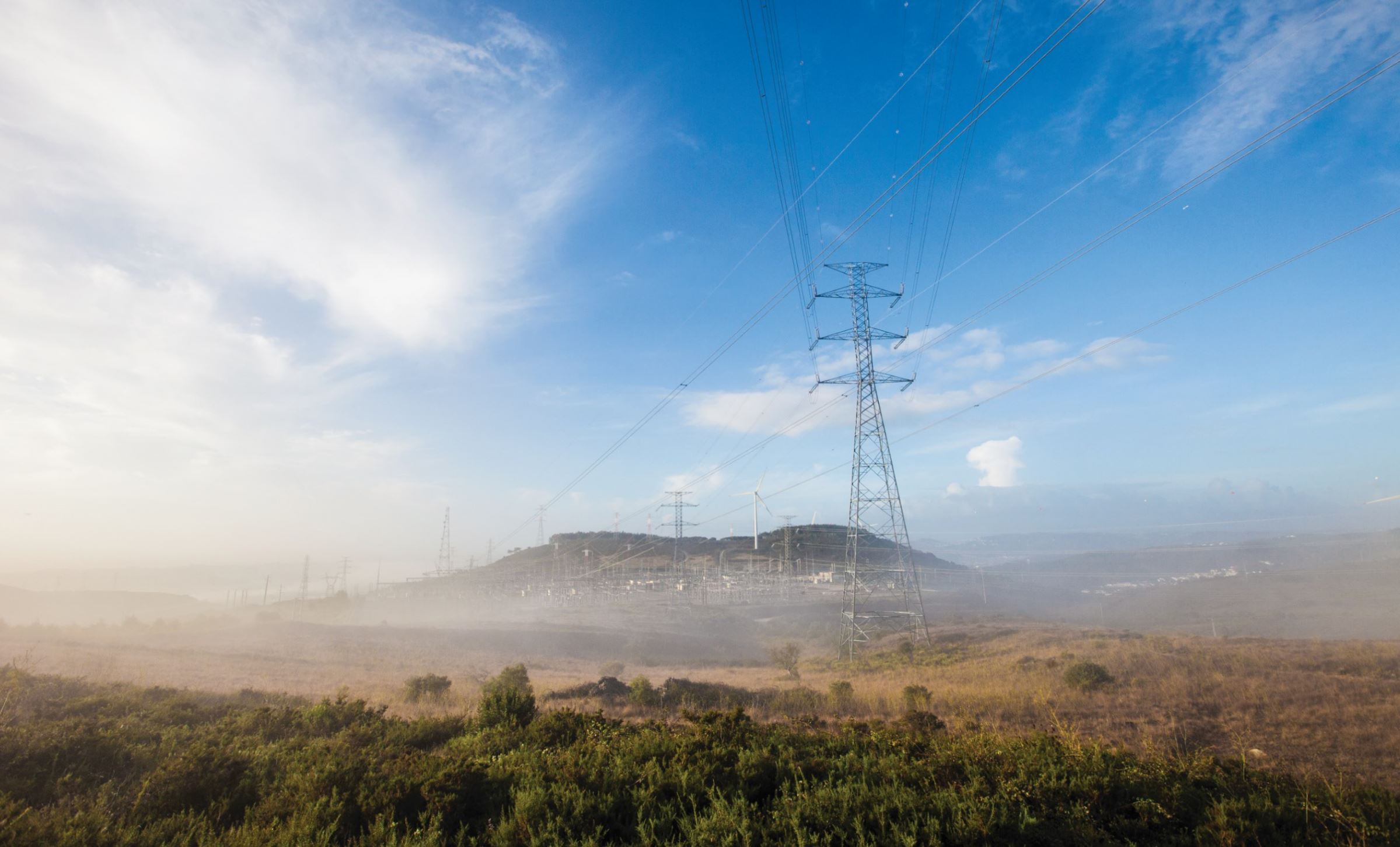
 In March 2018, mainland Portugal produced more electricity from renewables, such as hydro and wind power, than it consumed. Image: REN
The announcement was made recently by the Portuguese Renewable Energy Association (APREN), whose associates represent more than 90 percent of Portugal’s installed renewable energy capacity.
Hydro and wind accounted for 97 percent
Mainland Portugal’s renewables comprise mainly two sources: hydropower and wind power. Last month, these two sources accounted for 55 percent and 42 percent of the total electricity produced from renewables.
APREN explain that while the total amount of electricity produced from mainland Portugal’s renewables was more than that consumed in the month, there were some periods during which it was necessary to fill some gaps with electricity sourced from fossil fuels or imports.
However, these periods were “fully compensated by others of greater renewable production,” they note.
Day-to-day figures reveal that the share of consumption met by mainland Portugal’s renewables fell to a minimum of 86 percent on March 7, and were at a maximum of 143 percent on March 11.
In addition, there were two periods – each lasting nearly 3 days – during which consumption “was fully assured” by renewable energy sources.
One period, that started on March 9 lasted 70 hours, and the other, lasting 69 hours, started on March 12.
EU emission allowance saving of 21 million euros
As a member of the European Union (EU), Portugal participates in the EU’s Emissions Trading System (ETS) for trading greenhouse gas allowances.
The ETS is the world’s largest carbon market. It which works on the principle of “cap and trade” and operates in all 28 EU countries, plus Iceland, Liechtenstein, and Norway.
The system limits greenhouse gas emissions from more than 11,000 power stations and industrial plants in the 31 countries, and also from airlines that operate between them.
The greenhouse gas emissions from these sources account for some 45 percent of the EU total. The idea is that total emissions in the system come down over time as the cap is gradually reduced.
Each year, the energy companies in the system must “surrender” enough emissions allowances to cover their total emissions. If they do not, they have to pay big fines.
The effect of March’s production of electricity from mainland Portugal’s renewables meant that the country avoided producing emissions amounting to 1.8 million tons of CO2.
Avoiding this amount of emissions translates to a saving of 21 million euros in emission allowance.
Reduction in energy price
The impact of March’s high share of renewables also brought down the market’s average daily wholesale price to 39.75 euros per MWh.
This is a 9.5 percent reduction on the 43.94 euros per MWh price for the same period last year, when renewables accounted for only 62 percent of consumption.
“Last month’s achievement,” APREN predict, “is an example of what will happen more frequently in a near future.”
They anticipate that, by 2040, electricity from renewables will “guarantee, in a cost-effective way,” the total annual consumption of for mainland Portugal, with occasional use of natural gas power plants.
