
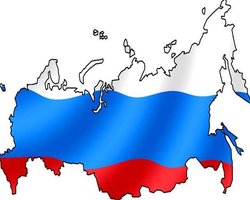
Russia increases key interest rate to 9.5%, addressing inflation

Written by Joseph Nordqvist

Published: 01:24, November 1, 2014

Russia’s central bank has increased its key interest by 1.5%, from 8% to 9.5%, in an attempt to address the country’s inflation problem. The new rate will take effect on November 5.

The increase was higher than what most analysts had forecast, of approximately 0.5%.

Russia has suffered from increasing inflation with a weak ruble and sanctions affecting western food imports.

At the beginning of 2014 the key interest rate was 5.5%. Russia has been increasing the rate to try and tackle inflation, however, it has not worked yet.

According to the Russian central bank:

“If external conditions improve, and a persistent trend for lowering inflation and inflation expectations emerges, the Bank of Russia will be ready to start to ease its monetary policy,”

The bank said that inflation is at 8.4%, and it predicts it will be above the 8% level until the end of March.

Russian economic growth is also looking gloomy and it is not expected to grow at all in the final three months of the year and first quarter of 2015.

EU accused Russia of levying tariffs too high

russia eu

The European Union recently challenged Russia at the World Trade Organization (WTO), claiming that the country was levying tariffs on a wide range of goods that were much higher than permitted.

Joseph Nordqvist Avatar

Other News

Motorola Solutions completes $1.5 billion D-Fend counter-drone acquisition

Aug 23, 2026

Beacon Fen secures consent for 400 MW Lincolnshire solar project

Aug 23, 2026

BJ’s raises profit outlook as gasoline boosts second-quarter sales

Aug 23, 2026

EU battery passport guidance gives companies a 71-point compliance map

Aug 23, 2026

CoStar completes $800 million Zonda acquisition to expand into new-home data

Aug 23, 2026

UK borrows £1.8 billion in July as spending runs above forecast

Aug 22, 2026

WhiteFiber closes $310 million note sale, but AI data center expansion still needs more funding

Aug 22, 2026

Driverless taxis still need workers, and that may shape robotaxi economics

Aug 22, 2026

Why the rare earth bottleneck comes after the mine

Aug 22, 2026

Could offshore wind farms change how much rain falls on Europe?

Aug 22, 2026

Why keeping medicines cool has become big business

Aug 22, 2026

Why airlines rent spare jet engines instead of buying more

Aug 22, 2026

Why merger cost savings do not always reach consumers

Aug 22, 2026

Repeated choices can strengthen later preferences, study finds

Aug 22, 2026

Why the colleague who uses AI may gain an advantage at work

Aug 22, 2026

UK business activity strengthens in August despite continued services job cuts

Aug 22, 2026

Micron plans $10 billion research network for next-generation memory

Aug 21, 2026

YMTC parent seeks 33 billion yuan in Shanghai IPO after profit surge

Aug 21, 2026

Mitsubishi Electric agrees $1.4 billion deal for US power-market software group PCI

Aug 21, 2026

Why a strong ESG reputation can make a downgrade hurt more

Aug 21, 2026