

The Sicilian mafia emerged in the 1800s as a result of a surge in public demand for lemons and oranges, according to research led by Queen’s University Belfast in Northern Ireland.
In a paper published in the Journal of Economic History, Dr. Arcangelo Dimico, who lectures in economics at Queen’s Management School, and his colleagues describe the Sicilian mafia as “arguably one of the most infamous institutions in the Western world.”
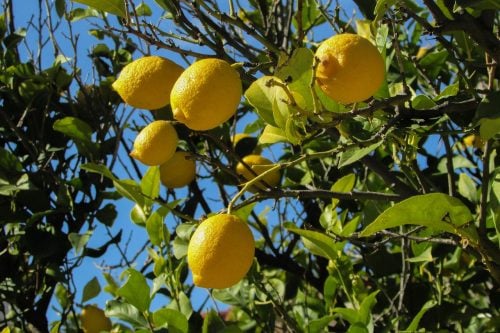 Demand for lemons surged in the early 1800s as they became widespread as a treatment for scurvy. pixabay-1878505
Their research suggests that the notorious institution first came to prominence in Sicily in the 1870s and soon after, spread into the economics and politics of Italy and of the United States, to the extent that they posed “a serious threat to the rule of law in both countries.”
“Although,” they note, “outcomes of the mafia’s actions such as murders, bombings, and embezzlement of public money have been observed during the last 140 years, the reasons behind its emergence are still obscure.”
Rise in demand for lemons to prevent scurvy
After studying two unique sources of data that were gathered during public enquiries that covered several towns and districts in Sicily during the late 19th and early 20th centuries, they found that the presence of the Sicilian mafia in the 1880s was strongly linked to a boom in citrus growing.
The boom was a response to a rise in international demand for lemons – which started to rise in the late 1700s – as their use became widespread as a standard treatment for preventing scurvy, a disease that occurs when the body does not have enough vitamin C.
In the 1800s, Sicily dominated the international market for citrus fruits, and the rise in public demand swelled revenues, guaranteeing high profits for relatively few citrus growers.
The island’s agricultural conditions were ideal for growing citrus fruits – it had a mild climate with a temperature that varied little over the year, and an abundant water supply.
Citrus producers became ‘targets for predation’
The researchers suggest that a combination of factors – such as high profits, lack of trust, weak law enforcement, and high levels of local poverty – meant that citrus producers became “targets for predation.”
So, the orange and lemon growers resorted to hiring mafia members to protect themselves and their crops and to act as their go-betweens between the sellers and exporters at the ports.
The study is significant because it challenges the idea that the Sicilian mafia arose from a combination of political instability and the failure of the feudal system to provide a strong institutional setting.
The new findings propose for the first time, that actually, the Sicilian mafia rose to power as a result of an economic boom.
“We claim that the economic boom in international citrus demand, and the subsequent rise of Sicilian exports during the 19th century, are key factors behind the rise of mafia,” note the researchers.
