
640px-1_Singapore_city_skyline_2010_day_panorama

Singapore plans on deploying autonomous buses on public roads by 2022

Written by Joseph Nordqvist

Published: 06:04, November 24, 2017

Singapore plans on deploying autonomous buses on public roads by 2022.

The aim is to provide better connectivity for residents, the country’s Ministry of Transport said in a statement on Wednesday.

The full-sized driverless buses, measuring 12 meters long, can accommodate about 80 passengers and are equipped to charge at a bus stop or depot.

They will initially be tested on less crowded roads in the Jurong West region alongside human-driven public buses during off-peak hours.

The trial is a collaboration between the Land Transport Authority and Nanyang Technological University (NTU).
640px-1_Singapore_city_skyline_2010_day_panorama
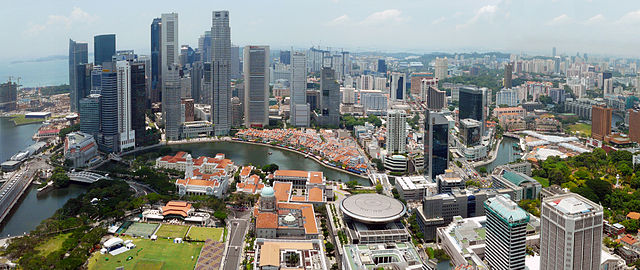
Singapore is one of the most densely populated countries in the world.

“AV technology will transform urban mobility, how we move about in the city. It is especially promising for Singapore because it can help alleviate the tight land and manpower limits that currently constrain our land transport system,” Transport Minister Khaw Boon said during a launch event.

“We expect that the autonomous vehicles will greatly enhance the accessibility and connectivity of our public transport system, particularly for the elderly, families with young children, and the less mobile.”

“Our land transport constraints may help us become a global player in urban mobility solutions. What works here is likely to also work in other cities,” said Mr Khaw.

Mr Khaw said that there are least 10 companies currently testing autonomous vehicle technology in Singapore

“Current efforts worldwide have been focused on cars,” NTU’s vice president of research Professor Lam Khin Yong told Channel NewsAsia. “So, this autonomous bus trial is the first of its kind in Singapore that will aim to improve road safety, reduce vehicle congestion, alleviate pollution and address manpower challenges.”

Joseph Nordqvist Avatar

Other News

When the next generation doesn’t want the family business

Oct 11, 2026

Cleveland Fed survey finds businesses unconvinced by stablecoins

Oct 11, 2026

Costs hold back commercial heat pump upgrades, California study finds

Oct 11, 2026

Rein Security raises $25 million to protect enterprise AI agents

Oct 11, 2026

Foreign trips take most of EU residents’ travel spending

Oct 11, 2026

Irish inflation rises to 4.1% as housing and transport costs climb

Oct 11, 2026

Safety reminders reduce unsafe choices in a clinical AI study

Oct 10, 2026

VEIR raises $110 million for superconducting data-center power systems

Oct 10, 2026

EU prepares €52.5 million in calls to help research reach the market

Oct 10, 2026

France secures EU approval for €40.5 million in fuel-cost loan schemes

Oct 10, 2026

EU selects 46 new projects for critical mineral supplies

Oct 10, 2026

Why a port disruption can reach factories far inland

Oct 10, 2026

Sorghum could diversify Europe’s feed crops as the climate warms

Oct 10, 2026

X-ray snapshots reveal how an enzyme builds penicillin’s rings

Oct 9, 2026

Thyssenkrupp opens Pune engineering center focused on vehicle software

Oct 9, 2026

Malaysia plans RM2,000 minimum wage with relief for smaller firms

Oct 9, 2026

Airtel Money’s London flotation puts its payments business in focus

Oct 9, 2026

More US families face heavy debt payments despite rising wealth

Oct 9, 2026

Can bikes and scooters make everyday city travel cheaper?

Oct 8, 2026

Workplace wearables: the safety promise and the privacy risk

Oct 8, 2026