
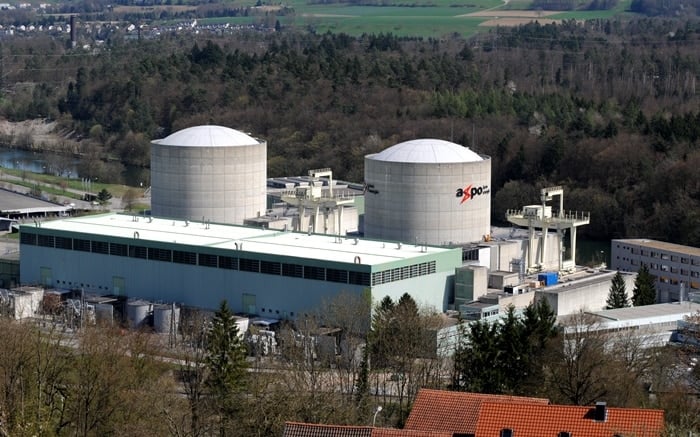
In a recent referendum, Switzerland’s voters said no to an earlier phase-out of nuclear power.
On Sunday, 54.5 percent of voters and an overwhelming majority of cantons voted against closing Switzerland’s nuclear power plants after 45 years of running and banning the building of new ones.
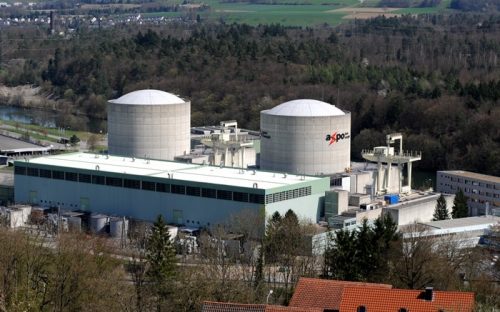 Built in 1969, Beznau I in Switzerland is the oldest nuclear reactor in the world. Image: ENSI
Switzerland is heavily dependent on nuclear power. Accounting for over a third of electricity production, nuclear power is second only to hydropower, which provides just over half.
A yes vote to earlier nuclear phase-out would have forced closure next year of three of the country’s five plants – Beznau I and II (in canton Aargau) and Mühleberg (Bern) – and closure of the other two – Gösgen (Solothurn) and Leibstadt (Aargau) – in 2024 and 2029 respectively.
The oldest reactor – Beznau I – was built in 1969, and following the closure of Britain’s Oldsbury reactor in 2012, is now the oldest nuclear reactor in the world.
The resultant no vote to earlier nuclear phase-out means Switzerland’s five aging reactors can continue to operate to the end of their economic lives, as long as deemed fit by the regulators.
Unlimited operating licences
All the Swiss nuclear reactors – except Mühleberg – have unlimited operating licences, which are subject to approval by ENSI, the Swiss Federal Nuclear Safety Inspectorate.
In 2010, plans were in place to replace Switzerland’s nuclear plants with new ones, following a referendum in favour of the plans and confirmation by regulators that the sites chosen were suitable.
However, three months after the Fukushima Daiichi disaster in March 2011, the Swiss government decided to gradually decommission its nuclear plants, but did not set a clear timeline – estimated to be sometime during the 2030s and 2040s.
Opposers of campaign said rapid closure too risky
Sunday’s referendum was called after a campaign by the Green Party gathered more than the 100,000 signatures required to put the issue to the popular vote under Switzerland’s direct democratic system.
Supporters of the Green Party’s case for earlier nuclear phase-out argue the advanced age of Switzerland’s nuclear reactors – they are amongst the oldest in the world – makes them dangerous and raises the risk of a nuclear accident. They say they should be closed once they reach 45 years of age.
Before the vote, the government and industry voiced their opposition to the earlier nuclear phase-out, saying that closing Switzerland’s nuclear power stations so rapidly was risky.
They said it would leave a gap in electricity supply that could not be met by renewables and could lead to power outages. It could also force the country to make up the shortfall by importing.
However, Regula Rytz, president of the Green Party, reportedly told SRF television that the referendum vote has not solved the problem, and promises that they “will keep at it,” emphasizing their case on grounds of safety and financial security.
