
Tesla Model3

Tesla aims to build 500,000 all-electric cars by 2018

Written by Joseph Nordqvist

Published: 03:45, May 5, 2016

Tesla Motors plans on seriously ramping up production of its fully-electric vehicles.

The company said that it would aims to build a total of 500,000 all-electric cars every year starting in 2018 – a goal originally slated for 2020.

Tesla said the 500,000-unit production goal includes Model S, Model X, and Model 3 – which will launch for $35,000 by late 2017.

The new target would boost production to a faster growth rate than Ford Motor Co. managed to achieve in the early 1900s.
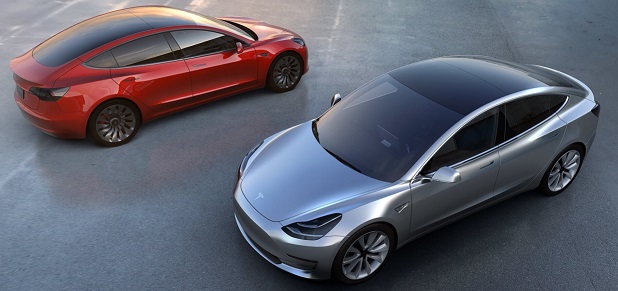
Tesla Model3
The Tesla Model 3 has a range of 215 miles per charge and boasts a 0-60 mph time of under 6 seconds.

“Given the demand for Model 3, we have decided to advance our 500,000 total unit build plan (combined for Model S, Model X, and Model 3) to 2018, two years earlier than previously planned,” Tesla said.

“Increasing production five fold over the next two years will be challenging and will likely require some additional capital, but this is our goal and we will be working hard to achieve it.”

Tesla will invest over $2 billion on production capacity this year – $750 million more than initially planned – to meet customers’ demand.

Elon Musk said late last month that Tesla had received nearly 400,000 orders for the Model X – its first car aimed at the mass market, starting at $35,000.


“Naturally, this will impact our ability to be net cash flow positive for the year, but given the demand for Model 3, investing to meet that demand is the best long-term decision for Tesla,” Musk said.

Tesla reported a first-quarter net loss of $282 million or $2.13 per share, from $154.2 million, or $1.22 per share, a year earlier. The company delivered 14,820 vehicles in the quarter – 12,420 Model S sedans and 2,400 Model X SUVs – short of the its target of 16,000.

Revenue increased to $1.15 billion from $939.9 million.

Joseph Nordqvist Avatar

Other News

A bank tested AI customer twins for marketing, with mixed lessons for businesses

Nov 15, 2026

What makes a product vintage, and why the distinction matters to retailers

Nov 15, 2026

EU business social media use rises, but a gap remains by company size

Nov 15, 2026

Why startups may benefit from testing locally before expanding abroad

Nov 14, 2026

Novel product ideas can be harder to try but more rewarding afterward

Nov 14, 2026

What is in an online cart can influence whether shoppers check out

Nov 14, 2026

Subscription plans can miss customers who would save money, Lyft research finds

Nov 14, 2026

Workers with worse shifts than their colleagues were more likely to leave, restaurant study finds

Nov 14, 2026

More product options do not always reach more customers, cosmetics study finds

Nov 14, 2026

EU household spending grew in 2025 as communication purchases led gains

Nov 13, 2026

Ad experiments can help predict which campaigns drive additional sales

Nov 13, 2026

Browser choice screens lifted Firefox usage in Europe, researchers find

Nov 13, 2026

Online product rankings can cut shipping costs without reducing sales, experiment finds

Nov 13, 2026

Large companies lead EU service exports, but smaller firms dominate in some markets

Nov 13, 2026

Cart reminder timing is linked to different shopper responses

Nov 12, 2026

AI labels changed how consumers judged food images in three experiments

Nov 12, 2026

Shared AI tools were linked to higher sales for small online sellers

Nov 12, 2026

An image ad people like may not be the one they remember

Nov 12, 2026

Upfront rental prices changed competition as nightly rates rose in a study

Nov 12, 2026

Showing payment options earlier can influence online purchase decisions

Nov 11, 2026