
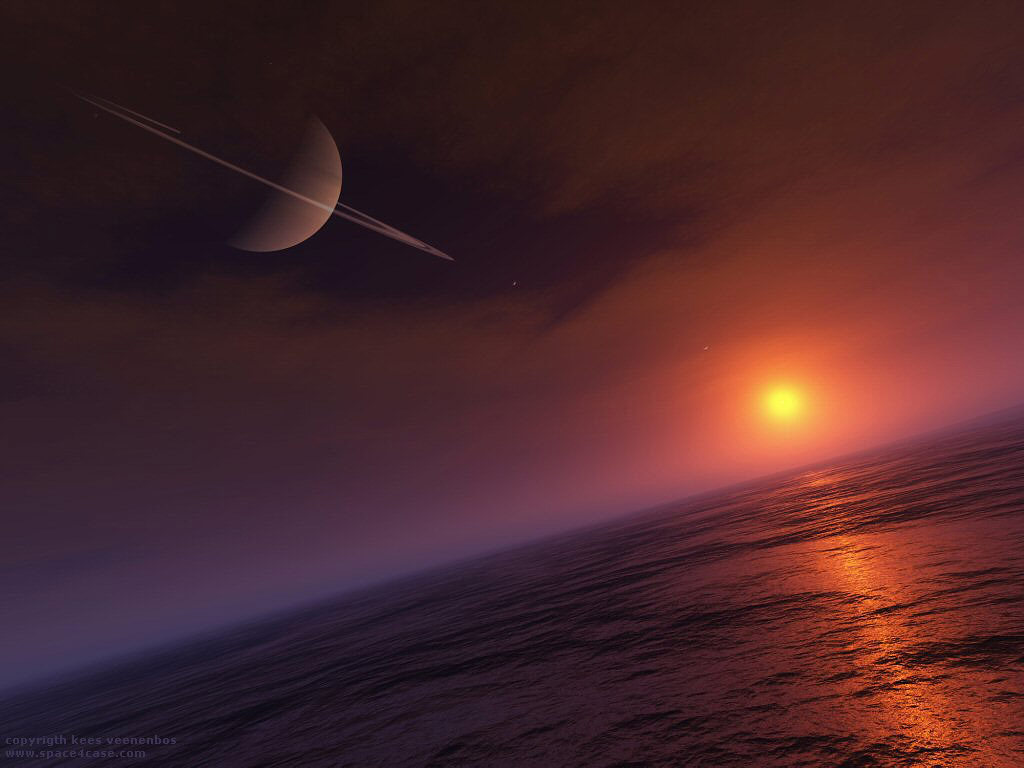
An amazing submarine has been designed by NASA scientists to explore one of the large lakes in Titan, the largest of several moons that orbit Saturn.
Titan is the only celestial object in our solar system where clear evidence of stable bodies of surface liquid has been identified.
The scientists would like to have their sub-aquatic vehicle travelling to Titan within the next 25 years.
The unmanned spacecraft Cassini detected several bodies of liquid on Titan when it orbited Saturn in 2007, the largest being Kraken Mare. That is where NASA plans to submerge the submarine.
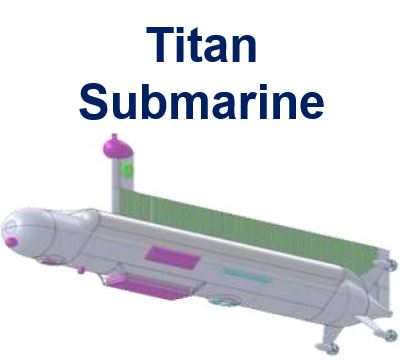
The aquatic drone could be exploring the Kraken Mare in Titan by the year 2040. (Image: NASA)
According to Cassini data, Kraken Mare is up to 160 meters deep and has small waves.
The autonomous submarine or aquatic drone should have the capacity to cover 2,000 kilometers during its 90-day stay in the lake. It will weigh about 1 tonne and has been designed according to features present in today’s drones used on Earth.
How will the sub transmit data back to Earth?
However, it will be slightly different from Earth aquatic drones. It will need to send messages over a distance of more than one billion miles to Earth, given that there will be no orbiter above Titan.
The scientists have decided that the Titan sub will only transmit messages when it is on the surface of the lake.
The team plan to incorporate a planar phased-array antenna into the vehicle’s dorsal fin. Even though this may be at the cost of some degree maneuverability, the researchers felt this was the best option.
The placement of the communication system also complicated where to fit the buoyancy control tanks.
While the aquatic drone is on the lake’s surface, a mast-mounted camera will be filming. Side-scan sonar will be mapping the lake’s floor while the submarine is under water, and a “benthic sampler” will scoop up sediments for analysis.
Titan’s environment is not the same as Earth’s
NASA is not sure what the lake consists of, but believes it is most likely a combination of methane, ethane and propane. The scientists predict mainly methane and propane. They are assuming that there is more of the heavier methane and have factored this greater density into the design of the aquatic probe.
It is cold enough there to condense Nitrogen into a liquid, which makes the filling of the buoyancy tanks quite a challenge for the research team.
Landing the drone on Titan is also tricky because submarines are not particularly aerodynamic. It has to withstand travelling at very high speed as it enters and then passes through the dense atmosphere, and then the splashdown impact.
NASA proposes packing the drone into a vehicle like the X-37 autonomous space plane, which is designed to land on water. After splashdown its cargo bay will open and the sub will be released.
The scientists at the Universities Space Research Association in Houston, wrote:
“The vehicle would use conventional propulsors to yaw around, using a sun sensor to determine the initial azimuth to Earth (Earth is always within 6° of the Sun as seen from Saturn) and begin communication, using a terrestrial radio beacon as a more precise reference.”
