
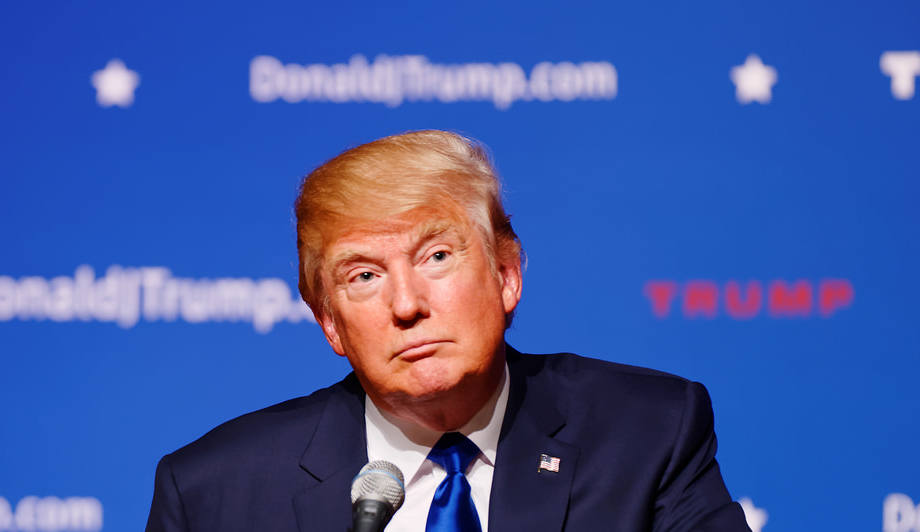
US President Donald Trump has ordered a review of the Dodd-Frank Wall Street Reform and Consumer Protection Act, an act that brought significant changes to financial regulation in the US.
Dodd-Frank was brought in following the 2008-09 financial crisis to avoid another meltdown.
Many in Wall Street view the regulations created by the Obama administration as being too restrictive and the Trump administration similarly argues that the regulations are overly-controlling.
Dodd-Frank introduced more transparency of derivatives, the prevention of financial institutions trading for their own benefit, and a tightening of regulation of credit rating agencies. It also created the Financial Stability Oversight Council, which identifies risks and promotes market discipline.
Democrat congressman Jim Himes, told the BBC:
“Dodd-Frank of course was the legislative response to the economic carnage that came about because of the financial meltdown of late 2008.
“Much of the legislation… is designed to get at those things which went horribly wrong, that is to say, problems in the mortgage market.”
But Trump argued that the rules and regulations in Dodd-Frank have made it harder for businesses to borrow money.
Trump said:
“We expect to be cutting a lot out of Dodd-Frank because frankly I have so many people, friends of mine, that have nice businesses and they can’t borrow money.
“The banks just won’t let them borrow because of the rules and regulations in Dodd-Frank.”
Press Secretary Sean Pricer, called the legislation “disastrous” during Friday’s press hearing:
“The Dodd-Frank Act is a disastrous policy that’s hindering our markets, reducing the availability of credit, and crippling our economy’s ability to grow and create jobs. It imposed hundreds of new regulations on financial institutions while establishing unaccountable and unconstitutional new agency that does not adequately protect consumers.
Perhaps worst of all, despite all of its overreaching, Dodd-Frank did not address the causes of the financial crisis, something we all know must be done. It did not solve the “too big to fail,” and we must determine conclusively that the failure of a large bank will never again leave taxpayers on the hook.”
News of the review on Friday sent bank shares higher, with Goldman Sachs and JP Morgan Chase rising by 4% and 3% respectively.
Gary Cohn, an adviser to Mr Trump and a former Goldman Sachs executive, told the Wall Street Journal that “banks are going to be able to price products more efficiently and more effectively to consumers.”
Market analysts believe that easing some of Dodd-Frank could help promote competition and allow small banks to compete better in the market.
Market analyst Jasper Lawler at the London Capital Group was quoted by the BBC as saying that “unwinding some of Dodd-Frank is a good thing because it will enable smaller community banks to compete, offering competition to consumers.”
Trump won’t be able to completely dismantle Dodd-Frank on his own as any big changes to the law must go through Congress. Nonehteless, the move represents a broad effort by the Trump administration to ease regulations on banks and other major financial companies.
