

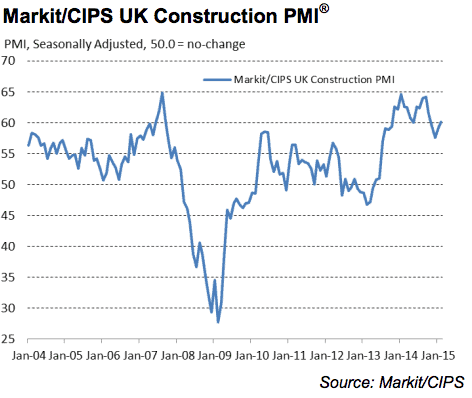
Construction growth in the UK surged to a four-month high in February, indicating that British buildings firms have recovered from the slowdown that hit the construction sector at the end of last year.
The Markit/CIPS UK construction purchasing managers’ index (PMI) increased by a full point to 60.1. The results are better than what analysts had expected – of a drop to 59.0
Housing, commercial, and civil engineering sectors all posted growth.
Chris Williamson, chief UK economist at Markit, said:
“The survey has recorded a remarkably strong spell of continuous growth since July 2013, fuelled initially by rising house building activity amid government incentives for home buyers but rapidly becoming more broad-based as the wider economic recovery took hold.”
“The latest data suggest that, while the pace of expansion has cooled since the peaks seen late last year, the recovery retains strong momentum.”
But William did say that growth is likely to cool off this year.
“The sector is likely to see weaker demand for building projects as some uncertainty sets in around the General Election and indicators such as the Knight Frank House Price Sentiment Index, which hit an 18-month low in February, suggest that the housing market is cooling, which may lead to lower residential construction.”
Tim Moore, senior economist at Markit commented that the survey highlights “renewed vitality” within Britain’s construction sector, as output growth picked up from the soft patch seen at the end of last year.
David Noble, Group Chief Executive Officer at the Chartered Institute of Procurement & Supply, said:
“The construction sector is awash with positive sentiment, rejecting wholeheartedly the downbeat end to last year, with the steepest rise in output activity for four months. The good fortune comes in threes – as respondents report a rise in staffing levels, higher levels of new orders and rising rates for sub-contractors.”
“Clients are ready to spend, resulting in rising employment levels, but tempered by continuing skills shortages now seen for a number of months. Subcontractors have been the winners; their rising rates evidence of continued demand for their capacity and the strongest since records began.”
A separate survey released on Monday revealed that the rate of British manufacturing expansion reached a seven-month high last month.
