
The UK’s inflation rate returned to a positive level in November, the first time in four months, up to 0.1% after a reading of minus 0.1% in October, according to the Office for National Statistics (ONS).
The ONS said that the main contributors to the rise in the Consumer Prices Index (CPI) was transport, alcohol, and tobacco.
The drop in energy prices had less of an affect on inflation in November compared to previous months.
Over the past nine months CPI has been between 0.1% and -0.1%, which means that households across Britain have experienced very little change in prices compared with the same months in 2014.
Contributions to the CPI 12-month rate: November 2014 and November 2015:
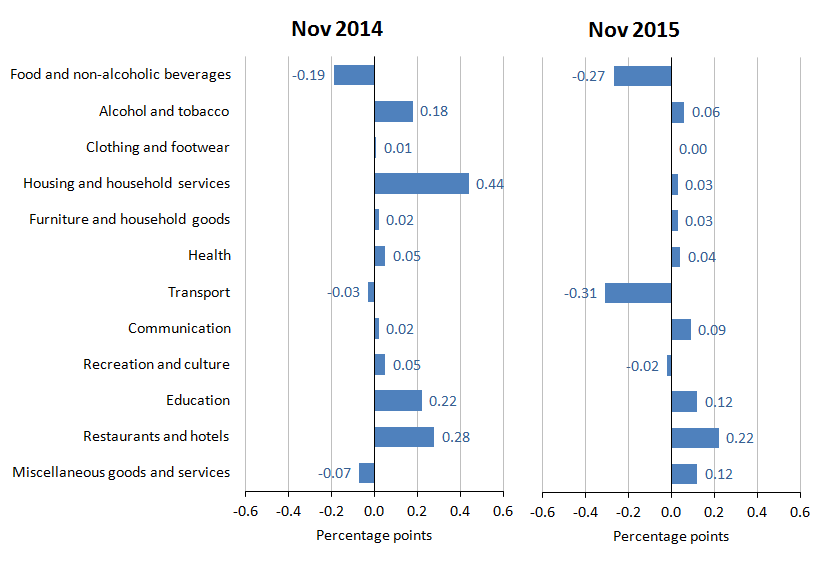
Source: UK Office for National Statistics
Inflation in the UK has been at its lowest level for the longest period on record and remains well below the the Bank of England’s 2% target.
Interest rates were left unchanged at at 0.5% by the central bank last week, with eight out nine on the Monetary Policy Committee voting for no change.
The BoE doesn’t expect inflation to reach 1% until the second half of 2016.
Maike Currie, associate investment director, Fidelity International, said: ‘Today’s move into positive territory is likely to be short-lived with the massive fall in oil prices and the supermarket discount wars likely to keep a lid on UK inflation as we head into 2016.
‘I expect UK CPI to continue see-sawing around the zero-mark for the near future.’
She added: ‘Persistently weak UK inflation means there is little incentive for the Bank of England to raise interest rates. I don’t expect UK interest rates to rise in 2016, and the pace of future rises is likely to be a lot slower too.’
“UK inflation remained largely absent in November, and looks set to remain weaker for longer than forecasters have recently been expecting,” said Chris Williamson. chief economist at data firm Markit.
“Falling prices for oil and other commodities are helping drive down companies’ costs.
“Weak wage pressures and fierce competition in the retail sector are also helping keep a lid on prices. Hence clothing prices showing a record fall between October and November.”
