
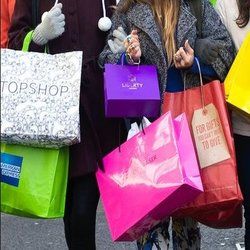
On a like-for-like basis, UK retail sales increased by 1.3% from August last year, when they had risen by 1.8% on the previous year. Sales in August 2014 were 2.7% up on a total basis, compared to a 3.6% rise in August 2013.
Last month’s performance was the best since January 2014 (excl. Easter distortions), according to the “BRC-KPMG Retail Sales Monitor August 2014″.
Much of the growth was due to a sharp rise in Clothing & Footwear sales, which posted its steepest gain since December 2011.
Food, on the other hand, which posted a new record low 3-month average decline, was the worst performer. Over a 3-month period ending in August, food sales fell by 1.6%, but grew by 0.1% compared to August 2013.
Non-Food sales increased by 3.9% during the 3-month period to August, a similar figure to its 12-month average.
Online shopping surged
The growth in online shopping continues apace. Non-food online sales in August were 19.8% higher than in August 2013, the highest increase ever posted.
In August, online sales (non-food) represented 16.5% of total sales, 1.7 percentage points higher than in August last year.
Helen Dickinson, Director General, British Retail Consortium, said:
“August has recorded the strongest growth in retail sales since January this year, excluding Easter distortions, accelerating to 2.7 per cent. This was driven in the main by the best growth of clothing and footwear since December 2011, indicating a higher level of consumer confidence in the economy. Retailers have pointed to the successful launch of their autumn fashion collections helped by the cooler weather, as well as a good response to marketing campaigns for back to school clothing. Furniture sales also did well as the strength of the housing market continues although not as well as in July.”

Shoppers, however, continue to take advantage of record low food inflation. Ms. Dickinson explained that the strength of the UK economy is not consistent across all areas of the country, “and shop prices fell in August.”
Retailers need to invest
In these challenging circumstances, retails must make sure they continue investing in digital innovation, job creation and physical retail space, says the British Retail Consortium (BRC).
Head of Retail at KPMG, David McCorquodale, said:
“Back to school sales and the changing of the season saw fashion retailers put in a strong performance in August. Overall, it has been a very successful summer for non-food retailers, placing them on a firm footing for the autumn/winter trading period and the run up to Christmas.”
Mr. McCorquodale said the food sector is still in a state of disruption with the “big four” (large four supermarket chains) being challenged on several fronts after dominating the market for a decade and a half.
Kantar Worldpaner published a report in August showing that the UK grocery market is moving away from the big four.
“With autumn drawing in, the countdown to Christmas has now begun. This will be a true bellwether of consumer confidence. If shoppers feel secure enough in the future to spend, then retailers could be in for an enjoyable Christmas this year,” Mr. McCorquodale said.
Shoppers are more price sensitive
Food inflation is very low, people are eating out more and consumers are visiting a greater number of food stores when seeking out best value, says Joanne Denney-Finch, Chief Executive, IGD (Institute of Grocery Distribution).
Ms. Denney-Finch added that according to IDG’s ShopperVista research, 47% of consumers say they have recently visited at least two grocery stores on the same shopping trip, compared to 42% in 2013. Fifty-eight percent of respondents said they frequently alter their meal plans according to what’s on promotion.
