
Regulators in the UK and the US will be meeting next week to see how they would cope with the the failure of a large bank deemed too big to fail – essentially another Lehman Brothers-style banking crisis.
It is the first time a war game will be conducted at such a senior level.
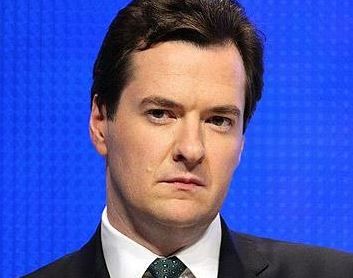
UK’s Chancellor of the Exchequer, George Osborne, and Treasury Secretary, Jack Lew, will participate in the first joint exercise that will simulate what they would do if a large multinational bank falls into deep trouble.
The meeting, which will take place on Monday, is being hosted by the US Federal Deposit Insurance Corporation. Other important regulators attending include Janet Yellen, Chair of the US Federal Reserve, and Bank of England Governor Mark Carney.
It will not be based on any specific institution. However, examples of UK banks with operations in the US include HSBC and Barclays and the US investment banks Goldman Sachs and JPMorgan have a huge presence in London.
Osborne said:
“There is no doubt that in 2008 the judgment taken by my predecessor and others was that banks like the Royal Bank of Scotland and others were too big to fail. Now I want to make sure that we have real options, and that we are able to avoid bailing in taxpayers with a bailout. And I’m pretty confident that’s the case now.”
He added:
“No war game is like war itself. But it means we will be far better prepared. I’m sure this is not the last time this will happen.”
“This is a critical moment for the British economy and the world economy. Serious clouds are gathering on the horizon.”
Six years ago the financial crisis sent shivers down the backs of politicians and regulators around the globe. Since then a series of new rules have been enforced to let a large bank go without having to spend billions of taxpayer dollars.
However, banks that conduct operations around the world, such as JPMorgan and Barclays, are much more difficult to salvage.
In the case of a large multinational bank going bust there are concerns that regulators would solely focus on saving domestic operations and not be as concerned about its operations abroad.
Therefore, one of the tests in the simulation will be the failure of an American bank with operations in the UK, the other will be the failure of a UK bank with operations in the US.
