
The Automated Customer Account Transfer Service (ACATS) is a US system that standardizes the transfer of customer assets between participating brokerage firms and banks. It moves account holdings, rather than operating a market for buying and selling investments.
The National Securities Clearing Corporation (NSCC), part of the Depository Trust & Clearing Corporation (DTCC), operates the service. It supports firms’ initiation, review and settlement of transfers.
Who can use ACATS?
DTCC identifies eligible users as NSCC full-service members and Depository Trust Company (DTC) bank participants. Certain mutual fund service members participate in a limited capacity for re-registration. DTC and its parent DTCC are different entities.
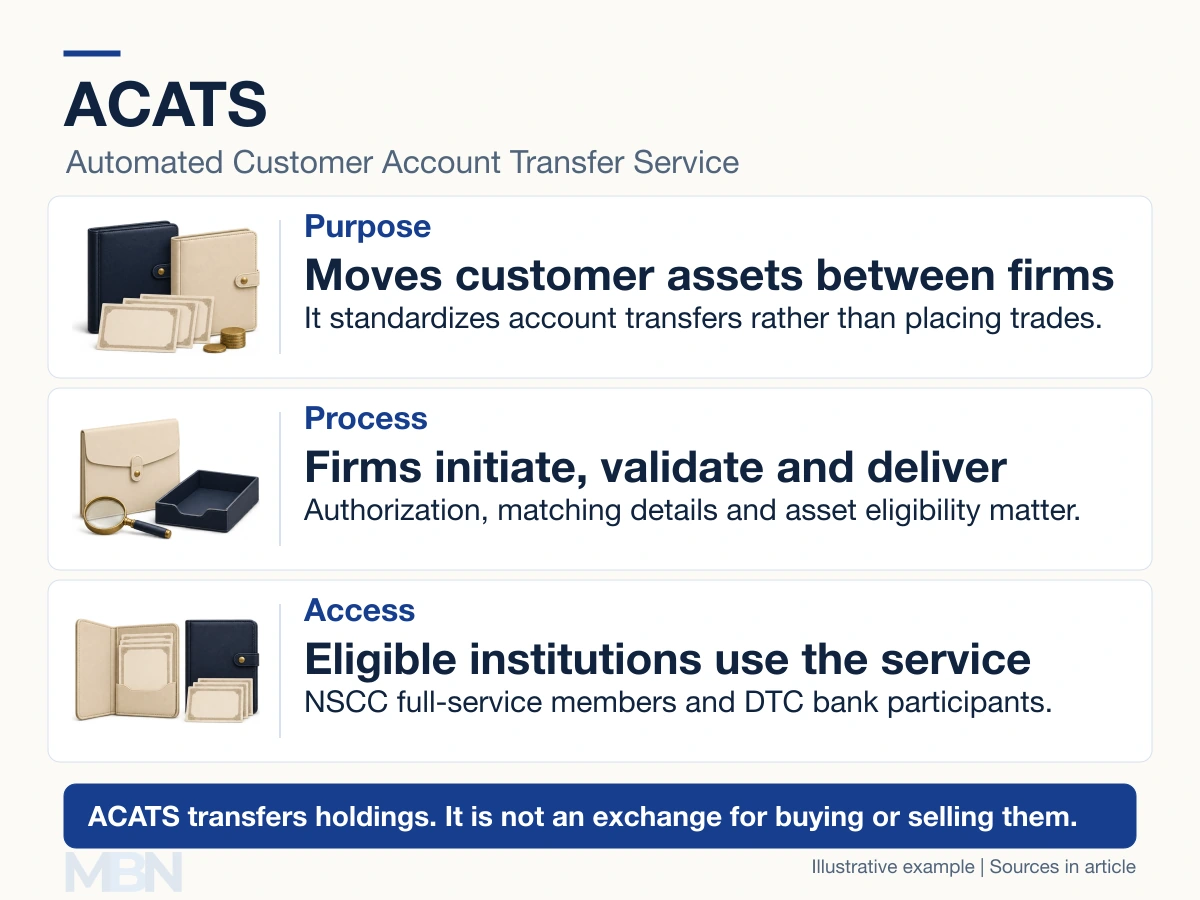
Customers normally give instructions to a firm, which handles the institutional process. They do not personally become ACATS participants to move an account.
What happens during a transfer?
The SEC’s account-transfer bulletin describes a process initiated through the receiving firm. That firm requests the assets from the carrying firm, which holds the existing account. The firms check the instructions, account details and positions.
A full account transfer concerns the account’s transferable assets. A partial transfer concerns specified assets. Unsupported holdings, mismatched information, missing authorization or account restrictions can require separate handling.
Does a transfer mean the investments are sold?
No. An in-kind transfer moves the investment itself. For example, 100 eligible shares can move to a compatible account at another firm without first being sold. The number of shares remains 100, although their market value can rise or fall during the process.
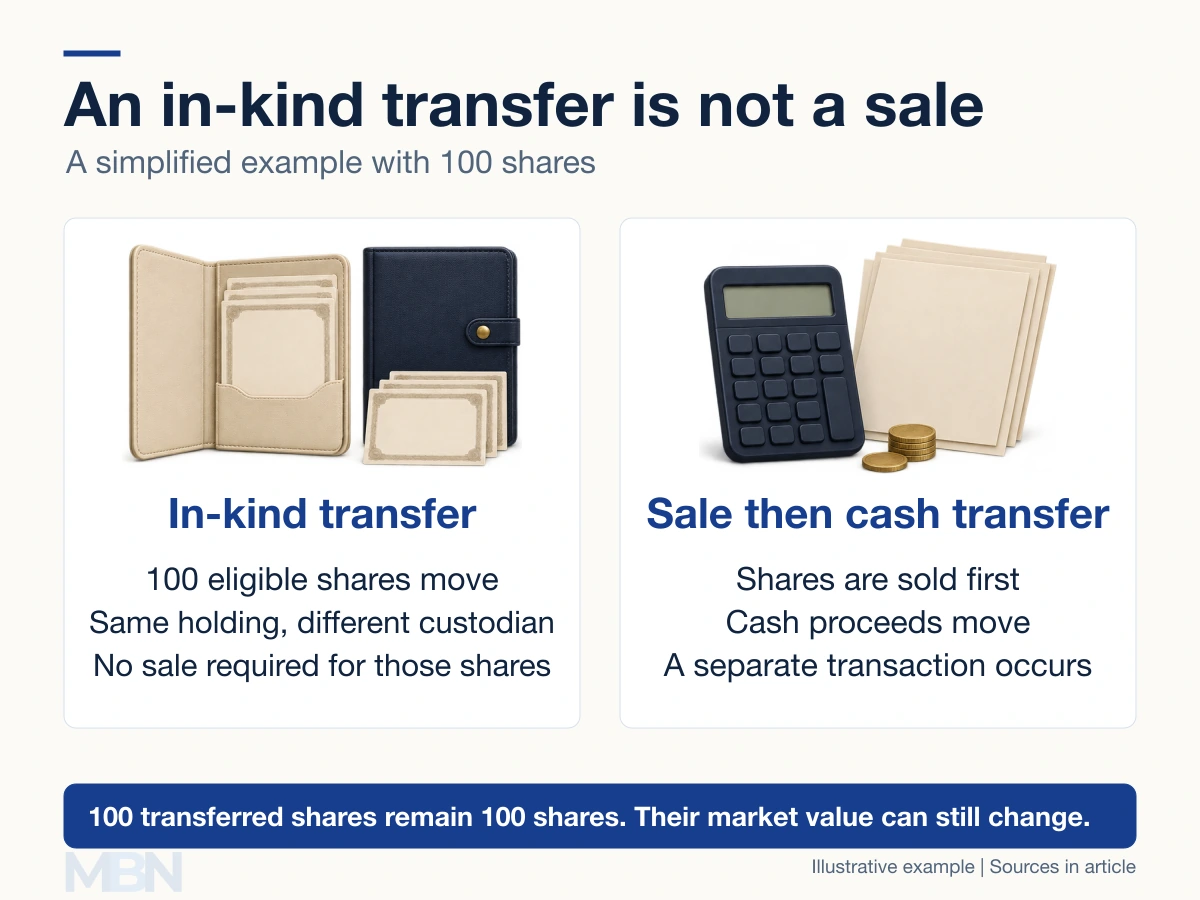
Selling a holding and moving the resulting cash is different. A sale can create fees or tax consequences. A transfer should not automatically be described as tax-free, particularly when account types, ownership or retirement arrangements change.
Can every asset be transferred?
No. The service supports many categories, including stocks, bonds, mutual funds, options and cash, but the receiving firm must be able and willing to carry the particular asset. Proprietary products and other nontransferable holdings can require different treatment.
ACATS also links with other processing services for relevant assets. Those links help coordinate transfers; they do not make every product transferable to every institution.
How long does it take?
FINRA Rule 11870 sets validation and completion requirements. It generally requires validation or an allowed exception within one business day, and completion within three business days after validation, subject to the rule and applicable processing provisions.
This is not a guarantee that every customer request finishes within three days of first contacting a firm. The starting point, exceptions, delayed assets and arrangements outside ACATS matter. A whole-account transfer can also involve restrictions on new orders while processing occurs.
What does automation change?
Standardized instructions reduce manual work and help firms coordinate asset movement. They do not guarantee that every transfer is authorized, correct or completed without problems. DTCC describes ACATS as a non-guaranteed service, with certain reversals possible following a participant default.
Last checked and updated on November 10, 2026 by the MBN editorial team.