
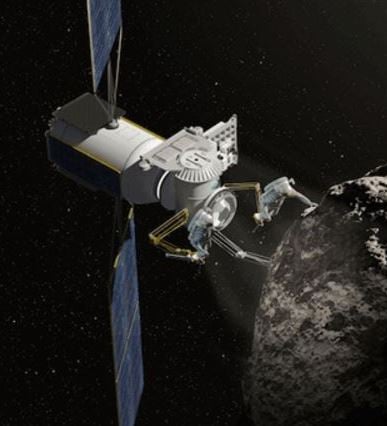
Owning materials from an asteroid is now legal in the Unites States, after President Barack Obama signed the U.S. Commercial Space Launch Competitiveness Act (H.R. 2262) into law, effectively reversing decades of space law. Before the new law was signed, space had been largely treated as publicly owned, i.e. nobody could claim commercial ownership of anything in outer space.
Now, US citizens have the right to own the asteroid resources they obtain, which several companies, including Planetary Resources Inc., say will encourage the commercial exploration and utilization of resources from asteroids.
Eric Anderson, Co-Founder and Co-Chairman of Planetary Resources, Inc., said:
“This is the single greatest recognition of property rights in history. This legislation establishes the same supportive framework that created the great economies of history, and will encourage the sustained development of space.”
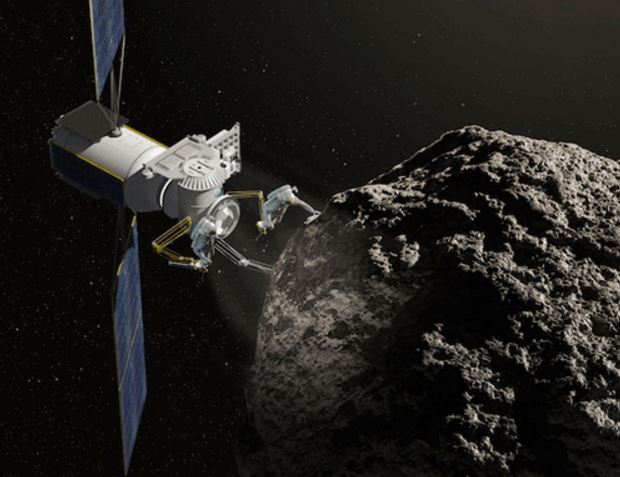 Asteroids are rich in precious metals and minerals. Mining them could become a giant business. But companies need to know that what they harvest is theirs. (Image: berc.berkeley.edu)
Peter H. Diamandis, M.D., who is also Co-Founder and Co-Chairman of Planetary Resources, Inc., commented:
“A hundred years from now, humanity will look at this period in time as the point in which we were able to establish a permanent foothold in space. In history, there has never been a more rapid rate progress than right now.”
The American government says it has got rid of ‘unnecessary regulations’ and made it easier for private American businesses to explore space commercially. While individuals will not be able to claim the ‘celestial body’ itself, anything they mine out of it will be theirs.
New law aims to encourage space mining
The hope is that the new legislation will encourage people to harvest the valuable resources that are within asteroids that fly near Earth. In July 2015, for example, an asteroid with a platinum core worth £3.5 trillion passed near Earth. The asteroid, called 2011 UW-158, passed 1.5 million miles away from Earth, which astronomically speaking is extremely close – 30 times nearer than our nearest planet.
“A United States citizen engaged in commercial recovery of an asteroid resource or a space resource under this chapter shall be entitled to any asteroid resource or space resource obtained, including to possess, own, transport, use, and sell the asteroid resource or space resource obtained in accordance with applicable law, including the international obligations of the United States.”
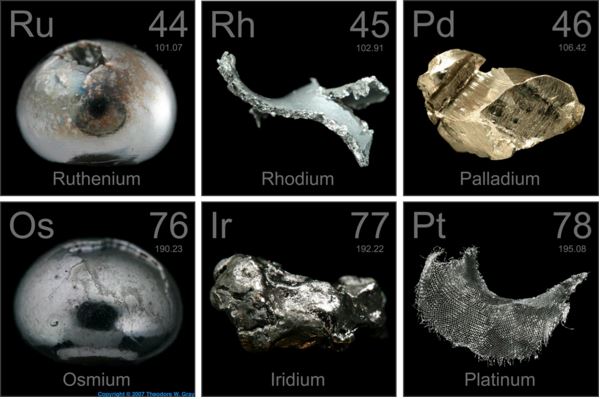 According to Planetary Resources “In addition to precious metals, Asteroids contain more common metallic elements such as iron, nickel, and cobalt, sometimes in incredible quantities and often in their pure, non-oxidized metal form. These base metals, silicates and other asteroid resources can support entirely new space ventures, from deep space habitats to space-based solar power arrays.” (Image: Planetary Resources)
Among US lawmakers who lobbied the introduction of the new law, Florida senator Marco Rubio said the new regulation makes it easier for innovators to ‘return’ the United States to suborbital space and further develop the country’s space industry.
“Throughout our entire economy, we need to eliminate unnecessary regulations that cost too much and make it harder for American innovators to create jobs. The reforms included here make it easier for our innovators to return Americans to suborbital space and will help the American space industry continue pushing further into space than ever before. I’m proud the final bill includes proposals I had previously introduced in the Senate, including one related to commercial recovery of space resources. This bill is an important win for Florida’s space coast and the entire space exploration community.”
In a press release yesterday, the White House wrote:
“H.R. 2262, the ‘U.S. Commercial Space Launch Competitiveness Act,’ which amends current law concerning the U.S. commercial human spaceflight industry; extends authority for use of the International Space Station through September 30, 2024; and provides authority to facilitate commercial exploration for and commercial recovery of space resources.”
Most space legislation regarding ownership was contained in the ‘Outer Space Treaty’, which was opened for signature in the US, the UK, and the Soviet Union on 27 January 1967. It entered into force on 10 October 1967. As of September 2015, 104 nations are parties to the treaty.
It states that the moon and other objects in space are part of the ‘common heritage of humankind’, and says that exploration should be peaceful. No weapons should be placed on any celestial body, the Treaty stipulates.
Video – Mining Asteroids for fuel
According to Planetary Resources, asteroid sourced hydrogen and oxygen will literally fuel expansion of the space economy by providing a locally sourced fuel resource that will change how industry operates in space.

Comments are closed.