
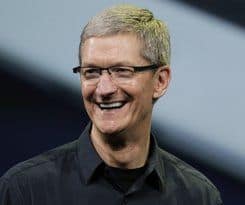
Apple CEO Tim Cook is still angry with the US government’s relaxed stance on unbreakable encryption.
The Apple CEO told White House officials last week in a meeting in San Jose regarding counter-terrorism that the government should “come out and say ‘no backdoors’”.
Cook has been at the forefront of pushing the US government to support unbreakable encryption.
However, FBI director James Comey has stated on several occasions that encryption makes it harder for law enforcement to intercept the communications of criminals, and would subsequently make it harder to solve crimes.
Tim Cook calls upon the White House to support unbreakable encryption https://t.co/gU4NF0q5bw #TimCook #security pic.twitter.com/kXuvqZygK5
— iPhone Hacks (@iPhoneHackx) January 14, 2016
“Justice may be denied, because of a locked phone, or an encrypted hard drive,” Comey said during a speech in Washington after becoming FBI director. “The notion that the marketplace could create something that would prevent [a locked] closet from ever being opened, even with a properly obtained court order, makes no sense to me.”
Apple and US law enforcement have clashed in the past. In September 2015 Apple said it couldn’t comply with a court order to hand over texts sent between two criminals using iMessage because of encryption.
Cook strongly defended encryption technology in a speech in Washington last June.
He said:
“Some in Washington are hoping to undermine the ability of ordinary citizens to encrypt their data. We think this is incredibly dangerous. If you put a key under the mat for the cops, a burglar can find it, too.
“Criminals are using every technology tool at their disposal to hack into people’s accounts. If they know there’s a key hidden somewhere, they won’t stop until they find it. Removing encryption tools from our products altogether, as some in Washington would like us to do, would only hurt law-abiding citizens who rely on us to protect their data.”
“Justice may be denied, because of a locked phone, or an encrypted hard drive,” Comey said during a speech in Washington after becoming FBI director. “The notion that the marketplace could create something that would prevent [a locked] closet from ever being opened, even with a properly obtained court order, makes no sense to me.”
