
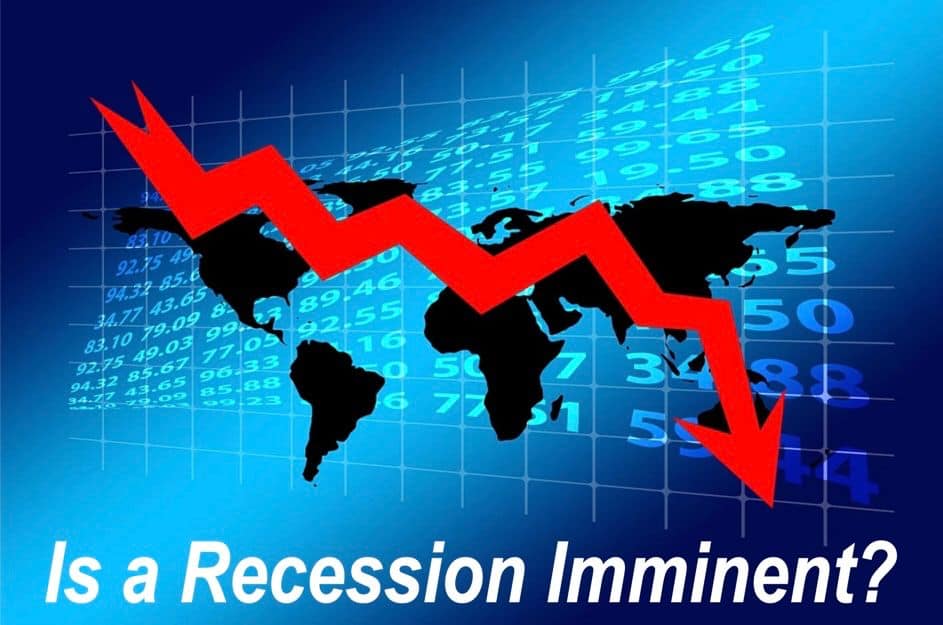
The question on the tip of many people’s tongues today is whether we are currently walking into a recession. Some economists say “Not yet,” while others are certain that we are. There is one thing that they all agree on: the risk is significantly greater today than it was five weeks ago, or before the United States and Israel started attacking Iran.
When Brent Crude hit $100 per barrel, anxiety levels rose alarmingly, but then, after a few days, we started to get used to it. Now, we are getting used to $115 per barrel. When the Strait of Hormuz became dangerous for ships, we wondered whether it was the end of the world. Two weeks later, we have also gotten used to that.
It seems that each time we reach a milestone, it is no longer scary when we are stuck in it for a while. Becoming immune to the US president’s hype is one thing, however, ignoring the components of a looming economic slowdown is unwise.
Many recession predictions, but only one was right
In a CNN article, David Goldman quotes Hady Farag, an Associate Director and Partner at Boston Consulting Group, who said:
“People are preparing themselves for the fact that we are already in a recession now or that there is a high likelihood we will soon be in one.”
If we know that a slowdown is imminent, how can we forecast when it will hit? According to economists, there are ways. However, I have waited for one to hit at least eight times over the past eight years, and their predictions were right only once, to some extent. In 2020, a short-lived, pandemic-related recession occurred.
In the years 2018, 2019, 2022, 2023, 2024, 2025, and 2026, recessions were forecast, many of them by reputable economists–but none of them materialized.
Why do so many recessions look imminent, but never occur?
In the same CNN article, Goldman believes that the US did not fall into an economic recession, but forever seemed to be on the brink, because sectors of the economy have fluctuated differently. While one sector has slowed down dramatically, others have boomed simultaneously and vice-versa. For example, the tech sector was in a recession in 2022, but not manufacturing; that was booming. When manufacturing slumped into a recession in 2024, the semiconductor sector grew sharply.
Goldman also mentions other factors such as front-loading theory, when consumers stocked up on a product before Trump’s tariffs were implemented, and the K-shaped theory, which occurs when high-income employees keep their jobs and low-income workers are laid off.
Wall Street raises the odds
In an ABC News article written by Max Zahn, Wall Street is raising the risk of an imminent recession amid the US–Israel vs. Iran war. He explains that the US–Israeli attack on Iran triggered a major global oil shock–one that we have not seen in many decades. Events over the past five weeks in the Middle East have prompted forecasts of a recession in the United States.
Zahn wrote:
“Goldman Sachs raised its probability of a recession in the next 12 months from 25% to 30%, while Moody’s Analytics pegged U.S. recession odds at just below 50%. EY Parthenon put the risk of a recession over the next year at 40%, but it warned that those odds “could rapidly rise” if the Middle East conflict worsens.”
As oil prices rise and other petroleum-related products, such as fertilizers, become more expensive, the Federal Reserve may decide to raise interest rates, which would push America closer to a recession.
These gloomy forecasts are only likely to become reality if the Iran war drags on. Since nobody knows what Trump’s plan is regarding Iran, it is impossible to predict what he will do next. Some political commentators believe that not even Trump knows what the plan is. Could he have attacked without a plan?
Recession in 2027 predicted
Top economist David Rosenberg, president of Rosenberg Research, has been gauging the risk of a recession since 2022. He believes that the US is heading for a major downturn in 2027. As AI-related stimulus shrinks, the economy will stall, he believes.
The US is about to lose two sources of wealth creation that have played a major role in staving off a recession in the country. The two sources are:
1. A large fiscal stimulus.
2. The colossal investments that have been poured into artificial intelligence (AI).
In a Business Insider interview, Jennifer Sor quoted Rosenberg, who said:
“We could have a very significant recession in 2027 because business spending will face a vacuum.”
Tax refunds this year will help stave off a downturn by up to three months, he added.
