
Bank bailouts by the taxpayer will be a thing of the past, said Mark Carney, governor of the Bank of England and Chairman of the Financial Stability Board. Bank creditors would pick up the bill of failing banks rather than taxpayers, global regulators from twenty nations proposed on Monday.
A bailout is the act of saving a company (or government) from total collapse by injecting money into it.
The days of “banks are too big to fail” are hopefully over, Mr. Carney said.
Regarding the proposed rules, Mark Carney said:
“Agreement on proposals for a common international standard on total loss-absorbing capacity for G-SIBs is a watershed in ending “too big to fail” for banks. Once implemented, these agreements will play important roles in enabling globally systemic banks to be resolved without recourse to public subsidy and without disruption to the wider financial system.”
Following the 2007/8 global financial crisis, governments worldwide spent trillions of dollars of taxpayers money bailing out banks that would otherwise have crashed. At the time, lawmakers and economists said they were “too big to fail” and could seriously hurt the world’s financial system if they were allowed to die.
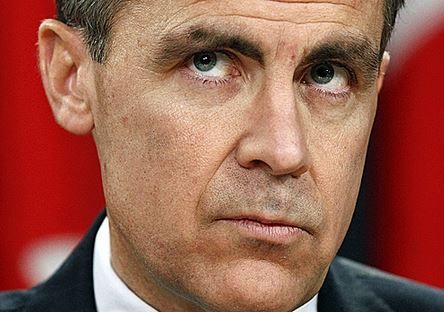 No more asking the tax pair to bail out “too big to fail” banks, says Mark Carney
Hundreds of millions of taxpayers took a dim view of this fat cat bailout, especially when just a few years later bank executives started paying themselves multi-billion bonuses again, including banks that still belonged to the taxpayer and were posting huge losses. Regulators from the Group of 20 economies have been meeting to try to find ways to make sure this never occurs again.
The regulators propose that multinational banks like HSBC or Goldman Sachs should have a cushion of bonds/equity equivalent of between 16% to 20% of their risk-weighted assets, such as loans, by the end of this decade.
In order to help shore up a troubled bank, the bonds would be converted into equity. This buffer would be on top of the current minimum requirements central banks have imposed on financial institutions since the crisis.
The regulators have picked out thirty banks they see as “systematically important” on a world scale. Three Chinese banks within the list of thirty would initially be exempt.
The following banks have been deemed “Global Systemically Important Financial Institutions” by the FSB:
Japan: Mizuho FG, Sumitomo Mitsui, Mitsubishi UFG FG.
China: Bank of China, ICBC, Agricultural Bank of China.
France: BNP Paribas, Crédit Agricole, Banque Populaire, Société Générale.
Germany: Deutsche Bank.
Italy: Unicredit Group.
Spain: Santander, Banco Bilbao Vizcaya Argentaria.
Sweden: Nordea.
Switzerland: Credit Suisse, UBS.
UK: HSBC, Royal Bank of Scotland (RBS), Barclays, Standard Chartered.
USA: Wells Fargo, State Street, Morgan Stanley, JP Morgan Chase, Goldman Sachs, Citigroup, Bank of New York Mellon, Bank of America.
The proposal, which is expected to be approved in Australia later this week by G20 leaders, will be put out to public consultation until February next year.
Mr. Carney said:
“This isn’t something that we cooked up in Basel tower and are just presenting to everybody.”
If any of the thirty banks failed to comply to the new regulation, it would face penalties, such as a reduction in dividends or bonuses, the Financial Stability Board said.
The FSB says it welcomes comments and responses to questions set out in the consultative document by Monday, February 2nd, 2015. Send responses to fsb@bis.org. Unless expressed otherwise, responses will be published on the FSB website.
