
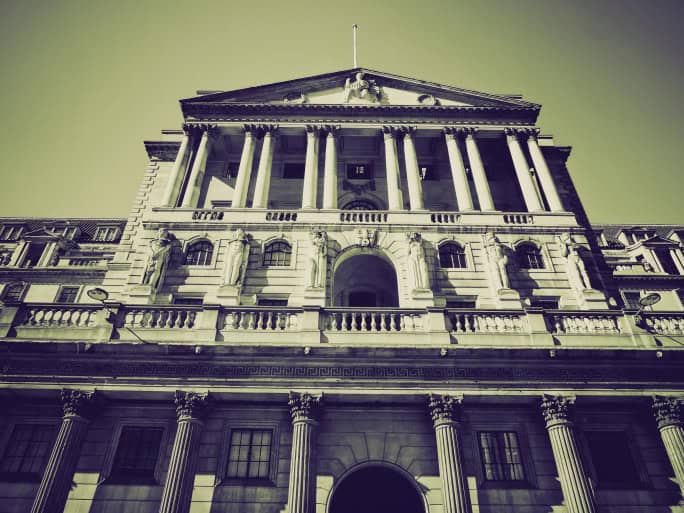
Bank of England

BoE expected to cut interest rates down to near-zero

Written by Joseph Nordqvist

Published: 20:36, July 9, 2016

The Bank of England is expected to cut interest rates down to near-zero levels this week amid fears of a UK recession.

The Monetary Policy Committee (MPC) is forecast to lower rates to around 0.25% on Thursday.

Some believe the MPC may cut rates to a level even lower than that, with Bank of America Merrill Lynch expecting policymakers to slash rates to as low as 0.1%.

A cut would represent the first change in UK interest rates since it was slashed to 0.5% in March 2009.
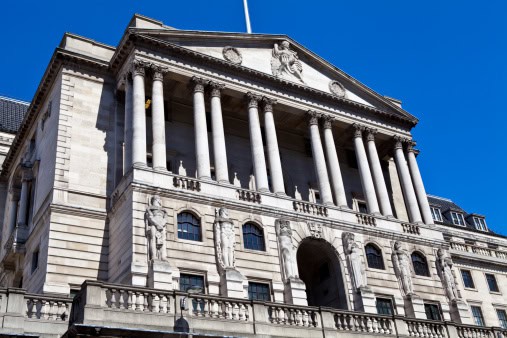
Bank of England in London
The Bank of England recently freed up more than £150 billion in lending to consumers and businesses.

BoE governor Mark Carney said earlier this week that there was a prospect of a ‘material slowing’ of the British economy following the Brexit vote, a strong hint that rates will be cut sometime this summer.

Financial markets are now pricing a 78% chance that a rate cut will occur on Thursday.

Economist Howard Archer of IHS Global Insight told This is Money the Bank was likely to cut rates in July or August:

‘How much stimulus the Bank of England delivers on Thursday is clouded by the fact that Mr Carney has indicated that the July and August MPC meetings should be seen as a package that will likely deliver stimulus,’ he said.


Archer added: ‘We also suspect that the Bank of England will extend its Funding for Lending Scheme and it may very well also return to Quantitative Easing, which has been on hold since November 2012 with the stock of purchases at £375 billion.’

Earlier this week the BoE announced that the Financial Policy Committee is ready to take actions to ensure “capital and liquidity buffers can be drawn on, as needed, to support the supply of credit and in support of market functioning.”

The FPC lowered the UK countercyclical capital buffer rate from 0.5% to 0% of banks’ UK exposures, reducing regulatory capital buffers by £5.7 billion, freeing up £150 billion for lending to UK households and businesses.

Joseph Nordqvist Avatar

Other News

IQE revenue rises 43% as AI demand boosts semiconductor materials

Sep 7, 2026

German industrial production falls as car output drops sharply

Sep 7, 2026

Eurozone growth picks up, but employment barely rises

Sep 7, 2026

Why businesses replace equipment that still works

Sep 7, 2026

What happens to a product after a customer returns it?

Sep 7, 2026

Factories weigh the cost of recycled water against supply risks

Sep 7, 2026

Why invoice fraud remains a business risk as payments go digital

Sep 7, 2026

EV battery recyclers face a long wait for used packs

Sep 6, 2026

France moves business invoicing beyond the emailed PDF

Sep 6, 2026

The financing gap that can stop an export order before it ships

Sep 6, 2026

Singapore sets a benchmark for liquid-cooled AI data centers

Sep 6, 2026

Non-food sales lead a 0.6% decline in eurozone retail trade

Sep 6, 2026

Texas repair law expands access to electronics parts and tools

Sep 6, 2026

Thailand’s high-income push puts smaller firms and regional cities in focus

Sep 6, 2026

Canada’s trade surplus shrinks as exports to the US fall

Sep 5, 2026

El Niño strengthens into 2027, raising risks for food prices, power and trade

Sep 5, 2026

Nvidia agrees to buy Hugging Face for $12.93 billion, pledges to keep platform open

Sep 5, 2026

Global food prices rise as sugar leads August increases

Sep 5, 2026

A weaker currency can lift overseas profits without reviving factories at home

Sep 5, 2026

AI shortcuts may weaken managers’ judgment, researchers warn

Sep 4, 2026