
In a Coca-Cola Monster Beverage deal worth $2.15 billion, the soda giant has bought a 16.7% stake in the energy, natural soft and fruit drinks maker. Coca-Cola says it is moving its global energy business to Monster, and will take Monster’s non-energy business.
The deal is expected to be completed by the end of this year or early in 2015.
Coca-Cola’s energy drinks include Relentless, Play & Power Play, Mother, Burn, Full Throttle and NOS. Monster’s non-energy products include Hansen’s Juice Products, Hubert’s Lemonade, Peace Tea and Nansen’s Natural Sodas.
Coca-Cola’s global soda sales fell in Q1 2014, the first recorded decline in fifteen years. Several major developed markets have posted sharp falls in carbonated drinks sales. With its non-fizzy drinks gaining traction, the world’s largest beverage company has been seeking out opportunities in the non-soda market.
The energy drinks market has been expanding rapidly. According to Euromonitor International, worldwide energy drink sales this year will probably exceed $27 billion.
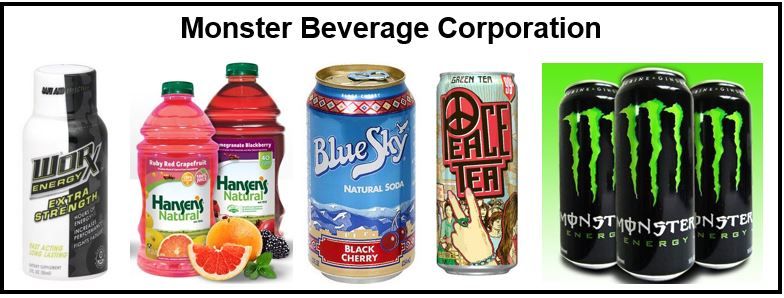
Monster sells energy, soft and natural drinks.
World’s largest distribution system
The deal means that now Monster has access to Coca-Cola’s unrivalled worldwide distribution system.
In a press release today, Monster Beverage Corporation wrote:
“The Coca-Cola Company and Monster Beverage Corporation announced today that they have entered into definitive agreements for a long-term strategic partnership that is expected to accelerate growth for both companies in the fast-growing, global energy drink category. The new, innovative partnership leverages the respective strengths of Coca-Cola and Monster to create compelling value for both companies and their shareholders.”
For its 16.7% ownership, Coca-Cola will have two directors on Monster’s Board of Directors.
Muhtar Kent, Coca-Cola’s Chairman and CEO, said:
“Our equity investment in Monster is a capital-efficient way to bolster our participation in the fast-growing and attractive global energy drinks category. This long-term partnership aligns us with a leading energy player globally, brings financial benefit to our Company and our bottling partners, and supports broader commercial strategies with our customers to being total beverage growth opportunities that will also benefit our core business.”
Monster’s Chairman and CEO, Rodney C. Sacks, explained that gaining access to the most powerful and extensive distribution system in the world is of enormous benefit for Monster.
Reuters quotes an unnamed individual, who claims to be familiar with the transaction, who said that the cash deal allows Monster to penetrate brand new markets, such as Russia and China, as well as increasing its footprint in regions where it can capture greater share, such as Brazil.
Coca-Cola was advised by Slate, Meagher & Flom LLP, while Monster’s financial and legal advisors were Barclays and Jones Day respectively.
Energy drinks under scrutiny
With an increasing number of reports about undesirable side effects linked to the consumption of energy drinks, especially excessive usage among young adults and teenagers, there is a risk they will become more strictly regulated in advanced and then later in emerging markets.
Both Coca-Cola and Monster downplayed this risk.
Monster is currently facing lawsuits related to its advertising practices as well as alleged injuries caused by its best-selling energy drink.
A Study published by the RSNA (Radiological Society of North America) found that healthy adults who consumed energy drinks with high levels of taurine and caffeine had considerably faster heart contraction rates one hour later. In other words, energy drinks alter heart function.
Study leader, Jonas Dörner, M.D., who works at the University of Bonn in Germany, said:
“Until now, we haven’t known exactly what effect these energy drinks have on the function of the heart. There are concerns about the products’ potential adverse side effects on heart function, especially in adolescents and young adults, but there is little or no regulation of energy drink sales.”
The Substance Abuse and Mental Health Services Administration reported in 2013 that over a five-year period ending in 2011, the number of emergency department visits in the United States related to the consumption of energy drinks surged from 10,068 to 20,783. The majority of patients were aged from 18 to 25, followed to 26-to-39 year olds.
If further studies point to more health problems linked to energy drink consumption, and/or the number of emergency department visits continues to rise, regulatory authorities are bound to introduce legislation that would reduce sales significantly.
