
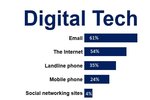
Workplace digital tech has definitely increased our productivity and flexibility, but has also come at a price – we now work more hours each week, says a new survey conducted by the Pew Research Center.
Cell phones and the Internet have penetrated every cranny of American workplaces. Digital technology has completely transformed the vast majority of jobs.
Scientific firms, new tech businesses, farms, the factory floor and even mom-and-pop stores have been radically transformed due to new information pathways and avenues to selling goods and services.
For employees working in offices, working life means a life online.
The Pew Research Center surveyed 1,066 Americans (over 18) online and asked those in employment a series of questions regarding the role of digital technology in their working lives.
The authors pointed out that their sample population was not representative of all American workers. It only included online adults in full- or part-time employment in any capacity.
According to Pew’s most recent data, 94% of people in work are Internet users.

Source: Pew Research Center.
Email and Internet
Online workers mentioned the Internet and email as their most important communication and information tools.
Email came top despite the challenges of the past generation, including threats like phishing and spam, as well as competitors such as texting and social media.
Landline telephones still outrank mobile phones for these internet-using employees, while social media is “very low in importance.”
Email and Internet are especially important for workers employed in the traditionally white collar occupations such as clerical staff, business owners, managers, executives and professionals.
Fifty-nine percent of the online employees said they took work outside the physical boundaries of the workplace at least “occasionally”, i.e. most people took work home.
The Pew Research Center wrote:
“What is potentially surprising is that even in the face of constantly evolving forms of digital communication, potential threats like phishing, hacking and spam, and dire warnings about lost productivity and email overuse, email continues to be the main digital artery that workers believe is important to their jobs.”
“Since taking hold a generation ago, email has not loosened its grip on the American workplace.”
The vast majority (93%) of online adults did not believe their productivity was undermined because of the mobile phone or the Internet. Forty-six percent felt these technologies have made them more productive.
When asked what impact email, the Internet and cell phones had, 51% believed they expanded the number of people outside their company they communicated with, 39% felt they allowed them more flexibility in their working hours, while 35% said they increased the total number of hours they worked.
These three effects were more prevalent among white-collar than blue-collar workers.
Employers also adapting
Employers are also adapting to hi-tech usage among their employees while they work. Forty-six percent of respondents said their employer blocked access to some websites, while 46% said there were workplace rules regarding what workers could say or post online.
Rules regarding who employees could write to and what they were allowed to post were more common in office-based jobs. Among blue-collar workers, 29% were not sure whether certain websites were blocked, while 35% were uncertain whether there were any rules regarding online practices in the workplace.
