
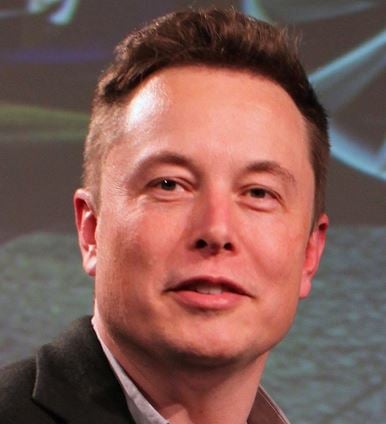
Elon Musk

Elon Musk launches new company Neuralink for development of “neural lace” technology

Written by Joseph Nordqvist

Published: 22:27, March 27, 2017

Elon Musk has launched a new company called Neuralink for the development of “neural lace” technology.

Neural lace technology seeks to augment human intelligence by implanting tiny brain electrodes that could be used to upload and download thoughts, the Wall Street Journal reports, citing people familiar with the matter.

The company was registered as a medical research company in California last July.

ElonMusk
Elon Musk is the the founder and CEO SpaceX; co-founder, CEO and product architect of Tesla Motors; co-founder and chairman of SolarCity, and co-chairman of OpenAI.

Musk has expressed his interest in the field on various ocassions over the past few years.

Speaking at Vox Media’s Code Conference in 2016, Musk said that the technology would allow humans to achieve “symbiosis” with machines.

He believes that neural lace technology could help prevent people from becoming “house cats” to AI.

“I don’t love the idea of being a house cat, but what’s the solution? I think one of the solutions that seems maybe the best is to add an AI layer,” Musk said at the Vox Code Conference. “A third, digital layer that could work well and symbiotically.”

More recently, Musk told an audience at the World Government Summit in Dubai, “Over time I think we will probably see a closer merger of biological intelligence and digital intelligence.”

He added that “it’s mostly about the bandwidth, the speed of the connection between your brain and the digital version of yourself, particularly output.”

It remains unclear what type of products the new company will create, but according to the report by the WSJ, people familiar with the matter describe a strategy that is similar to Tesla and SpaceX.

Joseph Nordqvist Avatar

Other News

Board diversity is linked to faster drug recalls, research finds

Oct 22, 2026

Young audiences favor new actors over influencers in UCLA survey

Oct 22, 2026

Added-sugar labels can change which foods shoppers buy

Oct 22, 2026

Stanford’s thermal-noise research advances low-power wireless sensing

Oct 21, 2026

Connected-car security risks increasingly sit in apps and cloud services

Oct 21, 2026

A freelancer’s financial guarantee can make a bid less attractive

Oct 21, 2026

A housing slump can change store shelves far beyond the downturn

Oct 21, 2026

Europe’s cheaper solar imports bring a manufacturing trade-off

Oct 20, 2026

Annual price reviews lose ground in regional Fed survey

Oct 20, 2026

Europe’s startup funding gap grows after the early rounds

Oct 20, 2026

Business data sharing has a funding problem beyond the technology

Oct 20, 2026

Why strong headline earnings growth needs a closer look

Oct 19, 2026

Why a supply-chain backup plan can fail when disruption strikes

Oct 19, 2026

Streaming customers are canceling and returning, changing the meaning of loyalty

Oct 19, 2026

Why falling consumer confidence is not a sales forecast

Oct 19, 2026

MidOcean and Idea Financial form venture for small-business loans up to $1 million

Oct 18, 2026

AI incidents reach senior leaders while governance changes lag, IBM survey finds

Oct 18, 2026

Euro area trade deficit widens as imports outpace exports

Oct 18, 2026

New studies examine research costs alongside academic publishing profits

Oct 18, 2026

Tariff uncertainty disrupts supply-chain sustainability plans, MIT survey finds

Oct 18, 2026