

Senator John Hoeven said the Environmental Protection Agency (EPA) and the Army Corps Engineers have gone too far with their new Waters of the US rule. Speaking at the US Cattlemen’s Association and the Independent Beef Association of North Dakota Conference, he said farmers are good stewards of the land who do not need civil servants burdening them with new costly regulations.
The EPA and Army Corps of Engineers released a proposed rule on March 25, 2014, that would widen the jurisdiction of the Clean Water Act (CWA) to include a countless number of ditches, stock ponds, creeks and small wetlands that are currently regulated at state level.
Opponents to the proposed new rule say this expansion of the EPA’s authorities would have considerable economic impacts for landowners who would likely be lumbered with new compliance costs and threats of hefty fines.
Senator Hoeven said farmers and ranchers historically have been excellent stewards of the nation’s land and water, apart from providing Americans with top-quality beef.
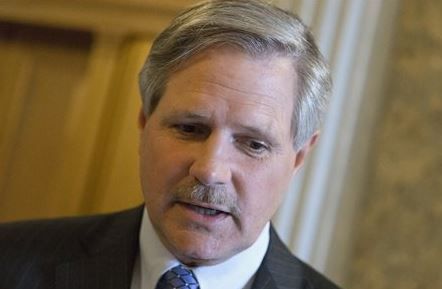
The EPA’s proposed Waters of the U.S. rule would just add another layer of bureaucracry, says Senator Hoeven.
“The Waters of the U.S. rule is not only a violation of private property rights, but it subjects our farmers and ranchers to a burdensome and costly new regulation. To make matters worse, it will also impede our efforts to build the housing, hotels, retail stores, roads and bridges necessary to maintain our high quality of life and our dynamic economic growth.”
Senator Hoeven wants to make sure the EPA gets no funding to implement its new Waters of the US rule, arguing that without money it would be dead in the water. He is heading an effort in the Senate Appropriations Committee to include phrases in the Energy and Water Appropriations bill to stop the EPA and the Army Corps of Engineers from implementing the proposed regulation in 2015 (fiscal year).
Another option is to hit the proposed rule head on with new rules. Hoeven is trying to push through the Protecting Water and Property Rights Act of 2014, which would make it impossible for the EPA to finalize its March 2014 proposed rule.
Senator Hoeven claims the new rules would add extra costs for homeowners, farmers, ranches, landowners and businesses across North Dakota. He urges the EPA to “abandon this new layer of bureaucracy and provide clarity and certainty to those who rely on the land for their livelihoods and manage it with good stewardship.”
The Small Business Administration’s Office of Advocacy has recommended this week that the EPA and Army Corps of Engineers call off the proposal for the new rule, Hoeven informed.
What does the EPA say?
On March 25, Gina McCarthy, EPA Administrator, said
“We are clarifying protection for the upstream waters that are absolutely vital to downstream communities. Clean water is essential to every single American, from families who rely on safe places to swim and healthy fish to eat, to farmers who need abundant and reliable sources of water to grow their crops, to hunters and fishermen who depend on healthy waters for recreation and their work, and to businesses that need a steady supply of water for operations.”
Assistant Secretary of the Army (Civil Works) Jo-Ellen Darcy added that the waters and wetlands of the United States are valuable resources that need to be protected today and for generations to come. “Today’s (March 25) rulemaking will better protect our aquatic resources, by strengthening the consistency, predictability, and transparency of our jurisdictional determinations. The rule’s clarifications will result in a better public service nationwide.”
The EPA says that the health of coastal waters, bays, lakes and rivers depends on the streams and wetlands where they begin. Communities benefit from streams and wetlands – they remove pollution, trap floodwaters, recharge groundwater supplies, and provide habitat for wildlife and fish. They also contribute to the country’s economy because of their role in manufacturing, energy, recreation, agriculture, hunting and fishing.
Approximately 60% of America’s stream miles only flow after rain or seasonally. However, they have a significant impact on the downstream waters. About 1 in every 3 Americans – 117 million people – get their drinking water from public systems that depend on these streams. “These are important waterways for which the EPA and the Army Corps is clarifying protection,” the EPA concluded.
According to the EPA, the proposed new rules will:
- Reduce confusion about Clean Water Act protection.
- Clarify types of waters covered under the Clean Water Act.
- Save businesses time and money.
- Provide more benefits to the public than costs.
- Help states to protect their waters.
