

An artificial intelligence, a robot scientist that researchers from the Universities of Cambridge, Manchester and Aberystwyth have called ‘Eve’, could well make drug discovery a much faster and cheaper process.
The team demonstrated Eve’s potential when she discovered, on her own, that a compound with anti-cancer properties might also be used to combat malaria.
The researchers write in the academic journal Interface (citation below) that the usage of robo-scientists is a natural extension of the trend of greater involvement of automation in science.
Robot scientists can automatically develop hypotheses and test them to explain observations, carry out experiments using laboratory robotics, interpret their findings to amend their hypotheses, and then repeat the cycle “automating high-throughput hypothesis-led research.”
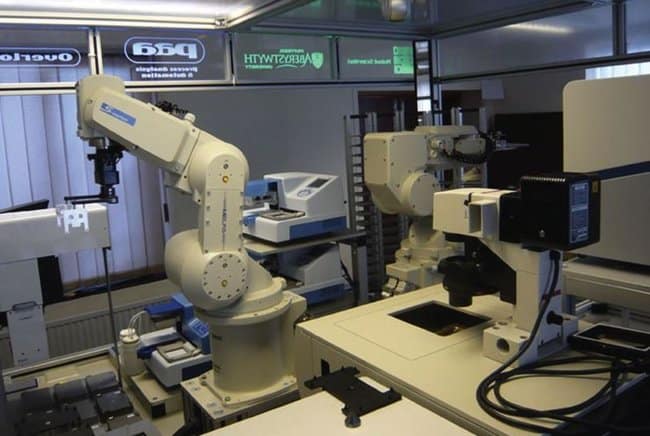
The robot scientist ‘Eve’ works much faster and cheaper than any human. (Image: Interface)
‘Eve’ is also well suited to recording scientific knowledge: as the experiments are conceived and executed by computer automatically, she can completely capture and digitally curate every aspect of the scientific process.
First came robot scientist Adam, and then Eve
The first robot scientist to autonomously discover new scientific knowledge was called Adam; he was developed by researchers at the Universities of Cambridge and Aberystwyth.
The team that developed Adam has now created Eve. Eve’s purpose is to accelerate the drug discovery process, as well as making it much more economical.
The researchers describe how Eve can help identify promising new drug candidates for neglected tropical diseases such as Chagas’ disease and African sleeping sickness, as well as more widespread diseases, including malaria.
Professor Ross King, who works at the Manchester Institute of Biotechnology at the University of Manchester, said:
“Neglected tropical diseases are a scourge of humanity, infecting hundreds of millions of people, and killing millions of people every year. We know what causes these diseases and that we can, in theory, attack the parasites that cause them using small molecule drugs. But the cost and speed of drug discovery and the economic return make them unattractive to the pharmaceutical industry.”
“Eve exploits its artificial intelligence to learn from early successes in her screens and select compounds that have a high probability of being active against the chosen drug target. A smart screening system, based on genetically engineered yeast, is used.”
“This allows Eve to exclude compounds that are toxic to cells and select those that block the action of the parasite protein while leaving any equivalent human protein unscathed. This reduces the costs, uncertainty, and time involved in drug screening, and has the potential to improve the lives of millions of people worldwide.”
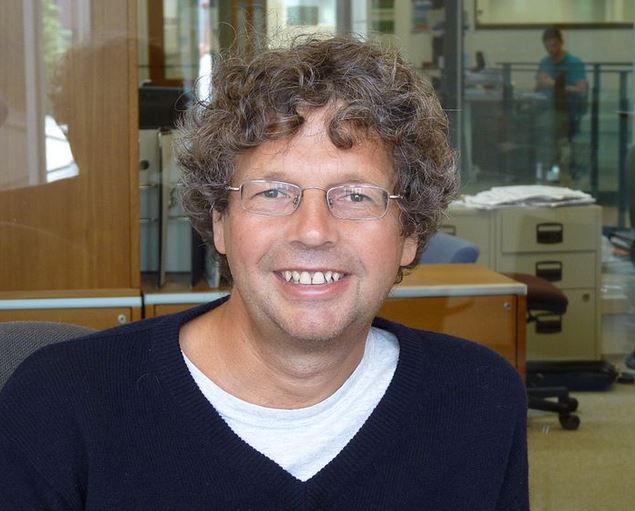
Ross Donald King is a Professor of Machine Intelligence in the School of Computer Science at the University of Manchester, working at the Manchester Institute of Biotechnology and Machine Learning and Optimisation group. (Image: Wikipedia)
The robot scientist has been designed to automate early-stage drug design. Eve starts off by systematically testing each member from a large set of compounds in the standard brute-force way of traditional mass screening.
The compounds are screened against experiments (tests, assays) designed to be automatically engineered. These can be carried out much more rapidly and cheaply than the custom-made assays that are currently standard.
Consequently, more types of assay can be applied, screening facilities are used more efficiently, which increases the profitability of a discovery within a given budget.
Capacity to screen over 10,000 compounds daily
Eve’s robotic system can screen more than 10,000 compounds each day. However, mass screening is still relatively slow and cumbersome as every compound in the library is tested. It is not intelligent, in the sense that it makes no use of what is learnt during screening.
In order to speed up this process, Eve selects a subset of the library at random to find compounds that pass the first assay. Any promising ‘hits’ are tested again several times to minimize the probability of false positives.
Eve then takes this set of confirmed hits and uses statistics and machine learning to predict new structures that could score better against the assays. She is not currently able to synthesize such compounds, although the researchers say this feature could be incorporated in future versions.
Steve Oliver, who works at the Cambridge Systems Biology Centre and the Department of Biochemistry at the University of Cambridge, said:
“Every industry now benefits from automation and science is no exception. Bringing in machine learning to make this process intelligent – rather than just a ‘brute force’ approach – could greatly speed up scientific progress and potentially reap huge rewards.”
To determine whether this approach might be viable, the scientists developed assays targeting key molecules from parasites responsible for Chagas’ disease, schistosomiasis and malaria, and tested against these a library of about 1,500 clinically-approved compounds.
Eve managed to show that a compound that had been investigated previously as an anti-cancer medication inhibited a key molecule – DHFR – in the malaria parasite. In other words, the robot scientist found a potential new application for an existing compound.
Medications that inhibit DHFR are currently used routinely to protect against malaria, and are administered to more than one million children. However, new resistant parasite strains have emerged, making the search for new drugs increasingly more urgent.
Professor Oliver added:
“Despite extensive efforts, no one has been able to find a new antimalarial that targets DHFR and is able to pass clinical trials. Eve’s discovery could be even more significant than just demonstrating a new approach to drug discovery.”
The research was funded by the European Commission and the Biotechnology & Biological Sciences Research Council.
Citation: “Cheaper faster drug development validated by the repositioning of drugs against neglected tropical diseases,” Kevin Williams, Elizabeth Bilsland, Andrew Sparkes, Wayne Aubrey, Michael Young, Larisa N. Soldatova, Kurt De Grave, Jan Ramon, Michaela de Clare, Worachart Sirawaraporn, Stephen G. Oliver, Ross D. King. Interface. Published 4 February 2015. DOI: 10.1098/rsif.2014.1289
