
Baby boomers are people in the birth cohort commonly defined in the United States as those born from 1946 through 1964. The name comes from the increase in births after World War II.
The US Census Bureau uses that range in its 2025 report on geographic mobility by birth cohort. A cohort is a group defined by shared birth years, rather than by one personality, political view or way of life.
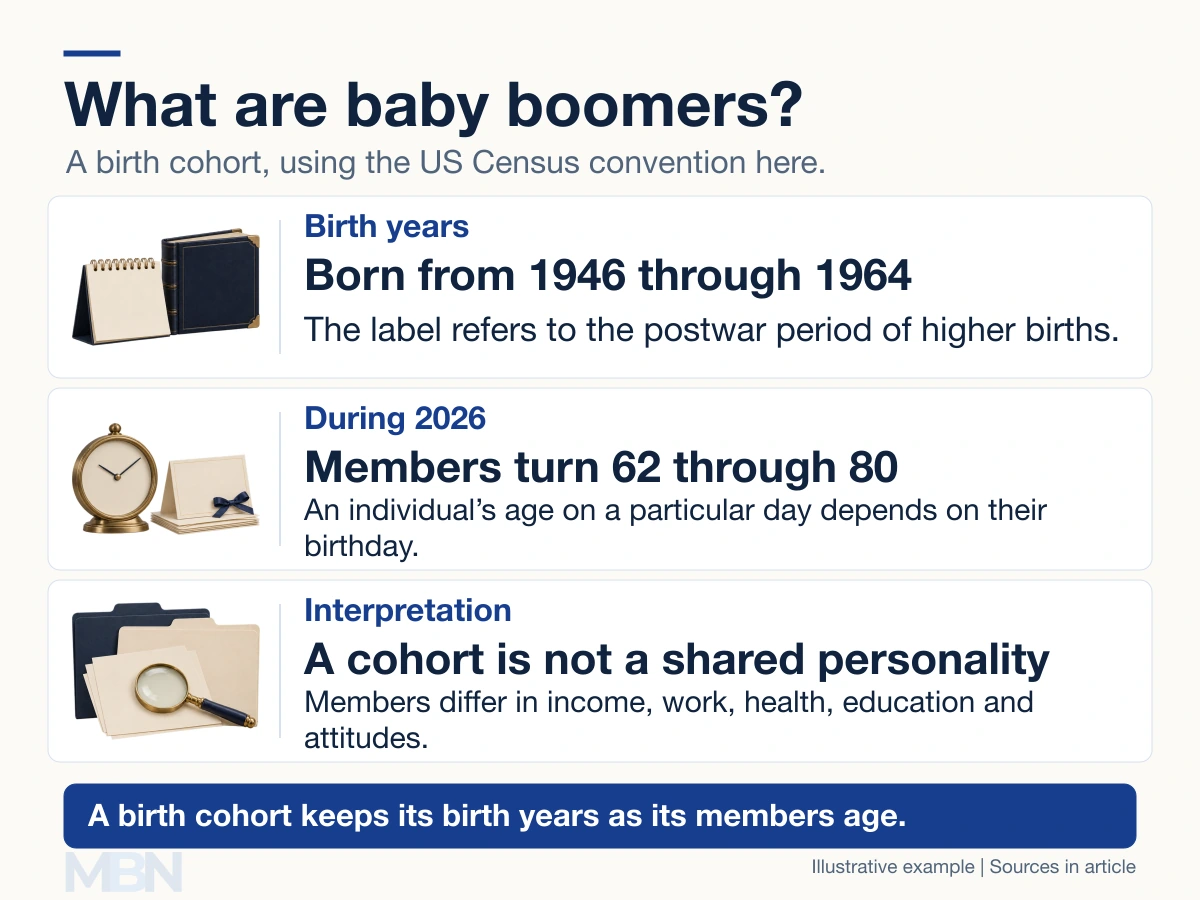
The birth years stay fixed as people age
A person remains part of the same birth cohort as time passes. An age category works differently: the people aged 65 and over in one year are not exactly the same group as those in that age category ten years later.
This article uses the US convention. Other countries’ birth patterns and generational labels can have different boundaries, so a comparison needs to name its convention.
How old are baby boomers in 2026?
People born from 1946 through 1964 turn 62 through 80 during 2026. On a particular date, someone who has not yet had their birthday is one year younger than the age they will reach that year.
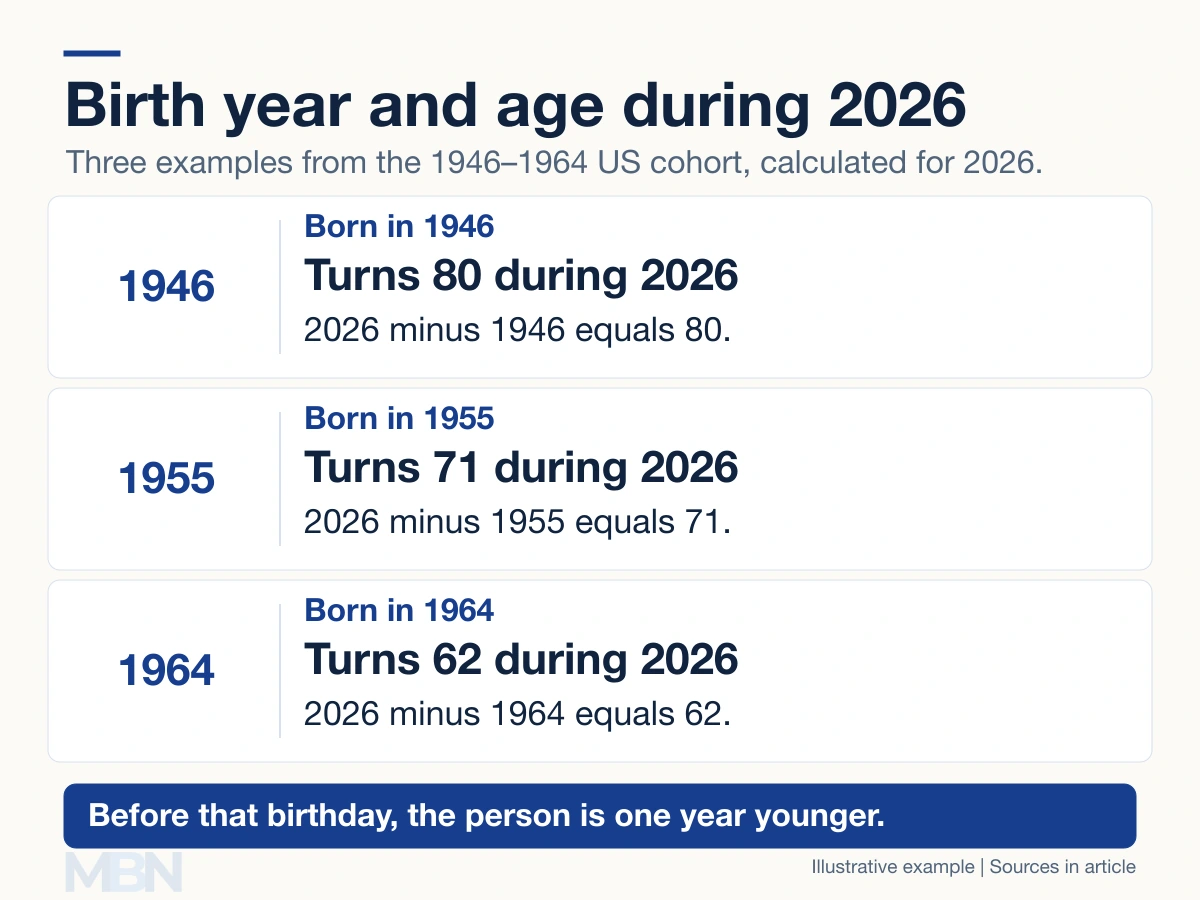
The range also spans different experiences. A person born in 1946 turned 18 in 1964, while someone born in 1964 was a newborn that year. A reference to the whole generation cannot place both at the same stage of life during the 1960s.
Population counts need a date and geography
The Census Bureau’s report on the baby-boom cohort distinguishes the cohort’s size over time. Births during the original boom and the number of people from those birth years living in the US later are different measures.
Deaths and migration change the later resident count. A dated population estimate should not be relabeled as the number of babies born during the boom, and an old percentage should not be presented as the current share of the population.
A generation does not explain everyone’s circumstances
Pew Research Center’s guidance on generational research stresses comparisons at similar stages of life and the differences within generations. A contrast between young and older adults today can reflect age, rather than a lasting generational difference.
A period effect comes from conditions affecting several age groups at the same time. Separating age, period and cohort effects takes appropriate data; a label alone cannot establish the cause of a difference.
For business and economic analysis, employment, retirement, income, wealth and spending need their own dated evidence. Membership of the boomer cohort does not by itself reveal whether a person is retired, owns a home or has substantial savings.
Last checked and updated on November 2, 2026 by the MBN editorial team.