
A credit freeze, also called a security freeze, restricts access to a consumer’s credit report for certain new-credit checks. It can make it harder for someone to open a fraudulent credit account using that person’s identity.
The rules below concern US consumer credit files. A wider “freeze in lending” describes a disruption in credit markets, not the same service.
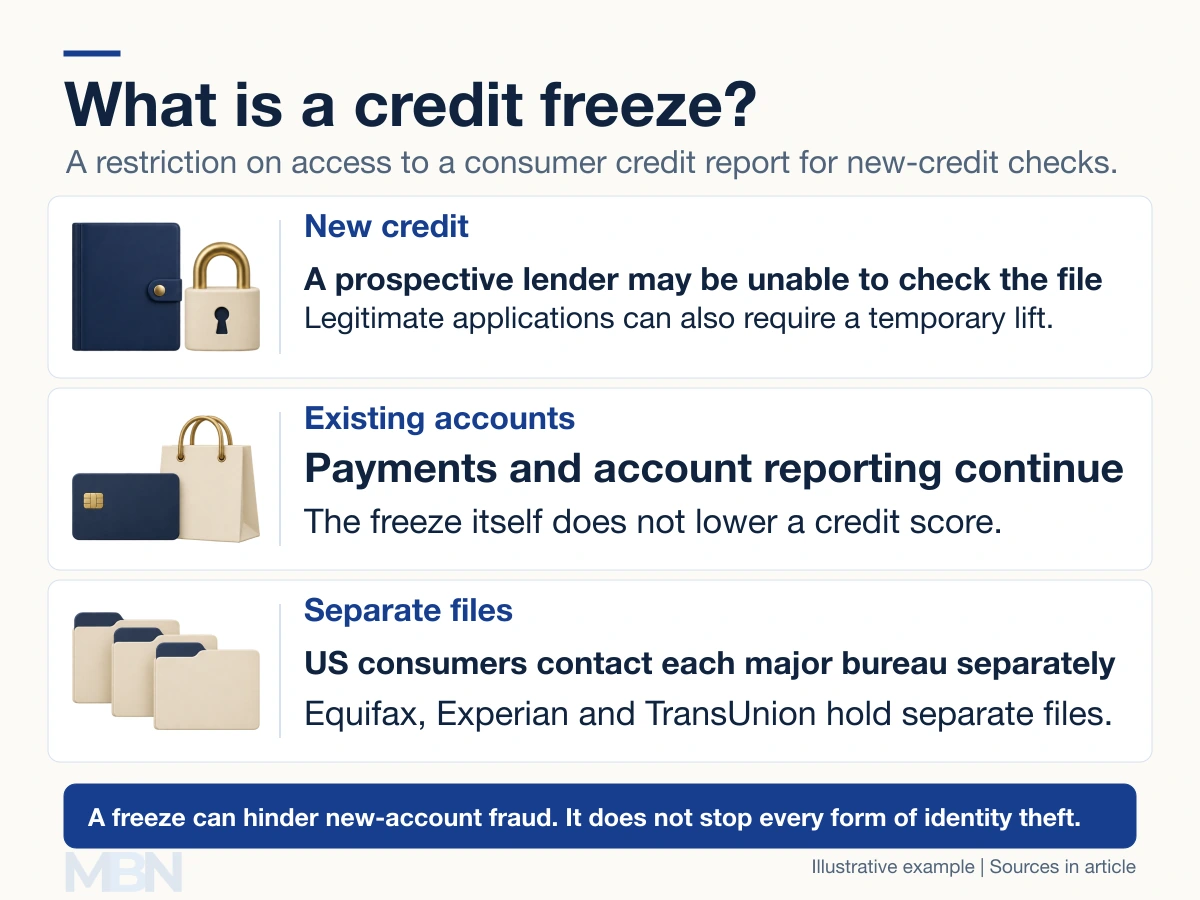
What does a credit freeze block?
A lender commonly checks a credit report before approving an application. With access restricted, it may be unable to complete that check. A legitimate applicant may therefore need to lift the freeze temporarily.
The Consumer Financial Protection Bureau explains the access restrictions and exceptions. Existing creditors, certain government agencies and hired credit-monitoring services can still have access. Consumers can also view their own reports.
The federal freeze provision does not apply to requests for employment, tenant-screening or insurance purposes. A freeze should not be described as a universal ban on every organization seeing the file.
Does it stop identity theft?
It addresses one route to fraud, not every use of stolen information. The FTC warns that a thief may still make charges on existing accounts. A freeze does not erase personal information already stolen or replace reporting an unauthorized transaction.
Existing cards can still be used. Freezing a report does not freeze its contents in time: creditors can continue reporting payments and missed payments. The FTC’s credit-law explanation distinguishes a frozen report from a changing score.
How is a US freeze placed or lifted?
A consumer contacts Equifax, Experian and TransUnion separately. Freezing one bureau’s file does not automatically freeze the others. Requests can be made online, by phone or by mail, with identity checks.
USAGov lists the current free-freeze process and response times. Online or telephone placement requests must be completed within one business day. Lifting through those channels must occur within one hour. Mail requests to place or lift a freeze have a three-business-day limit.
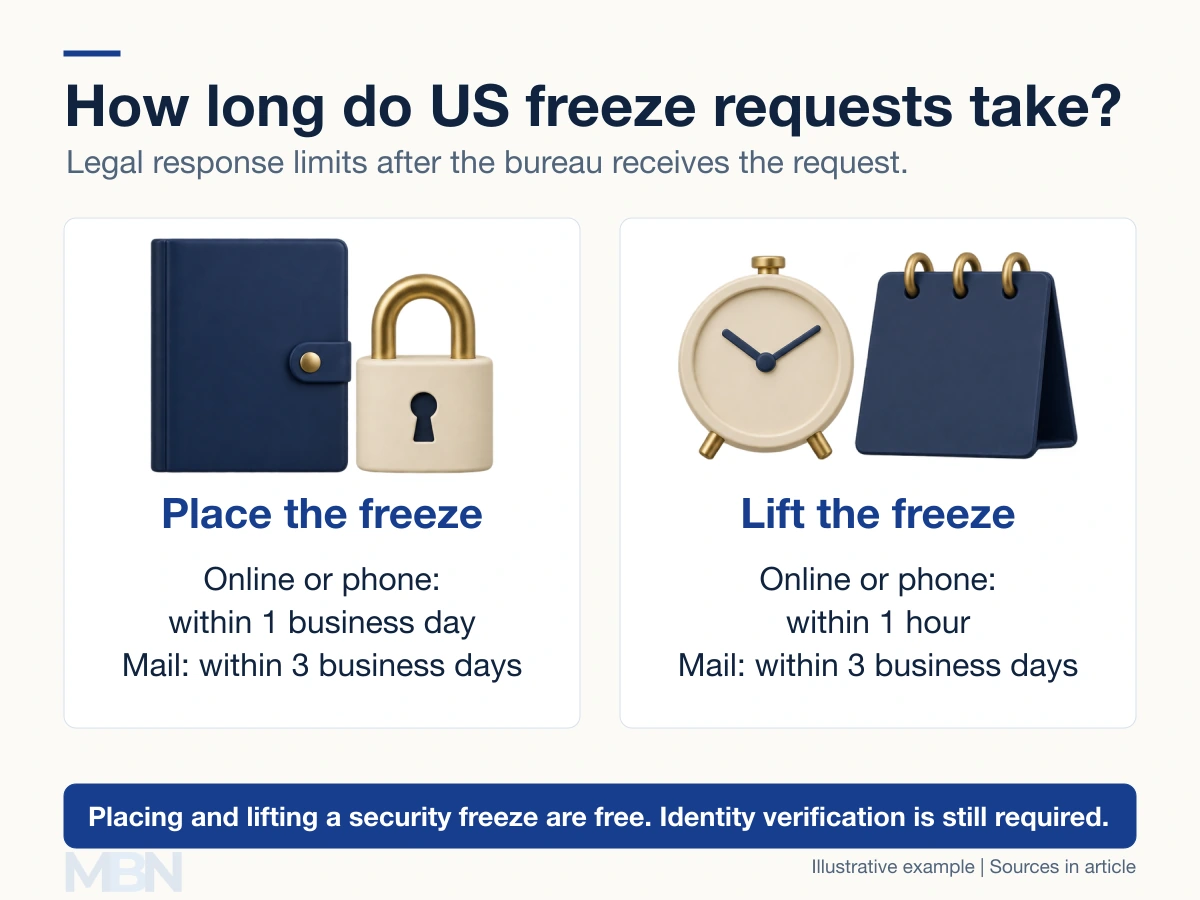
For example, a borrower planning a car-loan application might arrange a temporary lift at the bureau the lender uses. That opens access for the specified period; it does not guarantee approval or change the lender’s affordability checks.
Are a credit freeze, credit lock and fraud alert identical?
No. A security freeze is a free statutory protection. A commercial credit-lock service follows its provider’s terms and may be bundled with paid products. The CFPB says paid locks are no more effective than security freezes.
A fraud alert asks lenders to verify identity before granting credit, while allowing access to the report. The FTC explains that an initial fraud alert lasts one year and can be renewed. For an initial alert, contacting one major bureau triggers notification to the other two; freezes require separate requests.
Last checked and updated on November 4, 2026 by the MBN editorial team.