
A marketing plan is a document that sets out a business’s marketing objectives and the actions, responsibilities, timetable, budget and measures it will use to pursue them. It organizes the work for a defined period, such as a quarter or a year.
The strategy sets the intended customers and approach to the market. The plan explains how the team will carry out that strategy. Planning can improve coordination and make results easier to assess, but it cannot guarantee growth.
Start with the market and the objective
A market analysis examines customers, competitors and conditions affecting demand. Use that evidence to choose an audience and an objective that can be measured within a stated period.
For example, increasing market share from 10% to 15% is an intended outcome. Running advertisements, contacting prospects and updating a website are activities that might help pursue it. Assign those activities to named roles and dates rather than label the activities themselves as achieved results.
A marketing plan in outline
The following is a hypothetical plan for a repair service. Its figures are targets for the example, not reported results.
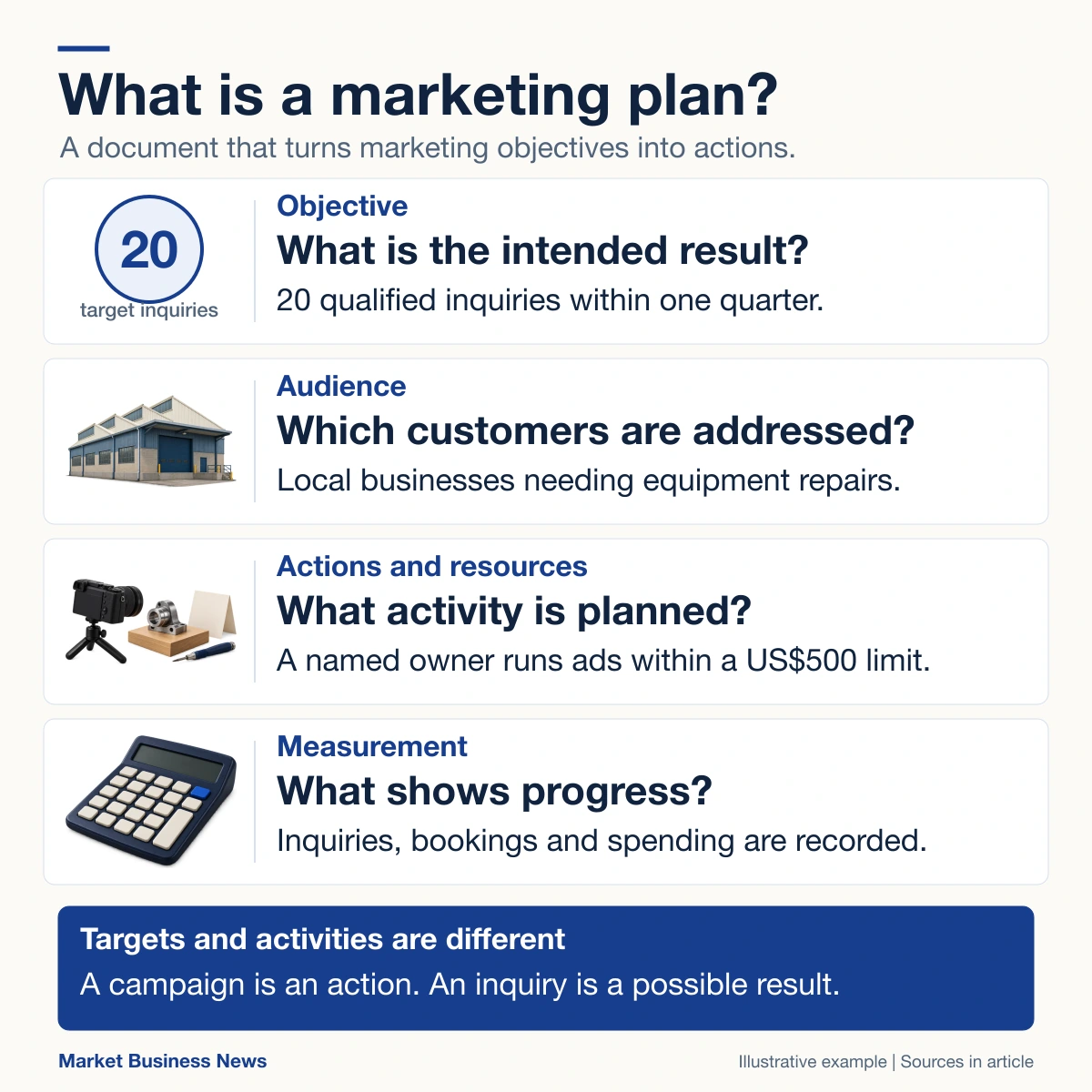
| Element | Example |
|---|---|
| Objective | Receive 20 qualified inquiries within one quarter. |
| Audience | Local businesses that need equipment repairs. |
| Action | Run a campaign using a short demonstration video and a dedicated inquiry form. |
| Owner | The marketing team, with responsibility for recording and following up inquiries. |
| Spending limit | US$500 in advertising, with staff costs budgeted separately. |
| Measurement | Record qualified inquiries, booked work and campaign spending. |
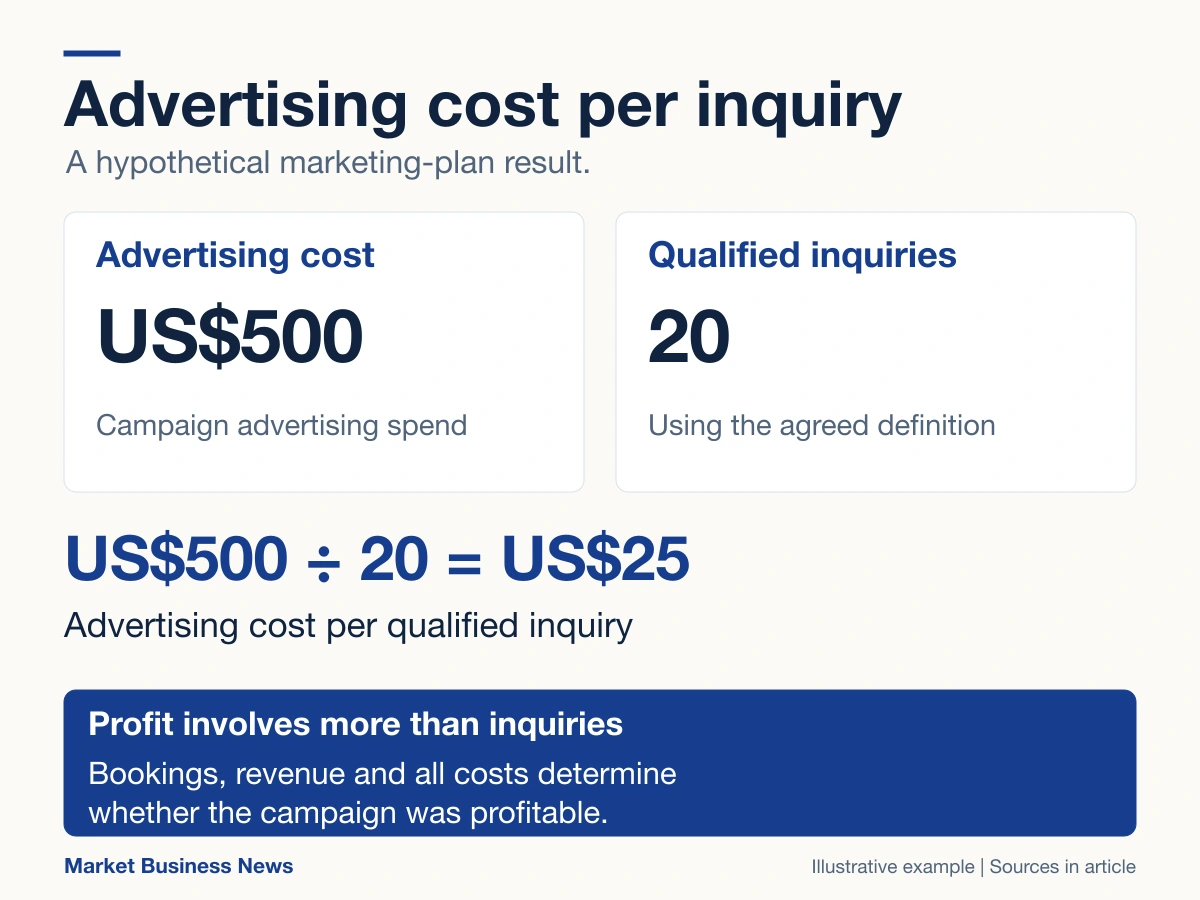
Define a qualified inquiry before counting results. If the campaign spends US$500 and generates 20 qualified inquiries, its advertising cost is US$25 per qualified inquiry. Whether the campaign earns a profit also depends on bookings, revenue and all relevant costs.
Set a budget and review dates
The budget should cover the resources required by the plan, including costs beyond advertising where relevant. Set spending authority and decide how changes will be approved.
A timetable shows when activities start, who is responsible and when results will be reviewed. If the evidence changes, the team can revise its assumptions or actions. Record what changed so that later comparisons remain understandable.
The Australian Government’s marketing-plan guidance provides a planning structure covering the market, audience, goals, activities and budget. The marketing mix helps connect the offering and its price with distribution and communication choices.
A review should distinguish work completed from outcomes achieved. Publishing an advertisement is a completed activity; an inquiry, sale and repeat purchase are different results.
Last checked and updated on November 2, 2026 by the MBN editorial team.