
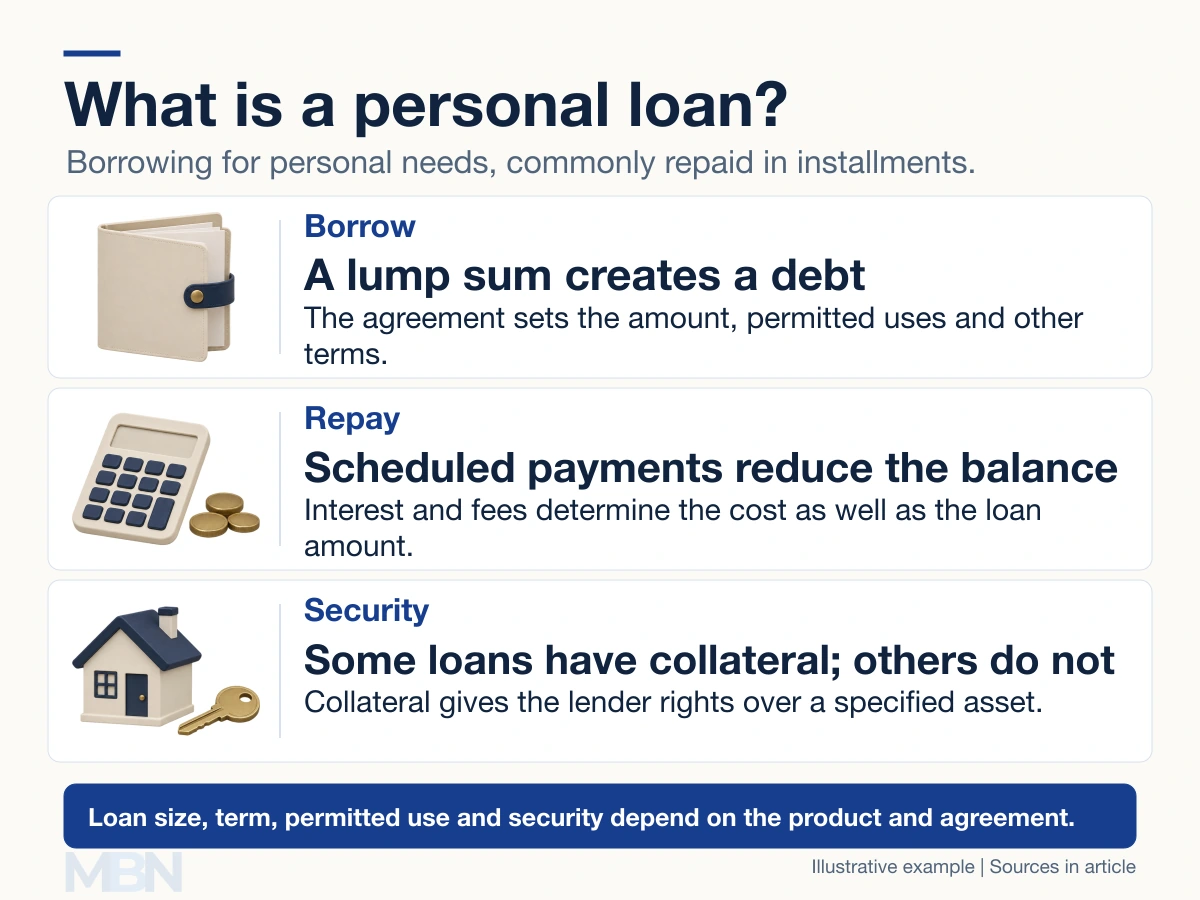
A personal loan provides money to an individual for personal needs, commonly as a lump sum repaid in installments. The borrower owes the principal, the amount borrowed, plus any interest and fees required by the agreement.
Common purposes include home improvements, an unexpected expense or refinancing existing debt. A product called a personal loan is distinct from a mortgage or business loan, but its name alone does not establish its size, repayment period or permitted uses.
How does repayment work?
The Consumer Financial Protection Bureau describes personal installment loans as closed-end borrowing with scheduled repayments. “Closed-end” means the agreement provides a defined amount rather than a reusable credit limit. Amounts and terms vary; one to five years is not a universal rule.
With a fixed-rate amortizing loan, scheduled payments cover interest and reduce principal so the balance reaches zero by the end of the term. “Amortizing” describes that gradual repayment. Adjustable rates or different repayment structures can change the pattern.
What determines the cost?
The CFPB identifies possible origination, documentation and late fees. An origination charge is a fee for arranging the loan. If it is deducted from the advance, the cash received can be less than the face amount borrowed.
Annual percentage rate, or APR, includes interest and relevant borrowing charges; it differs from a quoted interest rate alone. The repayment period also affects the total cash paid.
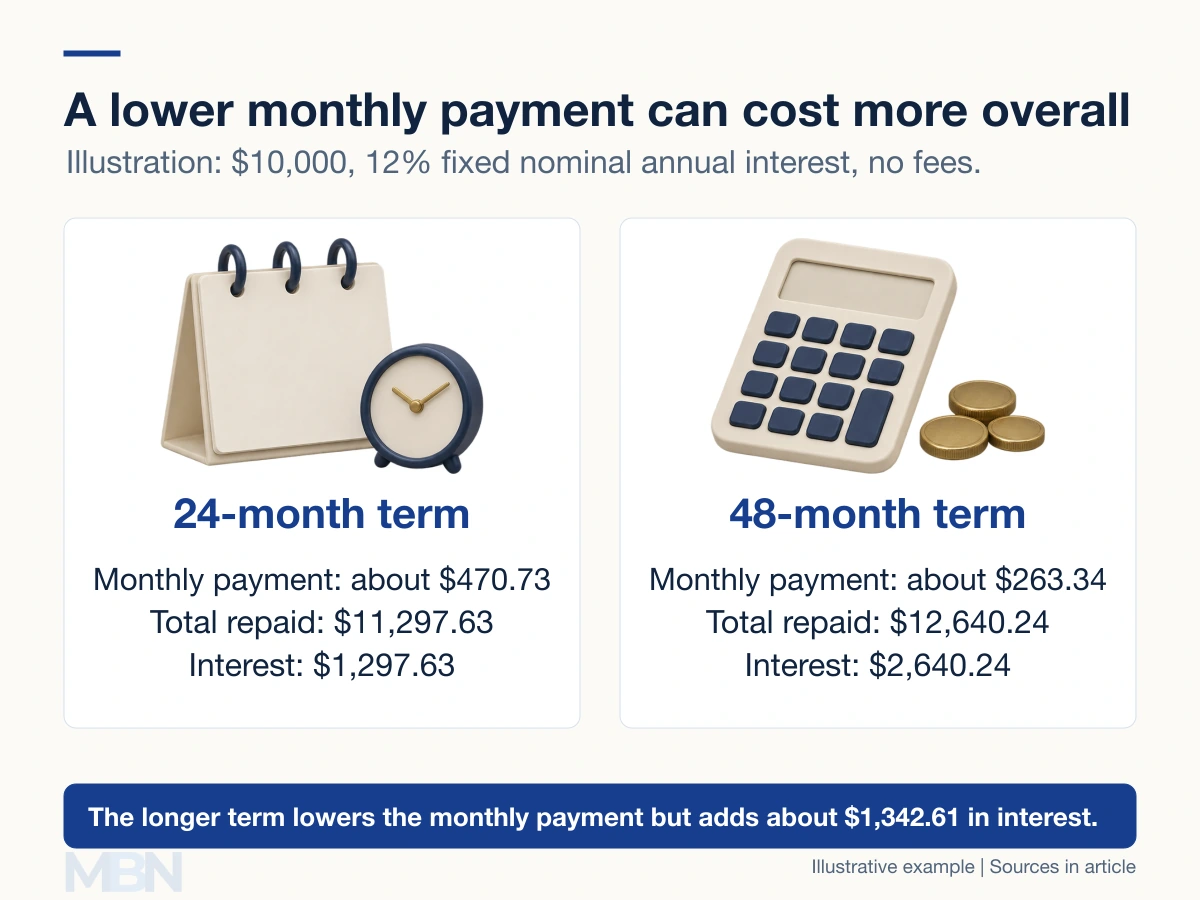
The example assumes a $10,000 advance, no fees, 1% monthly interest and equal month-end payments. Extending repayment from 24 to 48 months reduces the monthly payment by about $207.40 but increases total interest by about $1,342.61. Figures use unrounded payments before the final presentation rounding.
Secured and unsecured personal loans
A secured loan uses an asset as collateral. If the borrower defaults, the lender may enforce its security under the agreement and applicable law. The lender, not the borrower, seeks recovery of the collateral.
An unsecured loan has no specified collateral, but it remains an enforceable debt. For example, California’s courts explain collection through a lawsuit, judgment and lawful enforcement. Procedures and exemptions depend on jurisdiction. “Unsecured” does not mean that nonpayment has no consequences.
Does debt consolidation save money?
MoneyHelper explains that a consolidation loan replaces several debts with one. Savings depend on the new rate, fees, term and any early-repayment charges on the old debts. A lower monthly payment alone does not demonstrate a saving.
Australia’s Moneysmart also explains the risk of turning unsecured borrowing into a loan secured on a home or car. The payment arrangement changes, but the debt does not disappear.
Permitted uses depend on the contract
Borrowers do not have unlimited freedom to use every personal loan for any purpose. For example, Discover’s terms restrict certain uses, including post-secondary education expenses. Restrictions vary by lender and product.
Last checked and updated on November 4, 2026 by the MBN editorial team.