
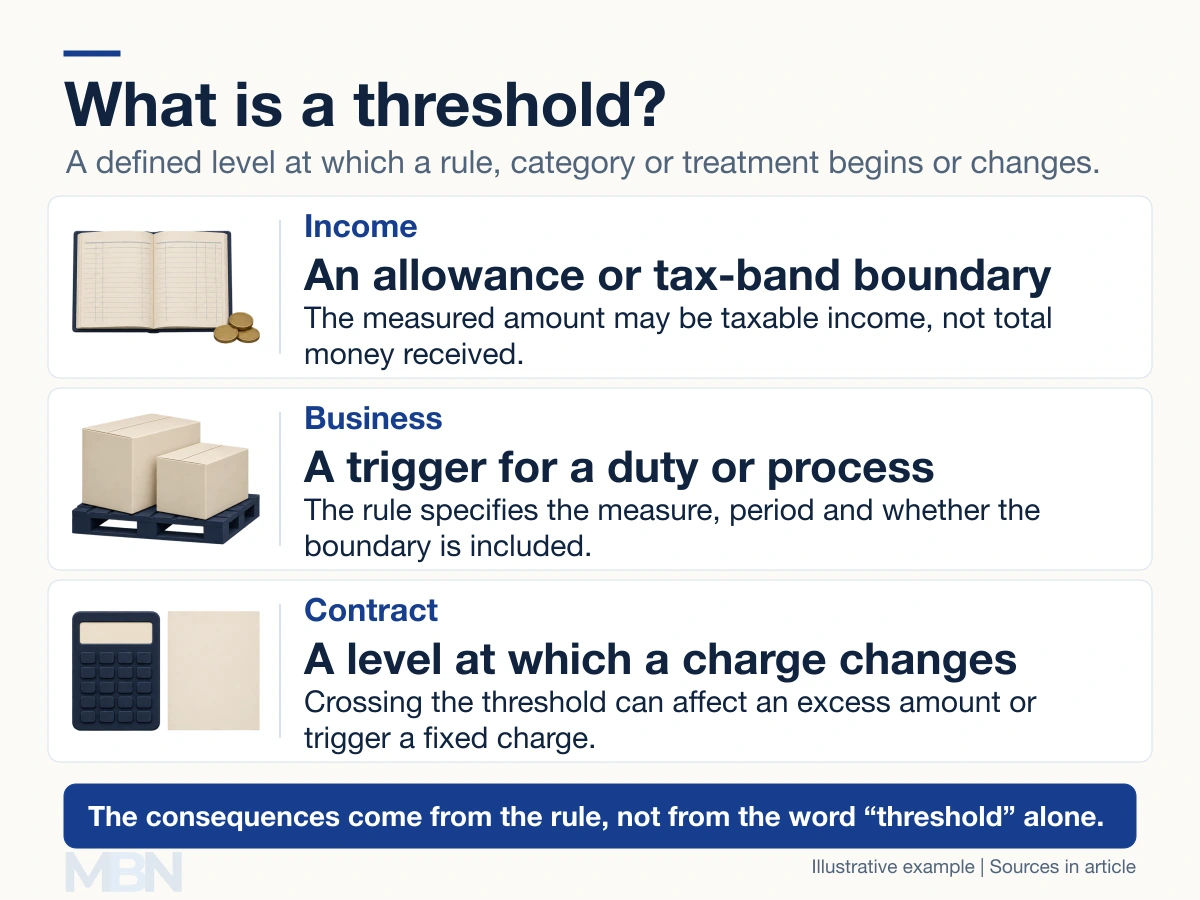
A threshold is a defined level at which something starts, changes category or becomes subject to a rule. In finance, it might determine when tax applies, when a higher rate begins or when a reporting obligation is triggered.
The word alone does not specify what happens after the boundary is crossed. The rule must identify the measured amount, the relevant period and whether the condition is “above”, “at least” or “below” the stated level.
Thresholds and tax allowances
An income-tax threshold can describe the point at which tax begins or a different marginal rate applies. An allowance, deduction and tax credit can each reduce tax, but they do not work in identical ways.
For the UK tax year from 6 April 2026 to 5 April 2027, the standard Personal Allowance is £12,570. It falls by £1 for every £2 of adjusted net income above £100,000 and reaches zero at £125,140. Other allowances and eligibility rules can affect the calculation.
For US federal tax year 2026, the standard deduction for a single filer is $16,100, with different amounts for other filing statuses and special rules for dependants, age and blindness. The IRS says elimination of the personal exemption was made permanent by the 2025 tax law. The old 2015 exemption amounts and phase-outs are not current thresholds.
Canada’s basic personal amount is a non-refundable tax credit, rather than a standard deduction. It reduces calculated tax through the credit mechanism. It should not be described as the same legal arrangement as the US deduction or UK allowance.
Australia’s Income Tax Rates Act defines a tax-free threshold of A$18,200. Residency, part-year adjustments and special taxpayer rules matter. This is not a blanket exemption from every tax or levy for everyone in Australia.
Crossing a boundary does not always change the whole amount
Consider a fictional rule charging 10% only on the amount above £100. At £90 or exactly £100, the charge is zero. At £120, only the £20 excess is charged, producing £2.
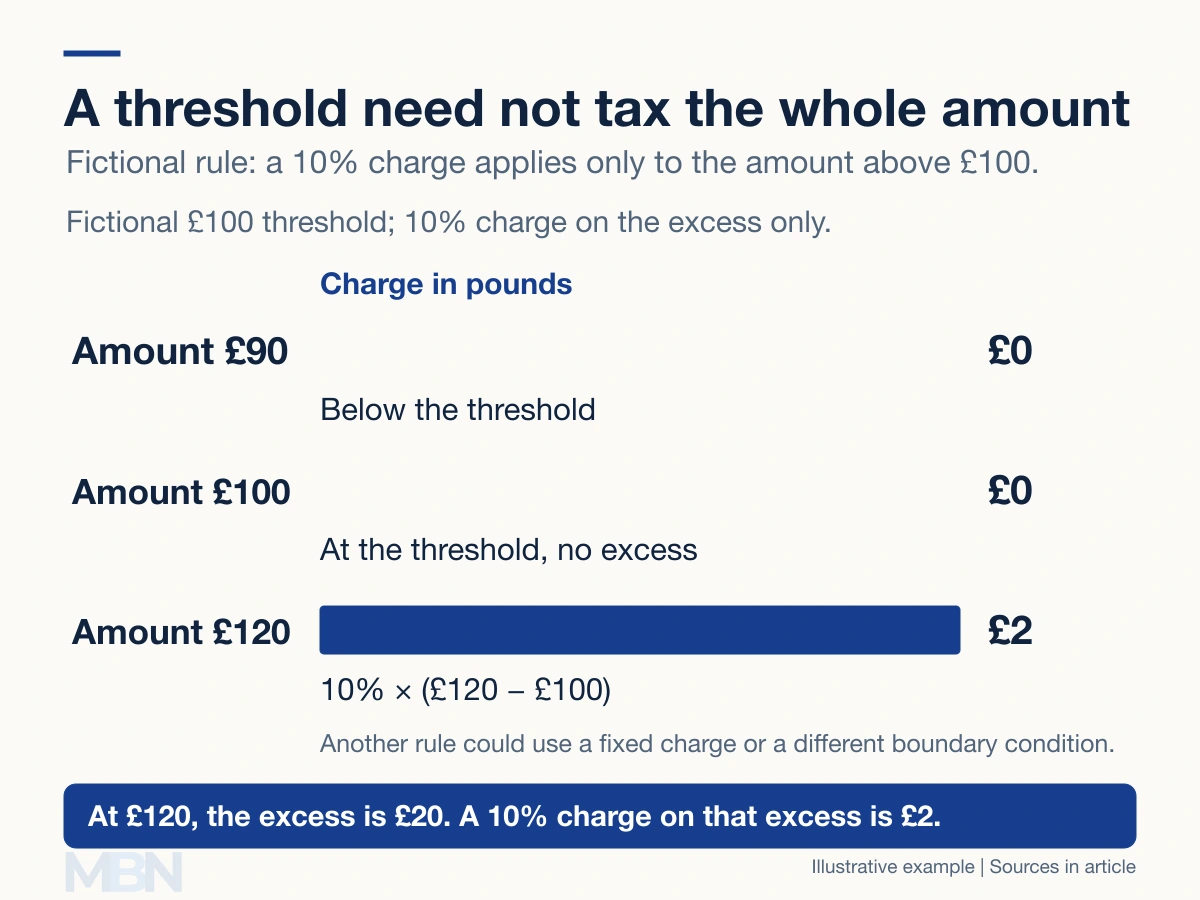
This illustrates a marginal calculation. It does not establish a real tax rate. Other rules can create a step change, such as a fixed fee when a specified condition is met, or gradually withdraw a benefit over a range.
The same distinction matters when comparing marginal and effective tax rates. A higher marginal band does not necessarily apply its rate to the entire income.
Other business uses
A fictional retailer might set an internal review threshold when stock falls below 20 units. A balance of exactly 20 would not meet a “below 20” rule; a balance of 19 would. A rule saying “20 or fewer” would work differently.
Banking contracts may use balance thresholds to determine interest or fees. An agreed overdraft limit is not automatically an interest-free allowance. The effect depends on the particular account terms.
Outside finance, threshold can mean the strip or boundary at a doorway, or figuratively the beginning of a new stage. Its financial meaning retains that idea of crossing a defined boundary.
Last checked and updated on November 4, 2026 by the MBN editorial team.