
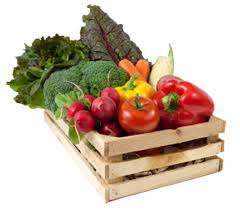
produce

Food hubs offer locally raised food, helping farms increase sales

Written by Joseph Nordqvist

Published: 16:30, December 27, 2014

Food hubs across the US are now giving small farms the opportunity to sell what they raise to consumers. It is an efficient way of promoting locally grown products.

There are now over 300 food hubs in the country providing this outlet, which is more than double the number six years ago.

Food hubs are “defined as facilities that manage the aggregation, storage, processing, distribution or marketing of locally and regionally produced food.”

There isn’t a specific model of a food hub as it depends on the market, location, and what is grown in the area. In some instances food is collected and given to consumers on a weekly basis, while other hubs help consumers and restaurants to source food online.

Doug O’Brien, deputy undersecretary for rural development for the U.S. Department of Agriculture said:

“We’ve seen in the last few years in particular as local and region food systems have grown and become not only larger but kind of more sophisticated that there has been a need for sort of the logistics of moving food from the field to the consumers. And food hubs kind of fill that space,”

The U.S. Department of Agriculture spent around $25 million from 2009-2013 supporting food hubs.

Farmers have said that these hubs allow them to focus on a few items and reduces the amount of time it takes to sell what they raise.

Market gardens – micro-farms between 1 to a few acres in size – benefit enormously from food hubs.

Joseph Nordqvist Avatar

Other News

Why more accurate AI forecasts don’t always make better investment decisions

Aug 1, 2026

The AI boom is inheriting the geography of America’s old energy economy

Jul 31, 2026

Brands scale AI investment as consumers place greater value on reliability, survey finds

Jul 30, 2026

Customers may praise products they helped create even when they fail

Jul 30, 2026

Study links Uber and Lyft to higher local GDP, but overall job effects remain unclear

Jul 30, 2026

Why some industrial parks create thousands of jobs while others create almost none

Jul 29, 2026

Solar farms meet farming as AI robots work beneath the panels

Jul 28, 2026

Simple chemical treatment could make recycled car plastic almost as strong as new

Jul 28, 2026

Leaf spray could give farmers another tool against salty soil

Jul 28, 2026

Product recalls were linked to lower reported tax rates near year-end

Jul 27, 2026

Land degradation is linked to billions in lost farm output

Jul 26, 2026

Chile’s mining disruption exposes a hidden risk in the AI supply chain

Jul 26, 2026

Bad customer matching can make a profitable ad campaign look like a failure

Jul 26, 2026

1% of resumes contain hidden prompts to trick AI hiring tools

Jul 25, 2026

One fund transaction may have sent the wrong signal about bond investors

Jul 25, 2026

How Kuwait is raising $7.85 billion without selling its pipelines

Jul 25, 2026

Why Gruyère makers would rather make less cheese than cut prices

Jul 25, 2026

Consumer distrust grows twice as fast as trust, study finds

Jul 25, 2026

Autonomous vehicles may become mainstream in mines before they do on public roads

Jul 25, 2026

Allianz to buy HSBC Life Singapore for S$2.7 billion

Jul 24, 2026