

General Mills, the maker of Cheerios, Trix, Green Giant vegetables, and Betty Crocker cake mixes, posted disappointing profit and revenue for fiscal Q1 2015 (ending August 31), as it struggles to cope with changing preferences for breakfast foods and fierce competition from cheaper store-branded products.
Before the bell today, General Mills shares traded nearly 5% down at $50.50.
Net income in fiscal Q1 2015 was $345.2 million, equivalent to 56c per share on common stock, twenty-five percent less than $459.3 million (71c per share) in the same quarter last year. Sales were $4,268.4 million, a 2.4% decline from $4,372.7 million in fiscal Q1 2014.
Sales in its US retail business, which represents half of the company’s total revenue, were down 5% to $2.44 billion in fiscal Q1 2015. Private label brands and customer preference for other types of breakfast foods, such as frozen egg sandwiches and yogurt are gaining market share.
Move towards healthier foods
In order to regain market share, which has been sliding for the past 12 months, the company has been cutting costs and focusing more on natural and healthier foods.
Last week, General Mills announced the acquisition of Annie’s Homegrown for approximately $820 million. Berkeley-based Annie’s makes natural and organic snacks, meals and pastas.
A deal was also agreed with McDonald’s to provide Yoplait yogurts with Happy Meals.
General Mills Chairman and Chief Executive Officer Ken Powell said:
“Back in June, we said our 2015 plans anticipated first-quarter EPS below year-ago levels. Our results were driven by sales and profit declines in the U.S., where industry trends were weak in the quarter. In addition, higher merchandising expense for our U.S. Retail businesses in this period depressed reported net sales and gross margin.”
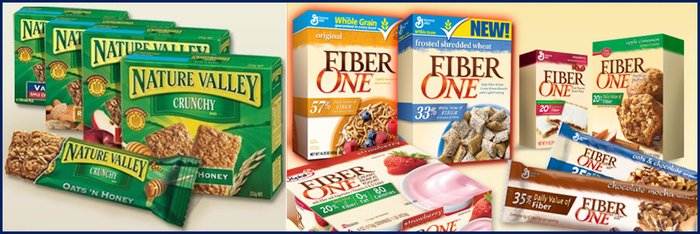
General Mills believes its future lies in healthier foods.
Outlook
Looking ahead, General Mills said year-on-year differences on merchandising expense phasing should have a smaller impact on the rest of the quarters of 2015. It expects improved sales and margin performance across the remainder of the year.
While assuring investors that it reaffirms its constant-currency growth targets for 2015 fiscal year, it added that conditions in the American market are more challenging than it had expected.
Mr. Powell said:
“We made some important progress in the first quarter. In U.S. Retail, our Yoplait yogurt business returned to growth, with volume, sales, and market share gains. Several other key product lines, including Big G cereals, grain bars, and fruit snacks achieved market share increases.”
“Our Convenience Stores and Foodservice segment generated sales growth and an 18% operating profit increase. And our International business segment posted 17% constant-currency profit growth with good constant-currency sales gains, notably in Latin America and Europe.”
Sales from convenience stores and food service edged up 1% to $473 million, led by snacks, frozen breakfast and yogurt. Foreign sales increased by 2% to $1.35 billion. Sales in Latin America increased by 20%, and by 4% both in Europe and Asia-Pacific.
