
Google has introduced a new feature to its search engine that helps people fact check information by highlighting “authoritative sources” in search results.
The new feature is part of an effort to crack down on the emergence of “fake news” – the deliberate spread of misinformation via news media or social media.
Google will not be fact-checking individual news stories itself though, but rather, determine authoritative sources by using an algorithm.
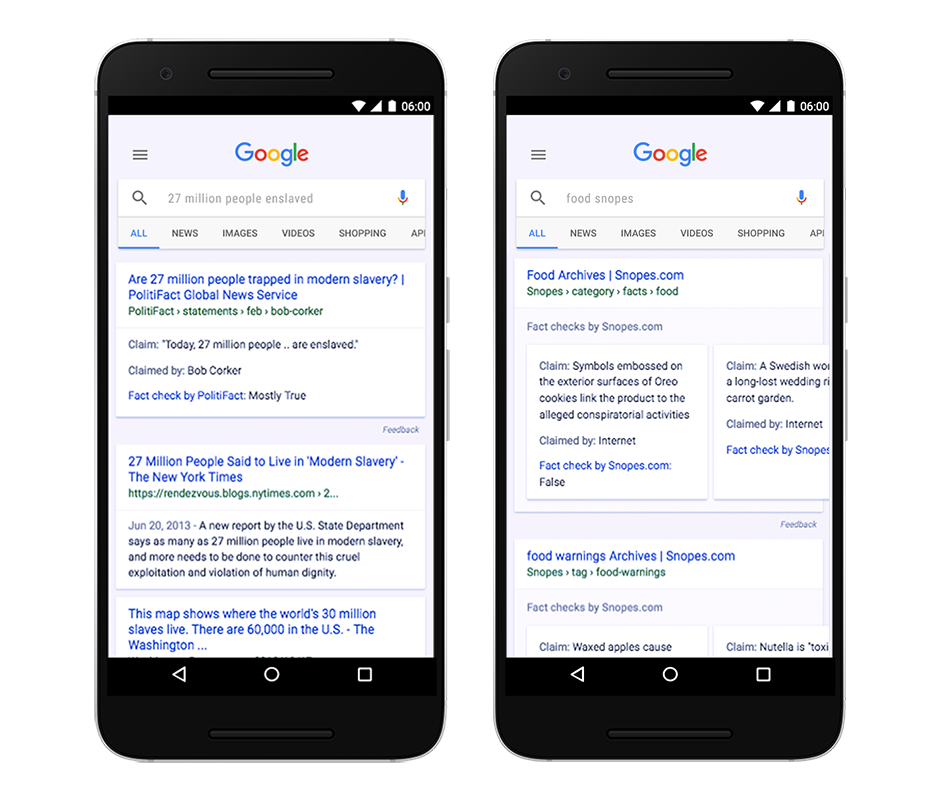
A Google spokesperson was quoted by Bloomberg as saying that publishers will have to option to add fact-check labels to their content, but Google’s search algorithms will determine whether or not they appear in search results.
“For the first time, when you conduct a search on Google that returns an authoritative result containing fact checks for one or more public claims, you will see that information clearly on the search results page. The snippet will display information on the claim, who made the claim, and the fact check of that particular claim,” Google said in an official blog post announcing the new feature.
“These fact checks are not Google’s and are presented so people can make more informed judgments,” Google said. “Even though differing conclusions may be presented, we think it’s still helpful for people to understand the degree of consensus around a particular claim and have clear information on which sources agree.”
“This information [on a specific claim] won’t be available for every search result, and there may be search result pages where different publishers checked the same claim and reached different conclusions. These fact checks are not Google’s and are presented so people can make more informed judgements,” the firm added in its post.
So, some results will have conflicting fact checks – as websites can draw their own conclusions on claims.
As Chris Foxx, BBC technology reporter, pointed out in his report on the new feature, these conflicting checks “may leave people more confused than before – but perhaps, at least, it will encourage them to question what they read online.”
