
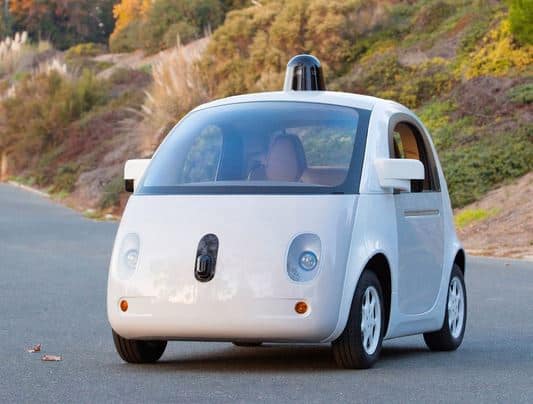
Google, Ford, Uber, Volvo and Lyft have formed a lobbying group called the ‘Self-Driving Coalition for Safer Streets’ which they hope will help speed up the process of getting driverless cars onto roads in the US.
The coalition said that it will “work with lawmakers, regulators, and the public to realize the safety and societal benefits of self-driving vehicles.”
Former administrator of the US National Highway Traffic Safety Administration (NHTSA), David Strickland, will be the group’s counsel and spokesman.
“The best path for this innovation is to have one clear set of federal standards and the coalition will work with policymakers to find the right solutions that will facilitate the deployment of self-driving vehicles,” Strickland said in the statement.
On Wednesday the NHTSA will hold its second public meeting on potential regulations for autonomous vehicles at Stanford University – the first meeting was held in Washington, D.C. last month.
The agency hopes that in July it will release its guidance to states, policymakers and companies on autonomous vehicles.
“We believe fully autonomous vehicles will help people travel more safely and efficiently, as well as facilitate mobility for those currently unable to drive,” Ford said in a statement. “The Coalition will work together to advocate for policy solutions that will support the deployment of fully autonomous vehicles.”
Fully autonomous vehicles without human controls are not legal under current US regulations.
Earlier this year the NHTSA said that Google’s AI system used to pilot cars could be considered a driver under federal law – a major milestone for autonomous technology.
However, legislation has only been passed in four U.S. states and Washington, D.C. allowing driverless cars.
All five companies are working on autonomous technology
As of March 2016, Google had test driven their fleet of vehicles, in autonomous mode, a total of 1,498,214 mi (2,411,142 km) in three US cities.
Uber is creating its own research facility which will focus on autonomous technology in Pittsburgh.
Ford has already started testing its own driverless cars in Dearborn, Michigan.
Lyft partnered with GM to create a fleet of autonomous for-hire vehicles, while Volvo recently announced plans to test 100 of its driverless cars in China.
