

The Japanese economic slowdown appears to be creeping back as factory output remained flat and household spending declined in July. According to official figures, consumer inflation remained at 3.3%.
When factoring in the consumption tax hike from 5% to 8% that was introduced in April, real inflation was actually 1.3% for July. The Bank of Japan, like the US, European and British central banks, has an annual inflation target of 2%.
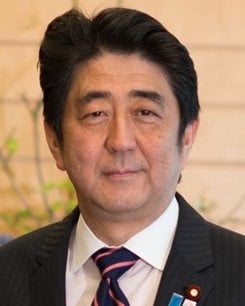
Japan’s Prime Minister, Shinzō Abe, came into power in 2012 following more than two decades of recession and deflation. He has put through a string of reforms at reviving the country’s economy.
Aim – to raise inflation
Dubbed Abenomics, Mr. Abe’s reforms aim to raise inflation in the hope that consumers and businesses start spending rather than saving.
Consumer spending in Japan, like in most of Western Europe and North America, represents over 60% of the nation’s economic activity.
In a prolonged period of deflation (falling prices), consumers spend much less, they postpone their purchases because they know if they wait they will get better deals. Businesses tend to do the same.
If consumers and businesses spend less, economic activity slows down and the economy does not expand.
Industry, the good and the bad
According to the Minsitry of the Economy, Trade & Industry, (the good) while industrial production was 0.2% up in July compared to June, (the bad) it was 0.9% down on July 2013. The Industrial Index was 96.8 in July.
The following industries contributed positively to July’s figure (in order of size):
- General-purpose, production and business-oriented machinery,
- petroleum and coal products,
- textiles.
On a good note, the Survey of Production Forecast in Manufacturing forecasts production will grow by 1.3% and 3.5% in August and September respectively.

(Source: Ministry of Economy, Trade & Industry 経済産業大臣, Japan)
Retail gives a tiny sign of hope
After falling by 0.6% in June, retail sales rose 0.5% in July, showing some small glimmer of hope.
However, economists wonder whether April’s sales tax hike may have killed any momentum the economy was starting to gather. Mr. Abe had to find some way of raising more money – Japan has the world’s (proportionally) largest budget deficit.
In the second quarter of 2014, Japan’s GDP (gross domestic product) was -1.7% smaller than in the first quarter, i.e. an annualized contraction of -6.8%. In the last quarter of 2013 the economy had gained.
Economists’ predictions differing widely
In an interview with the BBC, Martin Schulz, who works at the Fujitsu Research Institute in Tokyo, said “Basically price trends in Japan have been stabilizing. We had this big shock in April, when the sales tax hike was increasing costs for consumers by 3%, and real incomes were diving down as well. This leaves 1.3% real consumer inflation in Japan, which is a comparatively good level, but it doesn’t mean we are already on a positive trend.”
Despite a short-term slowdown, Mr. Shulz says the government should introduce further reforms. He is hoping the economy is recovering and forecasts Q3 GDP growth of approximately 2.5%, and possibly a bigger expansion in Q4.
The government’s plans to raise the sales tax further may be put on hold for a while, most analysts predict. The majority of business media journalists in the UK and North America say Japan’s economy is still in a trough with no sign of climbing out yet. They are also betting on a supplementary budget soon.
Bloomberg news quoted Junichi Makino, chief economist at SMBC Nikko Securities Inc. in Tokyo, who said “We are still at the bottom without a rebound. The situation is fueling concern that the government might not raise the sales tax as planned. The likelihood of a supplementary budget is rising.”
