
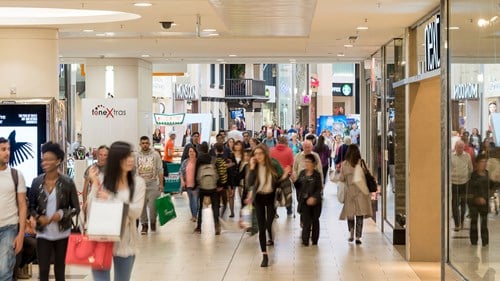
While online retail has grown over the past three decades, shopping mall sales have declined. Billions of dollars, euros, pounds, yens and other currencies have drifted from physical retail stores to online ones. However, Essential Service Retail (ESR) centers have thrived.
What’s an ESR center?
ESR centers focus on everyday needs-based goods and in-person services. These are things that we must purchase or buy regularly. In many cases, we cannot replace them with online alternatives.
Examples of ESR goods and services include daily necessity products, healthcare services, personal care services, personal finance and administrative services, and community experiences. Below is a breakdown of them:
- Daily necessity goods:
Groceries (fresh fruit and vegetables), pharmacy products, basic clothing, and pet supplies. In other words, high-frequency purchases.
- Healthcare services:
Dental clinics, GP offices, diagnostic labs, opticians (eye care services), and physical therapy & rehabilitation centers. Some people refer to these as core anchors.
- Personal care services:
Hair salons and barbers, nail salons, wellness centers and spas, massage parlors, beauty clinics, and laundry/dry cleaning services. These drive regular foot traffic; that is, they bring in lots of consumers to the ESR center.
- Education & family services:
Language schools, tutoring centers, daycare/childcare, training centers, and after-school programs.
- Community and experience elements:
Gyms, community spaces, small events, and co-working spaces.
Focus on consumer needs – not wants
An ESR center focuses on needs and not wants. We purchase many of the products offline because there are no online alternatives. If I have an ingrown toenail, I need to see a podiatrist or my GP; I cannot address my problem online.
Investor appeal
There is growing interest in ESR centers from institutional investors. They have recognized this retail sector as stable and more resistant to both e-commerce and inflation.
ESR concept growing worldwide
ESR centers are becoming more common in the US, Canada, Europe, and Australia. They are commonly known as neighborhood or grocery-anchored shopping centers in the UK, Canada, Ireland, and Australia.
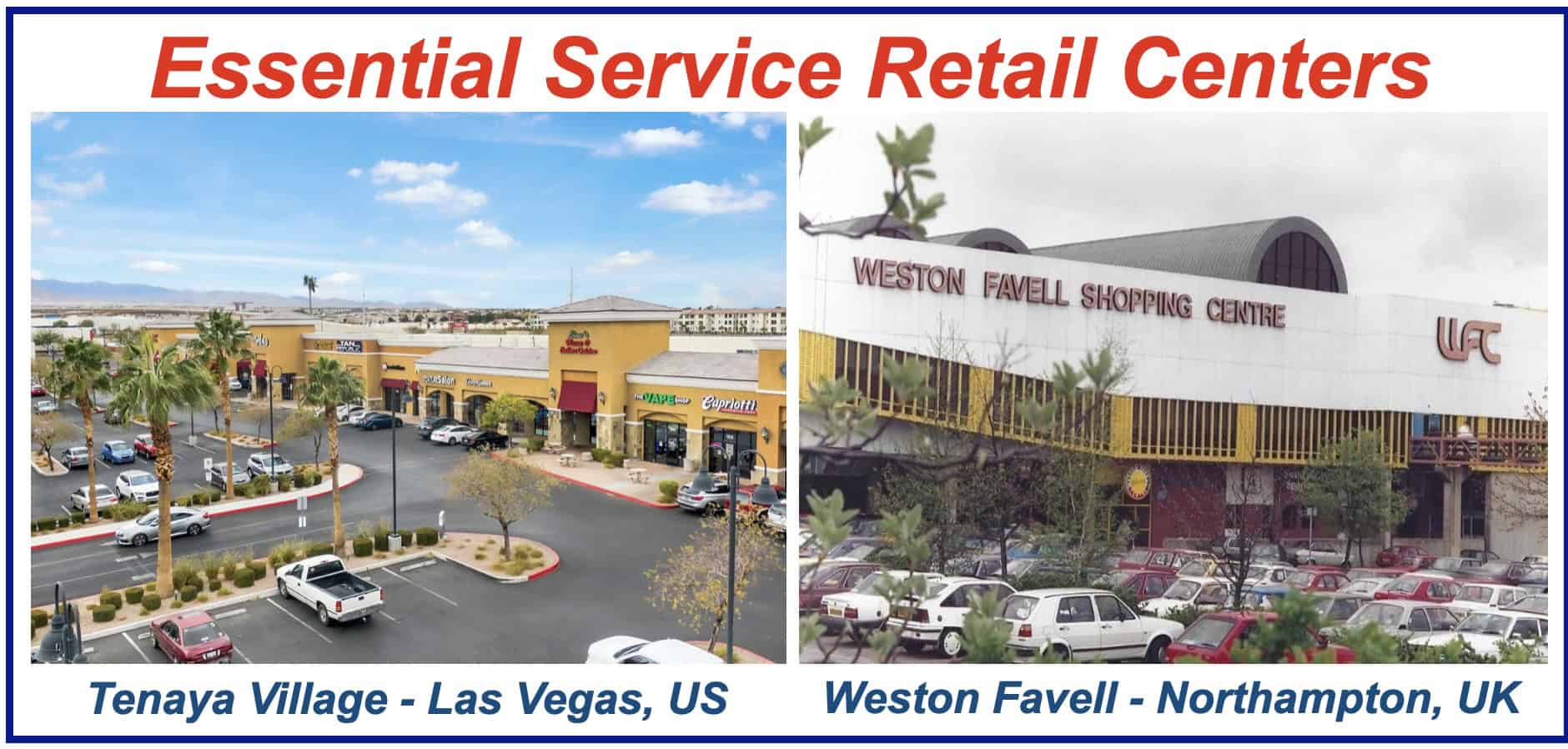
Examples include Tenaya Village in Las Vegas, USA, Weston Favell Shopping Centre in Northampton, UK, Shops at Don Mills in Toronto, Canada, and Stockland Baldivis Shopping Centre in Perth, Australia.
